

Western Black-eared Wheatear vs Pied Wheatear
Oenanthe hispanica versus Oenanthe pleschanka
Play a quiz with Western Black-eared Wheatear and Pied Wheatear
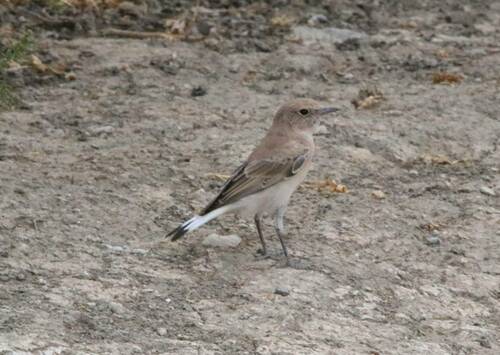 Western Black-eared Wheatear
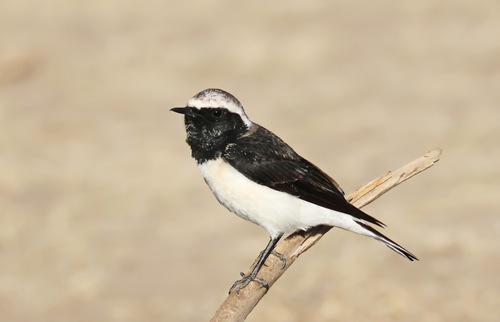 Pied Wheatear
In short
The most reliable field mark between Western Black-eared Wheatear and Pied Wheatear is the overall tone and contrast of the upperparts and head pattern in adult males: Western Black-eared Wheatear males have buff-tinged upperparts and a black mask that stops at the bill base, while Pied Wheatear males are more sharply black-and-white with a white crown tinged brown and a black mask extending to the throat. Females and immatures are trickier, but Western Black-eared is warmer brown overall, whereas Pied is colder, darker, and smaller with less white on the rump. In all ages, the tail pattern is similar but subtle differences exist in the extent and shape of black on the tail feathers. When in doubt, focus on the warmth of the plumage and the sharpness of the black-and-white contrast, especially in spring and summer males.
Identification tips
- Male head pattern (breeding): Western Black-eared Wheatear males have a black mask that stops at the bill base and does not extend above, while Pied Wheatear males have a black mask that merges with the black throat, creating a more extensive and sharply defined black-and-white contrast. This is most reliable in spring and summer.
- Upperparts color (male): Western Black-eared Wheatear males show buff-tinged upperparts, giving a softer, less starkly black-and-white look. Pied Wheatear males have a white crown tinged brown and black mantle/scapulars with buff tips, making them appear more crisply patterned.
- Throat and face (male): Black-throated Western Black-eared Wheatear males have less black on the throat and face, and the black ends less abruptly than in Pied. Pied males have a solid black throat and face, sharply set off from the white crown.
- Female/immature tone: Western Black-eared Wheatear females are warmer brown overall, while Pied Wheatear females are colder, darker brown with sandy buff on the head and less white on the rump. This warmth/coldness is a key separator in duller birds.
- Tail pattern: Both show a white tail with black forming an inverted 'T', but Pied Wheatear's outer tail feathers have more black at the tips, and the central pair are black with white bases. Western Black-eared Wheatear's tail is whiter, with the white on the inner web often reaching the tip and less extensive black.
- Rump and back: Western Black-eared Wheatear of both sexes has a white lower back and rump, often more extensive than in Pied, whose females especially show less white here.
- Wing color: Western Black-eared Wheatear males have blacker wings than Northern Wheatear, but Pied Wheatear's wings are black with creamy-buff tips and edges, especially in fresh plumage.
- Juvenile pattern: Pied Wheatear juveniles are speckled above due to pale centers on brown feathers, while Western Black-eared Wheatear juveniles are warmer brown and less distinctly marked.
- Size: Pied Wheatear females are slightly smaller, but this is subtle and not usually useful in the field.
- Habitat and range: In western Europe, Western Black-eared Wheatear is expected; Pied Wheatear is a rare vagrant. Context can help, but is not diagnostic on its own.
- Voice: Pied Wheatear gives a harsh 'zack zack' call and a variable, musical song. Western Black-eared Wheatear's vocalizations are not described here, so do not rely on voice for separation.
- Seasonal change: Western Black-eared Wheatear males become buffier on the head and mantle in autumn and winter, while Pied Wheatear males become more uniformly brown and white as feather tips wear off.
- Perched vs. flight views: Tail pattern is best seen in flight or when the tail is fanned. Head and upperpart color are more reliable when the bird is perched and in good light.
- Potential pitfalls: Both can show white rumps and similar tail patterns; do not rely on rump alone. Females and immatures are especially tricky—focus on overall warmth/coldness and the extent of white on the lower back.
Size
Both species are small wheatears and are very close in size, with Pied Wheatear listed at about 14–14.6 cm in length. Females of Pied Wheatear are noted as slightly smaller than males, but the difference is minor and unlikely to be diagnostic in the field. No significant structural differences in size or shape are described between these two species.
Plumage
-
Juvenile/First-year birds: Pied Wheatear juveniles are brown above with pale centers near the feather tips, giving a speckled look, while Western Black-eared Wheatear females and immatures are warmer brown and less distinctly marked. Pied Wheatear juveniles appear colder and more uniform brown and white as they age, with creamy buff underparts.
-
Adult males (breeding): Western Black-eared Wheatear males have a white or nearly white crown and forehead, buff mantle, blacker wings, and a black mask that stops at the bill base. Their underparts are white tinged with buff, and the back, upper tail coverts, and most of the tail are white. Black-throated individuals have less black on the throat and face, and the black ends less abruptly than in Pied. Pied Wheatear males are more sharply marked: white crown tinged brown, black face and throat, black mantle and scapulars with buff tips, creamy-white back and rump, and a more distinct black-and-white contrast overall.
-
Females: Western Black-eared Wheatear females are warmer brown, with a characteristic white lower back and less marked seasonal changes. Pied Wheatear females are browner with buff tips, smaller, and show less white on the rump, with a sandy buff wash to the head. Both have brown and white tails, but Pied's is colder-toned.
-
Tail pattern: Both species have a white tail with black markings forming an inverted 'T', but Pied Wheatear's outer tail feathers have more black at the tips and the central pair are black with white bases. Western Black-eared Wheatear's tail is whiter overall, with the white on the inner webs often reaching the tip, and the black less extensive.
Behaviour
Both species are typical wheatears: upright stance, ground-feeding, and often perching on rocks or low posts. Pied Wheatear males may sing from a perch or in flight, especially in early summer and August. No major behavioral differences are described that are useful for field separation.
Habitat
Western Black-eared Wheatear is generally found in southern Europe and the western Mediterranean, while Pied Wheatear breeds from southeast Europe through central Asia and is a rare vagrant to western Europe. Both favor open, stony, sparsely vegetated habitats, but Pied Wheatear is more likely in central Asian steppe or rocky hills, and Western Black-eared in Mediterranean scrub or rocky slopes. In western Europe, Pied is much rarer and would be unexpected outside of vagrancy context.
Voice
Pied Wheatear's call is a harsh 'zack zack', and its song is low-pitched, musical, and variable, sometimes lark-like or whistling, delivered from a perch or in flight. No distinctive vocal differences are noted for Western Black-eared Wheatear in these sources, so voice is not a reliable separator here.
Western Black-eared Wheatear · Pied Wheatear · My Tricky Birds