

West Indian Whistling-Duck vs Black Skimmer
Dendrocygna arborea versus Rynchops niger
Play a quiz with West Indian Whistling-Duck and Black Skimmer
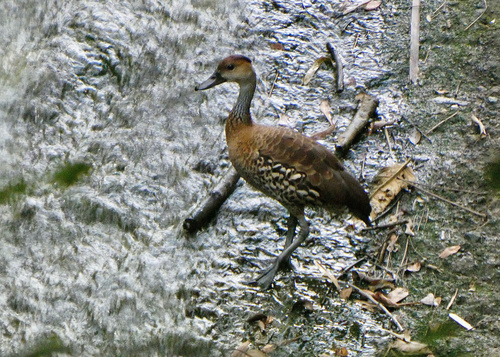 West Indian Whistling-Duck
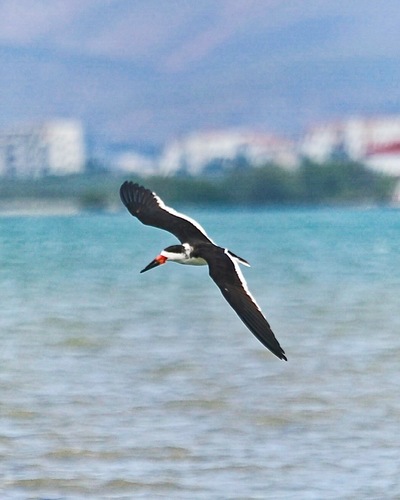 Black Skimmer
In short
The most reliable way to separate West Indian Whistling-Duck from Black Skimmer is by structure and bill shape: the duck is a heavy-bodied, long-necked bird with a thick, entirely black bill, while the skimmer is much slimmer, with extremely long wings and a unique red-and-black bill where the lower mandible is much longer than the upper. In flight, Black Skimmer shows long, pointed wings and a striking white trailing edge, while the duck is broad-winged and lacks such contrast. Juvenile and immature plumages are not easily confused, but adult plumages can cause confusion at a distance, especially when perched. Habitat and behavior also differ strongly: the duck is found in freshwater or brackish wetlands, while the skimmer is strictly coastal or on large open water bodies.
Identification tips
- Bill shape and color: West Indian Whistling-Duck has a thick, straight, entirely black bill; Black Skimmer has a long, laterally compressed bill with a red base and black tip, and the lower mandible is much longer than the upper (unique among birds). This is visible even at a distance with good light.
- Head and neck: The duck has a long neck and large head, with a pale foreneck and face contrasting with a dark crown and back. The skimmer has a shorter neck, a flat-crowned head, and a sharp black cap with a white forehead.
- Wing pattern in flight: Black Skimmer of all ages shows a prominent white trailing edge to the upperwing and a white or pale underwing, contrasting with black upperparts. The duck's upperwing is uniformly dark, lacking any white trailing edge or panel.
- Body shape and posture: The duck is bulky, deep-chested, and sits high in the water or stands upright on land. The skimmer is slim, elongated, and sits low, often in a horizontal posture on sandbars.
- Leg color: The duck has dark legs; the skimmer's legs are bright red, especially obvious when standing or in flight.
- Tail: The skimmer's tail is dark grey with white edges; the duck's tail is not distinctive.
- Juvenile/immature confusion: Juvenile ducks are duller but still show the same structure and bill; immature skimmers have brown upperparts with white fringes, but retain the unique bill and wing pattern.
- Plumage contrast: The duck's underparts are white with heavy black markings, especially on the belly; the skimmer's underparts are clean white, with no heavy markings.
- Habitat: Ducks are in vegetated wetlands, mangroves, or ponds; skimmers are on open coasts, sandbars, or large lakes.
- Behavior: Skimmers are often seen flying low over water, skimming with their bill; ducks swim or walk, rarely fly low over open water in the same manner.
- Flight style: Skimmers have long, pointed wings and a buoyant, graceful flight; ducks are steady, with broad wings and slower wingbeats.
- Voice: Skimmer gives a harsh "kak-kak-kak"; duck gives whistling calls.
- Perched posture: Skimmers rest flat on the ground, often in groups; ducks stand more upright or may perch on logs or in trees.
- Size impression: The duck appears much heavier and bulkier than the skimmer, which is slim and delicate despite its long wings.
- Seasonal confusion: Both species may be present in the Caribbean in winter, but habitat and structure remain reliable for separation.
Size
West Indian Whistling-Duck is substantially heavier and bulkier, with females weighing 800–1,320 g and males 760–1,240 g, about the size of a Mallard [wikipedia]. In contrast, Black Skimmer is much lighter, with an average adult mass of about 301.5 g [wikidata], and is noticeably slimmer and more elongated in flight. The duck is 48–58 cm long, while the skimmer is 40–50 cm long but with a much longer wingspan (107–127 cm vs. the duck's more modest span). The duck's body is deep-chested and robust, while the skimmer is narrow-bodied and long-winged.
Plumage
Juvenile West Indian Whistling-Ducks are duller than adults, with less contrast on the belly, but still show a pale foreneck and face, dark brown to black crown, back, breast, and wings, and heavily marked white underparts. All ages have a dark, unmarked upperwing in flight, lacking any white trailing edge. Black Skimmer adults in breeding plumage have a sharp contrast between black upperparts (including wings and crown) and white underparts and forehead, with a prominent white trailing edge on the upperwing in flight. Immature skimmers have brown upperparts with white feather tips and fringes, but still show the white trailing edge and white underparts. The skimmer's underwing is white to dusky grey, while the duck's underwing is not described as contrasting. The skimmer's tail and rump are dark grey with white edges, while the duck's tail is not distinctive. Bill color is a key difference: the duck's bill is entirely black, while the skimmer's is red at the base and black at the tip, with a dramatically longer lower mandible.
Behaviour
West Indian Whistling-Duck is typically seen swimming or walking in wetlands, often in small groups, and has a slow, steady flight with broad wings. Black Skimmer is almost always seen in flocks along coasts or large water bodies, flying low over the water with slow, graceful wingbeats, and often feeding by skimming the surface with its lower mandible. Skimmers rarely swim and are usually seen resting on sandbars or beaches. The duck may perch in trees or on the ground, while the skimmer is strictly ground-roosting.
Habitat
West Indian Whistling-Duck is found in freshwater or brackish wetlands, ponds, and mangroves throughout the Caribbean [wikipedia]. It avoids open coasts. Black Skimmer breeds and roosts on sandy beaches, sandbars, and coastal lagoons, and is rarely found away from large open water, especially saltwater or brackish environments. If you see the bird in a coastal setting, especially on a beach or sandbar, it is almost certainly a skimmer; in vegetated wetlands or mangroves, it is the duck.
Voice
Black Skimmer gives a distinctive barking "kak-kak-kak" call, often heard in flight or at colonies. West Indian Whistling-Duck, like other whistling ducks, gives high-pitched, whistling calls, but these are not described in detail here. The skimmer's call is much harsher and more abrupt than any duck's whistle.
West Indian Whistling-Duck · Black Skimmer · My Tricky Birds