

Vinaceous Dove vs Black-billed Wood-Dove
Streptopelia vinacea versus Turtur abyssinicus
Play a quiz with Vinaceous Dove and Black-billed Wood-Dove
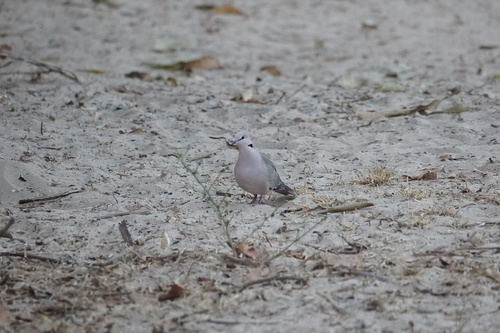 Vinaceous Dove
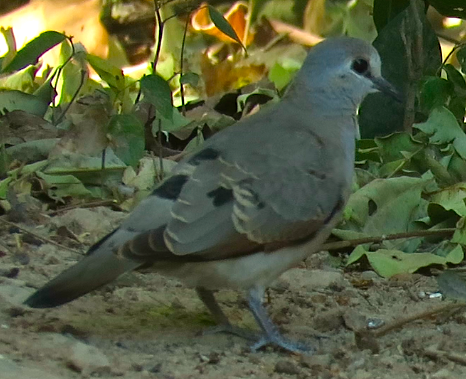 Black-billed Wood-Dove
In short
The most reliable field mark to separate Vinaceous Dove from Black-billed Wood-Dove is the underwing color in flight: Vinaceous Dove shows a blackish underwing, while Black-billed Wood-Dove flashes chestnut. For perched birds, look for the Vinaceous Dove’s black hind-neck patch edged with white, versus the Wood-Dove’s bluish-grey crown and nape and black bill. Juveniles of both are duller, but the Wood-Dove’s immatures are scaly below and lack the adult’s wing spots. Vinaceous Dove is noticeably larger and heavier, but size can be hard to judge unless both are together. Both species are similar in shape and flight style, so focus on plumage and bill color for confident separation.
Identification tips
- Underwing color in flight (all ages): Vinaceous Dove shows a blackish underwing; Black-billed Wood-Dove flashes chestnut. This is the most reliable mark when birds are airborne.
- Juvenile/immature plumage: Immature Black-billed Wood-Doves are scaly below and lack the adult’s wing spots; Vinaceous Dove juveniles are just duller overall, without scaly underparts.
- Neck patch (perched): Vinaceous Dove has a black hind-neck patch edged with white, visible from the side or rear; Black-billed Wood-Dove lacks any neck patch.
- Bill color: Black-billed Wood-Dove has a distinctive black bill; Vinaceous Dove’s bill is not described as black and does not stand out.
- Crown and nape color: Black-billed Wood-Dove shows bluish-grey on the forehead, crown, and nape, fading to whitish on the face; Vinaceous Dove’s head is pale pinkish-grey.
- Upperparts and wing pattern (perched): Vinaceous Dove is pale brown above with no metallic patches or blackish bands; Black-billed Wood-Dove has dark metallic patches on the folded wings and two blackish bands on the back.
- Underparts: Vinaceous Dove is pale pinkish-grey below; Black-billed Wood-Dove is pinkish, becoming whiter on the belly.
- Leg color: Vinaceous Dove has red legs; Black-billed Wood-Dove’s leg color is not described as distinctive.
- Tail pattern: Vinaceous Dove shows white in the tail; Black-billed Wood-Dove’s tail is pale grey brown, not specifically marked.
- Size and structure: Vinaceous Dove is much larger and heavier (110g vs 66g, 26–30 cm vs 20 cm), but beware of judging size in isolation unless both species are together.
- Flight style: Both have quick, direct flights with regular beats and sharp flicks, so flight style alone does not separate them.
- Voice: Vinaceous Dove’s call is a fast coo-cu-cu-coo; Black-billed Wood-Dove’s is a more musical, fluted coo-coo-cu-coo. Use with caution unless familiar with both.
- Habitat: Both use similar habitats (dry, open country, acacia), so do not rely on habitat for separation.
- Social behavior: Black-billed Wood-Dove is more terrestrial and forms large flocks at waterholes, but otherwise both can be seen singly or in small groups.
- Pitfalls: Immature Black-billed Wood-Doves lacking wing spots can be confused with Vinaceous Dove, but the scaly underparts and black bill remain helpful. Always try to see the underwing in flight for a quick ID.
Size
Vinaceous Dove is significantly larger and heavier (body mass ~110g) than Black-billed Wood-Dove (~66g). Vinaceous Dove measures 26–30 cm in length, while Black-billed Wood-Dove is about 20 cm. In the field, Vinaceous Dove appears bulkier and more robust, but beware that lone birds or those in poor light may make this difference subtle. If seen side by side, the size gap is obvious.
Plumage
- Juvenile/immature birds: Black-billed Wood-Dove immatures are duller than adults, with a scaly appearance below and lacking the adult’s wing spots. Vinaceous Dove juveniles are also duller than adults but do not show the scaly underparts or the absence of wing spots.
- Underwing in flight (all ages): Vinaceous Dove shows a blackish underwing, while Black-billed Wood-Dove has a chestnut underwing. This is the quickest separation in flight.
- Adult perched birds: Vinaceous Dove has a pale pinkish-grey head and underparts, a black hind-neck patch edged with white, and pale brown upperparts. Black-billed Wood-Dove shows a bluish-grey forehead, crown, and nape, fading to whitish on the face, with pinkish underparts and whiter belly. The Wood-Dove’s folded wings have dark metallic patches and two blackish bands on the back, lacking the Vinaceous Dove’s neck patch.
Behaviour
Both species have a quick, direct flight with regular wingbeats and occasional sharp flicks, typical of pigeons. Black-billed Wood-Dove tends to stay lower to the ground and is more terrestrial, often foraging on the ground and forming large flocks at waterholes, but is otherwise not very gregarious. Vinaceous Dove’s flight is similar but may appear slightly more robust due to its size. Both species build stick nests in trees, often acacias.
Habitat
Both species occur across northern Sub-Saharan Africa and favor dry, open habitats. Vinaceous Dove is widely resident across northern Sub-Saharan Africa, while Black-billed Wood-Dove is abundant in near-desert, scrub, and savannah just south of the Sahara. Both may be found in similar contexts, including acacia-dotted landscapes, so habitat alone is not diagnostic.
Voice
Vinaceous Dove gives a fast coo-cu-cu-coo, while Black-billed Wood-Dove’s call is a persistent, fluted coo-coo-cu-coo. The difference is subtle and may be hard to judge without experience, but the Wood-Dove’s call is more musical and fluted, while Vinaceous Dove’s is faster and less melodious.