

Motmot

Tree Swallow vs Redpoll

Tachycineta bicolor versus Acanthis flammea

Play a quiz with Tree Swallow and Redpoll
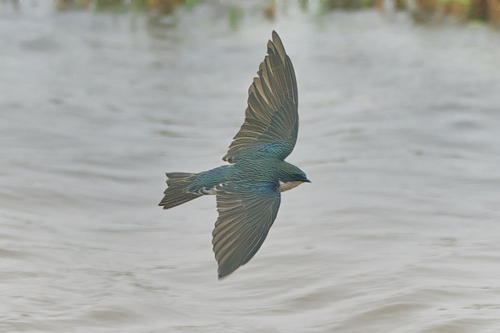
Tree Swallow (Tachycineta bicolor) Tree Swallow
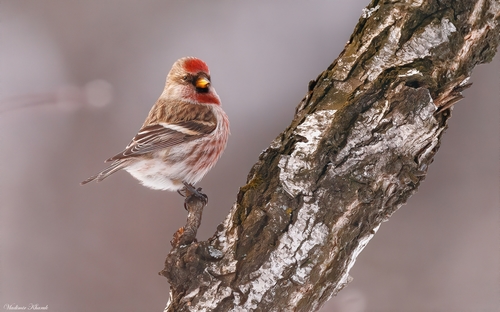
Redpoll (Acanthis flammea) Redpoll

Media

Loading…

In short

The most reliable way to separate Tree Swallow from Redpoll—especially in flight or at a distance—is by overall structure and wing pattern: Tree Swallow is a sleek, long-winged aerialist with a streamlined, swallow-like jizz, while Redpoll is a compact, stubby finch with a short, notched tail and no swallow-like flight. Juvenile Tree Swallows can be confusing due to their brown upperparts, but they always show clean white underparts and lack any streaking or red on the face. Redpolls, even juveniles, show strong streaking on the body, a small yellowish bill, and a distinctive red forehead patch in most plumages. Both species can appear similar in size, but their shape, behavior, and plumage details are very different once you look closely.

Identification tips

  1. Flight style and shape: Tree Swallow is unmistakably swallow-like in flight: long, pointed wings, streamlined body, and fast, agile, gliding or swooping flight. Redpoll has a bouncing, undulating flight typical of finches, with shorter, more rounded wings and a compact body.
  2. Bill shape: Tree Swallow has a small, black, pointed bill suited for catching insects. Redpoll has a short, conical, yellowish bill with a dark tip, perfect for seed-eating. This is often visible even at a distance with good light.
  3. Tail shape: Tree Swallow's tail is medium-long and slightly forked, especially noticeable in flight. Redpoll's tail is shorter, more notched, and never deeply forked.
  4. Juvenile confusion: Juvenile Tree Swallows are brown above but always have clean white underparts and cheeks, never streaked or with any red. Redpoll juveniles are streaked below and lack the pure white look of Tree Swallow.
  5. Red forehead patch: Redpolls (adults and most immatures) show a bright red patch on the forehead—never present on Tree Swallow of any age or sex.
  6. Body streaking: Redpolls are heavily streaked on the flanks and back in all plumages. Tree Swallow is always plain below (white or grayish), never streaked.
  7. Wingbars: Redpoll shows two pale wingbars on each wing, visible both perched and in flight. Tree Swallow lacks wingbars entirely.
  8. Face pattern: Redpoll has a black bib and more facial patterning, including the red forehead and sometimes a pale supercilium. Tree Swallow's face is plain white with a dark eye, lacking any bib or red.
  9. Upperparts color: Adult Tree Swallow is glossy blue-green above (males) or duller blue/brown (females/immatures). Redpoll is always brownish-gray and streaked, never glossy or blue.
  10. Rump and vent: Redpoll has a streaked rump and a broad dark vent streak. Tree Swallow's rump is plain, matching the upperparts, and the undertail is clean.
  11. Leg color: Tree Swallow has pale brown legs and feet; Redpoll's legs are brown, but this is rarely diagnostic in the field.
  12. Perched posture: Tree Swallow sits upright and sleek, often on wires or exposed perches. Redpoll is more likely to hunch or cling to seed heads or branches, sometimes feeding upside down.
  13. Habitat context: Tree Swallow is almost always near water or open fields, especially in breeding season. Redpoll is found in boreal woods, weedy fields, or at feeders, often in large flocks in winter.
  14. Seasonal context: In North America, Tree Swallow is present mainly spring to fall (breeding season), while Redpoll is most often seen in winter, especially during irruptions.
  15. Sex and age effects: Female and immature Tree Swallows can be browner, but never streaked or red-faced. Male Redpolls may show a pinkish wash on the breast, but all Redpolls have streaking and the red forehead patch.

Size

Tree Swallow is slightly heavier and longer-winged, measuring 12–14 cm in length with a wingspan of 30–35 cm and mass of 17–25.5 g [wikipedia]. Redpoll is a bit lighter and more compact, at 11.5–14 cm long, wingspan 19–22 cm, and mass 12–16 g [wikipedia]. In the field, Tree Swallow looks longer and more streamlined, with proportionally longer wings and tail, while Redpoll appears rounder and more finch-like, with a short, stubby bill and a shorter, notched tail.

Plumage

Juvenile and first-year Tree Swallows have brown upperparts and gray-brown washed breasts, but always show clean white underparts and cheeks, with no streaking or red anywhere [wikipedia]. Second-year females may show a mix of brown and blue on the back. Adult Tree Swallows (especially males) are glossy blue-green above with blackish wings and tail, and pure white underparts. Redpolls of all ages are brownish-grey with heavy dark streaks on the body, a black bib, and two pale wingbars. The key mark is the bright red forehead patch (present in adults and most immatures), and males often have a pinkish wash on the breast. Redpolls show a streaked rump and a broad dark vent streak, never clean white below. The bill is yellowish with a dark tip, and the face is often more patterned than any Tree Swallow. In flight, Tree Swallow shows long, pointed wings and a streamlined body, while Redpoll's wings are shorter and more rounded, matching its overall compact shape.

Behaviour

Tree Swallow is almost always seen flying acrobatically, often high above water or open fields, catching insects in the air. It perches on wires or exposed branches but rarely feeds on the ground. Redpoll is a seed-eating finch, usually seen foraging in trees or on the ground, often in flocks. Its flight is undulating and less graceful than the swallow's, and it frequently hangs from twigs or feeds upside down. Tree Swallow's flight is direct, fast, and buoyant, while Redpoll's is bouncy and less streamlined.

Habitat

Tree Swallow prefers open habitats near water—lakes, marshes, and fields—especially where there are nest boxes or natural cavities. It is rarely found in dense forest or urban parks away from water. Redpoll breeds in northern boreal forests and tundra, but in winter can be found in weedy fields, birch and alder stands, and sometimes at feeders, often far from water. If you see a bird in a dense flock feeding on birch seeds or at a feeder in winter, it's much more likely to be a Redpoll.

Submit a better description

Use the same sections as the comparison. Your text is published immediately.

The most reliable way to separate Tree Swallow from Redpoll—especially in flight or at a distance—is by overall structure and wing pattern: Tree Swallow is a sleek, long-winged aerialist with a streamlined, swallow-like jizz, while Redpoll is a compact, stubby finch with a short, notched tail and no swallow-like flight. Juvenile Tree Swallows can be confusing due to their brown upperparts, but they always show clean white underparts and lack any streaking or red on the face. Redpolls, even juveniles, show strong streaking on the body, a small yellowish bill, and a distinctive red forehead patch in most plumages. Both species can appear similar in size, but their shape, behavior, and plumage details are very different once you look closely.

  1. Flight style and shape: Tree Swallow is unmistakably swallow-like in flight: long, pointed wings, streamlined body, and fast, agile, gliding or swooping flight. Redpoll has a bouncing, undulating flight typical of finches, with shorter, more rounded wings and a compact body.
  2. Bill shape: Tree Swallow has a small, black, pointed bill suited for catching insects. Redpoll has a short, conical, yellowish bill with a dark tip, perfect for seed-eating. This is often visible even at a distance with good light.
  3. Tail shape: Tree Swallow's tail is medium-long and slightly forked, especially noticeable in flight. Redpoll's tail is shorter, more notched, and never deeply forked.
  4. Juvenile confusion: Juvenile Tree Swallows are brown above but always have clean white underparts and cheeks, never streaked or with any red. Redpoll juveniles are streaked below and lack the pure white look of Tree Swallow.
  5. Red forehead patch: Redpolls (adults and most immatures) show a bright red patch on the forehead—never present on Tree Swallow of any age or sex.
  6. Body streaking: Redpolls are heavily streaked on the flanks and back in all plumages. Tree Swallow is always plain below (white or grayish), never streaked.
  7. Wingbars: Redpoll shows two pale wingbars on each wing, visible both perched and in flight. Tree Swallow lacks wingbars entirely.
  8. Face pattern: Redpoll has a black bib and more facial patterning, including the red forehead and sometimes a pale supercilium. Tree Swallow's face is plain white with a dark eye, lacking any bib or red.
  9. Upperparts color: Adult Tree Swallow is glossy blue-green above (males) or duller blue/brown (females/immatures). Redpoll is always brownish-gray and streaked, never glossy or blue.
  10. Rump and vent: Redpoll has a streaked rump and a broad dark vent streak. Tree Swallow's rump is plain, matching the upperparts, and the undertail is clean.
  11. Leg color: Tree Swallow has pale brown legs and feet; Redpoll's legs are brown, but this is rarely diagnostic in the field.
  12. Perched posture: Tree Swallow sits upright and sleek, often on wires or exposed perches. Redpoll is more likely to hunch or cling to seed heads or branches, sometimes feeding upside down.
  13. Habitat context: Tree Swallow is almost always near water or open fields, especially in breeding season. Redpoll is found in boreal woods, weedy fields, or at feeders, often in large flocks in winter.
  14. Seasonal context: In North America, Tree Swallow is present mainly spring to fall (breeding season), while Redpoll is most often seen in winter, especially during irruptions.
  15. Sex and age effects: Female and immature Tree Swallows can be browner, but never streaked or red-faced. Male Redpolls may show a pinkish wash on the breast, but all Redpolls have streaking and the red forehead patch.

Tree Swallow is slightly heavier and longer-winged, measuring 12–14 cm in length with a wingspan of 30–35 cm and mass of 17–25.5 g [wikipedia]. Redpoll is a bit lighter and more compact, at 11.5–14 cm long, wingspan 19–22 cm, and mass 12–16 g [wikipedia]. In the field, Tree Swallow looks longer and more streamlined, with proportionally longer wings and tail, while Redpoll appears rounder and more finch-like, with a short, stubby bill and a shorter, notched tail.

Juvenile and first-year Tree Swallows have brown upperparts and gray-brown washed breasts, but always show clean white underparts and cheeks, with no streaking or red anywhere [wikipedia]. Second-year females may show a mix of brown and blue on the back. Adult Tree Swallows (especially males) are glossy blue-green above with blackish wings and tail, and pure white underparts. Redpolls of all ages are brownish-grey with heavy dark streaks on the body, a black bib, and two pale wingbars. The key mark is the bright red forehead patch (present in adults and most immatures), and males often have a pinkish wash on the breast. Redpolls show a streaked rump and a broad dark vent streak, never clean white below. The bill is yellowish with a dark tip, and the face is often more patterned than any Tree Swallow. In flight, Tree Swallow shows long, pointed wings and a streamlined body, while Redpoll's wings are shorter and more rounded, matching its overall compact shape.

Tree Swallow is almost always seen flying acrobatically, often high above water or open fields, catching insects in the air. It perches on wires or exposed branches but rarely feeds on the ground. Redpoll is a seed-eating finch, usually seen foraging in trees or on the ground, often in flocks. Its flight is undulating and less graceful than the swallow's, and it frequently hangs from twigs or feeds upside down. Tree Swallow's flight is direct, fast, and buoyant, while Redpoll's is bouncy and less streamlined.

Tree Swallow prefers open habitats near water—lakes, marshes, and fields—especially where there are nest boxes or natural cavities. It is rarely found in dense forest or urban parks away from water. Redpoll breeds in northern boreal forests and tundra, but in winter can be found in weedy fields, birch and alder stands, and sometimes at feeders, often far from water. If you see a bird in a dense flock feeding on birch seeds or at a feeder in winter, it's much more likely to be a Redpoll.

Discard your changes?

You have unsaved edits. If you leave now, those changes will be lost.

Tree Swallow · Redpoll · My Tricky Birds