

Temminck's Stint vs Buff-breasted Sandpiper
Calidris temminckii versus Calidris subruficollis
Play a quiz with Temminck's Stint and Buff-breasted Sandpiper
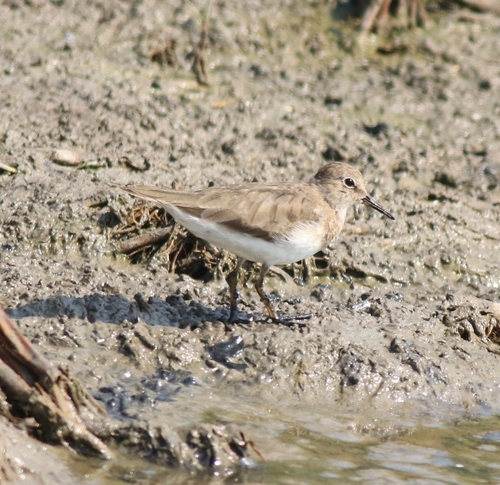 Temminck's Stint
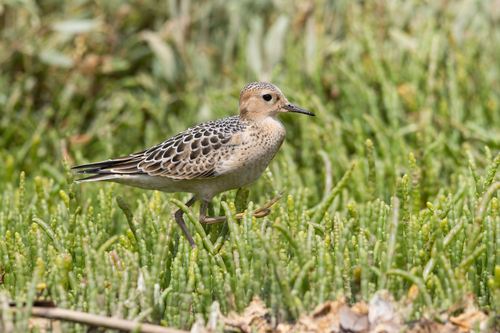 Buff-breasted Sandpiper
In short
The most reliable field mark to separate Temminck's Stint from Buff-breasted Sandpiper is overall coloration and leg color: Temminck's Stint is a tiny, drab wader with dull yellowish or brown legs and white outer tail feathers, while Buff-breasted Sandpiper is larger, with a distinctive buff face and underparts and brighter yellow legs. Juvenile and nonbreeding Temminck's Stints are plain brown above and white below, lacking any buff tones, while Buff-breasted Sandpiper always shows a warm buff wash on the face and breast. In flight or on the ground, Temminck's is much smaller and more compact, with a shorter bill and less upright stance. Both can appear in open habitats, but Buff-breasted Sandpiper is more likely on dry, short-grass fields, while Temminck's prefers muddy or wet edges.
Identification tips
- Size and Structure: Temminck's Stint is much smaller and more compact than Buff-breasted Sandpiper. If seen together, the difference is obvious, but even singly, Temminck's looks tiny and low to the ground, while Buff-breasted Sandpiper is upright and long-legged.
- Leg Color: Temminck's Stint has dull yellowish or brown legs; Buff-breasted Sandpiper has brighter yellow legs. This is a quick check at close range or in good light.
- Bill Shape: Both have short bills, but Buff-breasted Sandpiper's is particularly short and straight, matching its upright posture. Temminck's Stint's bill is fine but not as stubby.
- Face and Underparts Color: Buff-breasted Sandpiper always shows a warm buff wash on the face and breast, even in juveniles. Temminck's Stint is plain brown above and white below, with no buff tones at any age.
- Tail Pattern: Temminck's Stint has white outer tail feathers, visible in flight or when preening. Buff-breasted Sandpiper lacks this feature.
- Upperpart Tone: Temminck's Stint is generally drab brown or greyish above, with little contrast. Buff-breasted Sandpiper is more evenly brown above, but the key is the contrast with the buff underparts.
- Breast Pattern: Temminck's Stint may show a slightly darker breast band, but it is never buff. Buff-breasted Sandpiper's breast is evenly buff, blending into the face and throat.
- Habitat: If the bird is on a dry, short-grass field, especially away from water, Buff-breasted Sandpiper is much more likely. Temminck's Stint prefers muddy or wet margins.
- Behavior: Buff-breasted Sandpiper is often tame, walking upright and picking at insects. Temminck's Stint is more furtive, creeping low along the edge of water.
- Flight Jizz: Temminck's Stint may recall a tiny Common Sandpiper in flight, with rapid wingbeats and white outer tail. Buff-breasted Sandpiper is steadier and less contrasting in flight.
- Sex Differences: Only Buff-breasted Sandpiper shows sexual size dimorphism (males larger), but this is subtle in the field.
- Seasonal Variation: Temminck's Stint breeding adults may show some rufous or blackish mantle feathers, but the overall look is still plain. Buff-breasted Sandpiper's buff tones persist year-round.
- Juvenile Plumage: Juvenile Buff-breasted Sandpiper is paler on the rear underparts but still shows the buff face and breast. Juvenile Temminck's Stint is plain brown above and white below.
- Display Behavior: Buff-breasted Sandpiper males may raise wings to show white underwings; Temminck's Stint does not display this way.
- Geographic Context: Temminck's Stint is native to the Old World; Buff-breasted Sandpiper is a New World breeder and rare vagrant to Europe. Location can help, but always check field marks.
Size
Temminck's Stint is significantly smaller, with a body mass of about 26 g [wikidata] and a length of 13.5–15 cm [wikipedia]. Buff-breasted Sandpiper is noticeably larger and bulkier, with males larger than females, though exact mass is not provided. In the field, Buff-breasted Sandpiper will appear longer-legged and more upright, while Temminck's is compact and low-slung. Size alone is often enough to separate them in direct comparison.
Plumage
Juvenile and nonbreeding Temminck's Stint is plain brown above with white underparts and a slightly darker breast; it never shows any buff or rufous tones on the face or breast. Its legs are dull yellowish or brown, and the outer tail feathers are white. In breeding plumage, Temminck's may show some rufous or blackish mantle feathers, but the overall impression remains drab and plain. Buff-breasted Sandpiper, in all plumages and ages, has a warm buff face and underparts, with brown upperparts. Juveniles are similar to adults but can be paler on the rear underparts. The bill is short and the legs are yellow. Buff-breasted Sandpiper never shows the stark white outer tail feathers of Temminck's. In flight, Temminck's Stint may recall a tiny Common Sandpiper, but Buff-breasted Sandpiper is more uniform and lacks strong contrasts.
Behaviour
Buff-breasted Sandpiper is often very tame and approachable, frequently seen walking upright in open, short-grass habitats, picking at insects by sight. Temminck's Stint is more secretive, tends to hug the ground, and is more likely to be seen creeping along muddy edges or shallow water. Buff-breasted Sandpiper males may perform a wing-raising display, showing white underwings, especially on migration. Temminck's Stint does not display in this way.
Habitat
Temminck's Stint is typically found along muddy or wet edges of freshwater bodies, often in the Old World. Buff-breasted Sandpiper prefers dry, short-grass habitats such as airfields and golf courses, especially on migration, and is much less likely to be found near water. While both can turn up as vagrants, Buff-breasted Sandpiper is a regular wanderer to Western Europe but is most common in central North America during migration.
Temminck's Stint · Buff-breasted Sandpiper · My Tricky Birds