

Temmincks strandloper vs Blonde ruiter
Calidris temminckii versus Calidris subruficollis
Speel een quiz met Temmincks strandloper en Blonde ruiter
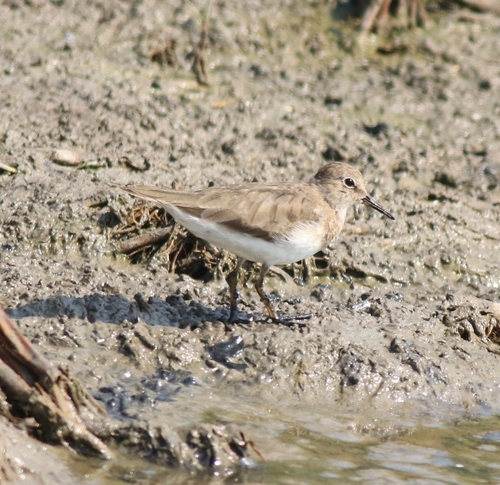 Temmincks strandloper
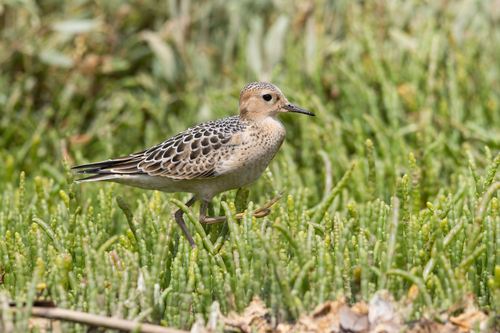 Blonde ruiter
Kort gezegd
De meest betrouwbare veldkenmerk om Temmincks strandloper van Blonde ruiter te scheiden is de algehele kleur en de kleur van de poten: Temmincks strandloper is een kleine, saaie wader met dof geelachtige of bruine poten en witte buitenste staartveren, terwijl Blonde ruiter groter is, met een kenmerkend buff gezicht en onderdelen en helderdere gele poten. Juveniele en niet-broedende Temmincks strandlopers zijn eenvoudig bruin boven en wit onder, zonder enige buff tinten, terwijl Blonde ruiter altijd een warme buff wash op het gezicht en de borst toont. In de vlucht of op de grond is Temmincks veel kleiner en compacter, met een kortere snavel en een minder rechtopstaande houding. Beide kunnen voorkomen in open habitats, maar Blonde ruiter is waarschijnlijker op droge, kortgrasvelden, terwijl Temmincks de voorkeur geeft aan modderige of natte randen.
Herkenningstips
- Grootte en Structuur: Temmincks strandloper is veel kleiner en compacter dan Blonde ruiter. Als ze samen worden gezien, is het verschil duidelijk, maar zelfs alleen lijkt Temmincks klein en laag bij de grond, terwijl Blonde ruiter rechtop en langbenig is.
- Kleur van de Poten: Temmincks strandloper heeft dof geelachtige of bruine poten; Blonde ruiter heeft helderdere gele poten. Dit is een snelle controle van dichtbij of in goed licht.
- Vorm van de Snavel: Beide hebben korte snavels, maar de snavel van Blonde ruiter is bijzonder kort en recht, passend bij zijn rechtopstaande houding. De snavel van Temmincks strandloper is fijn maar niet zo stomp.
- Kleur van Gezicht en Onderdelen: Blonde ruiter toont altijd een warme buff wash op het gezicht en de borst, zelfs bij juvenielen. Temmincks strandloper is eenvoudig bruin boven en wit onder, zonder buff tinten op enige leeftijd.
- Staartpatroon: Temmincks strandloper heeft witte buitenste staartveren, zichtbaar in de vlucht of tijdens het poetsen. Blonde ruiter mist deze eigenschap.
- Kleur van de Bovenkant: Temmincks strandloper is over het algemeen saai bruin of grijsachtig boven, met weinig contrast. Blonde ruiter is gelijkmatiger bruin boven, maar de sleutel is het contrast met de buff onderdelen.
- Patroon van de Borst: Temmincks strandloper kan een iets donkerdere borstband tonen, maar het is nooit buff. De borst van Blonde ruiter is gelijkmatig buff, samenvloeiend met het gezicht en de keel.
- Habitat: Als de vogel op een droog, kortgrasveld is, vooral weg van water, is Blonde ruiter veel waarschijnlijker. Temmincks strandloper geeft de voorkeur aan modderige of natte randen.
- Gedrag: Blonde ruiter is vaak tam, loopt rechtop en pikt naar insecten. Temmincks strandloper is meer furtief, kruipt laag langs de waterkant.
- Vlucht Jizz: Temmincks strandloper kan doen denken aan een kleine Oeverloper in de vlucht, met snelle vleugelslagen en witte buitenste staart. Blonde ruiter is steadier en minder contrasterend in de vlucht.
- Geslachtsverschillen: Alleen Blonde ruiter toont seksuele grootte-dimorfie (mannetjes groter), maar dit is subtiel in het veld.
- Seizoensvariatie: Broedende volwassen Temmincks strandlopers kunnen enkele roestkleurige of zwartachtige mantelveren tonen, maar de algehele uitstraling blijft eenvoudig. De buff tinten van Blonde ruiter blijven het hele jaar door bestaan.
- Juveniele Pluimage: Juveniele Blonde ruiter is bleker op de achterste onderdelen maar toont nog steeds het buff gezicht en de borst. Juveniele Temmincks strandloper is eenvoudig bruin boven en wit onder.
- Display Gedrag: Mannetjes Blonde ruiter kunnen hun vleugels opheffen om witte ondervleugels te tonen; Temmincks strandloper toont zich niet op deze manier.
- Geografische Context: Temmincks strandloper is inheems in de Oude Wereld; Blonde ruiter is een broeder uit de Nieuwe Wereld en een zeldzame dwaalgast in Europa. Locatie kan helpen, maar controleer altijd de veldkenmerken.
Grootte
Temmincks strandloper is aanzienlijk kleiner, met een lichaamsgewicht van ongeveer 26 g [wikidata] en een lengte van 13,5–15 cm [wikipedia]. Blonde ruiter is merkbaar groter en robuuster, met mannetjes groter dan vrouwtjes, hoewel het exacte gewicht niet wordt gegeven. In het veld zal Blonde ruiter langerbenig en rechtop lijken, terwijl Temmincks compact en laag bij de grond is. Grootte alleen is vaak genoeg om ze in directe vergelijking te scheiden.
Verenkleed
Juveniele en niet-broedende Temmincks strandloper is eenvoudig bruin boven met witte onderdelen en een iets donkerdere borst; het toont nooit enige buff of roestkleurige tinten op het gezicht of de borst. Zijn poten zijn dof geelachtig of bruin, en de buitenste staartveren zijn wit. In broedpluimage kan Temmincks enkele roestkleurige of zwartachtige mantelveren tonen, maar de algehele indruk blijft saai en eenvoudig. Blonde ruiter, in alle pluimages en leeftijden, heeft een warm buff gezicht en onderdelen, met bruine bovenkant. Juvenielen lijken op volwassenen maar kunnen bleker zijn op de achterste onderdelen. De snavel is kort en de poten zijn geel. Blonde ruiter toont nooit de scherpe witte buitenste staartveren van Temmincks. In de vlucht kan Temmincks strandloper doen denken aan een kleine Oeverloper, maar Blonde ruiter is uniformer en mist sterke contrasten.
Gedrag
Blonde ruiter is vaak zeer tam en benaderbaar, vaak gezien terwijl hij rechtop loopt in open, kortgras habitats, en pikt naar insecten met het zicht. Temmincks strandloper is meer geheimzinnig, neigt naar de grond en is waarschijnlijker te zien terwijl hij langs modderige randen of ondiep water kruipt. Mannetjes Blonde ruiter kunnen een vleugelheffende display uitvoeren, waarbij ze witte ondervleugels tonen, vooral tijdens de migratie. Temmincks strandloper toont zich niet op deze manier.
Habitat
Temmincks strandloper wordt typisch gevonden langs modderige of natte randen van zoetwaterlichamen, vaak in de Oude Wereld. Blonde ruiter geeft de voorkeur aan droge, kortgras habitats zoals luchthavens en golfbanen, vooral tijdens de migratie, en is veel minder waarschijnlijk in de buurt van water te worden gevonden. Terwijl beide als dwaalgasten kunnen opduiken, is Blonde ruiter een regelmatige zwervende vogel in West-Europa maar is het meest algemeen in centraal Noord-Amerika tijdens de migratie.