

Spotted Flycatcher vs Pale Flycatcher
Muscicapa striata versus Agricola pallidus
Play a quiz with Spotted Flycatcher and Pale Flycatcher
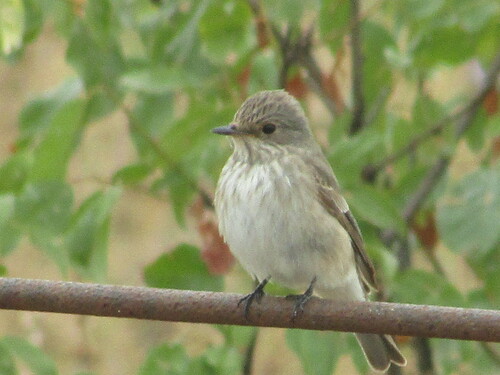 Spotted Flycatcher
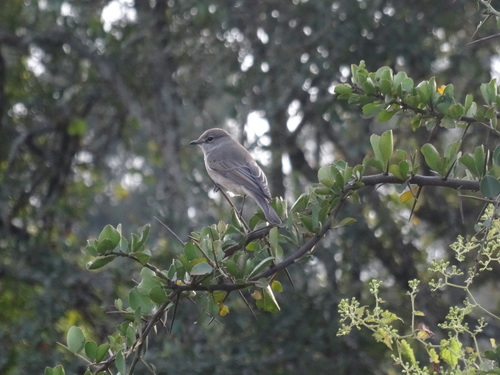 Pale Flycatcher
In short
The most reliable field mark between Spotted Flycatcher and Pale Flycatcher is the presence of bold streaks on the crown and breast in Spotted Flycatcher, which are absent in Pale Flycatcher. Juvenile Spotted Flycatchers show ochre-buff spots above and scaly spots below, while Pale Flycatcher lacks such spotting. Structurally, Spotted Flycatcher is slimmer and lighter, with a more upright posture, whereas Pale Flycatcher is heavier and bulkier. Both species can appear drab and grey-brown, but careful attention to streaking, jizz, and mass will separate them in the field.
Identification tips
- Crown and breast streaking: Look for bold brown streaks on the crown and breast—present in all ages of Spotted Flycatcher, absent in Pale Flycatcher.
- Juvenile spotting: Juvenile Spotted Flycatchers have ochre-buff spots above and scaly brown spots below. If you see a spotted juvenile, it is not Pale Flycatcher.
- Overall plumage tone: Spotted Flycatcher is grey-brown above with paler underparts and pale-edged wings and tail. Pale Flycatcher is more uniformly pale grey-brown, lacking strong contrast or pattern.
- Facial pattern: Spotted Flycatcher often shows a slightly streaked or marked face, while Pale Flycatcher appears plain-faced.
- Structure and posture: Spotted Flycatcher is slim with a long tail and wings, and typically sits very upright. Pale Flycatcher is bulkier, heavier, and less upright in posture.
- Size and build: If you get a sense of weight, Spotted Flycatcher is lighter (14–20 g) compared to the heavier Pale Flycatcher (23 g). This is subtle but can be judged with experience.
- Leg and bill color: Both have dark legs and a broad-based, pointed bill, so this is not a separator.
- Wing and tail pattern: Both species lack strong wing bars or panels, but Spotted Flycatcher has pale edges to the wings and tail, which can be visible at close range.
- Behavioral jizz: Watch for Spotted Flycatcher's repeated use of the same perch and its upright stance. Pale Flycatcher may be less consistent in returning to the same perch and appears less upright.
- Habitat and range: In Europe or temperate Asia, Pale Flycatcher is extremely unlikely. In Sub-Saharan Africa, especially outside the northern winter, Spotted Flycatcher is rare or absent.
- Seasonal context: If observed in Africa during the northern winter, check for Spotted Flycatcher among local flycatchers, but rely on streaking for confirmation.
- Vocalization: If you hear a thin, descending 'tssssseeeeeppppp', it supports Spotted Flycatcher, but silence or unfamiliar calls are not diagnostic.
- Sex differences: Both species are sexually monomorphic, so sex is not a separator.
- Subspecies variation: Paler Spotted Flycatcher subspecies may approach Pale Flycatcher in tone but retain some head and breast markings.
- Pitfalls: Both species are drab and can appear similar at a distance or in poor light; always look for streaking and juvenile spotting first, then assess jizz and size.
Size
Spotted Flycatcher is smaller and slimmer, typically weighing 14–20 g and measuring about 14.5 cm in length [wikipedia]. In contrast, Pale Flycatcher is noticeably heavier at 23 g [wikidata], and its proportions are bulkier overall. This difference is subtle in the field but can be apparent when both species are seen side by side or when judging the bird's build and weight on a perch.
Plumage
- Juveniles: Spotted Flycatcher juveniles are distinctly marked with ochre-buff spots on the upperparts and scaly brown spots on the underparts. This spotting is not present in Pale Flycatcher juveniles, which are generally plain and lack strong patterning.
- Adults: Adult Spotted Flycatchers have grey-brown upperparts, off-white underparts, and, most importantly, bold brown streaks on the crown, throat, and breast. Their wings and tail are edged with pale thin margins. Pale Flycatcher adults are much plainer, lacking the streaked crown and breast, and are overall a more uniform pale grey-brown above and paler below. Both species have dark legs and a pointed, broad-based bill, but only Spotted Flycatcher shows the diagnostic streaking.
- Subspecies: Some Spotted Flycatcher subspecies (e.g., M. s. tyrrhenica) are paler and warmer above, but still show some head and breast markings, unlike the always plain-faced Pale Flycatcher.
Behaviour
Spotted Flycatcher typically hunts from conspicuous perches with a distinctive upright posture, making frequent sallies after flying insects and often returning to the same perch. This upright, slim jizz is characteristic. Pale Flycatcher, while also a perch-hunting flycatcher, is bulkier and may not appear as upright or slim. Both species are aerial insectivores, but the Spotted Flycatcher's repeated use of the same perch and its posture are more pronounced.
Habitat
Spotted Flycatcher breeds across Europe and the Palearctic, favoring open woodland, parks, and gardens, and winters in Africa and southwestern Asia. Pale Flycatcher is native to Sub-Saharan Africa and is not found in Europe or temperate Asia. Thus, range and habitat can be a strong clue: Spotted Flycatcher in temperate zones, Pale Flycatcher in African savanna or woodland. Overlap is possible only in Africa during the northern winter.
Voice
Spotted Flycatcher's call is a thin, drawn-out, soft, high-pitched 'tssssseeeeeppppp', slightly descending. There is no vocal description provided for Pale Flycatcher, so voice is not a reliable separator unless Spotted Flycatcher's call is heard.