
Song Thrush vs Redwing
Turdus philomelos versus Turdus iliacus
Play a quiz with Song Thrush and Redwing
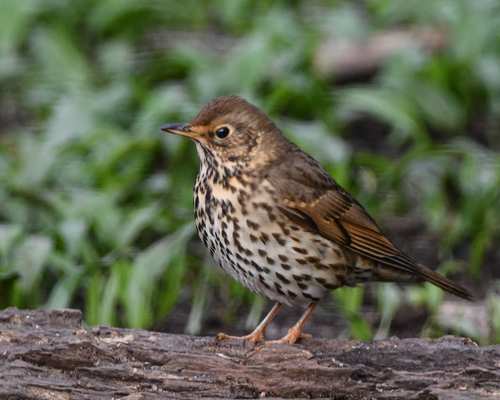 Song Thrush
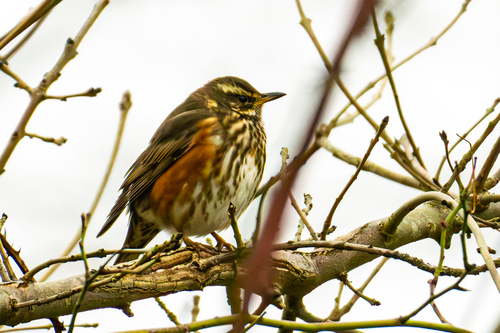 Redwing
In short
The most reliable way to separate Song Thrush from Redwing in the field is by spotting the Redwing's bold creamy white supercilium (eyebrow) and its distinctive red flanks and underwing, which are absent in Song Thrush. Song Thrush shows a warm yellow underwing and lacks any strong facial stripe, appearing plainer overall. Both species are similar in size and structure, but Redwing is slightly smaller and slimmer. Juveniles of both are similar, but the Redwing's facial and flank coloration remain the best clues. In flight, the color of the underwing is diagnostic: yellowish in Song Thrush, red in Redwing.
Identification tips
- Supercilium (eyebrow): Redwing always shows a strong creamy white stripe above the eye; Song Thrush never does. This is the single best field mark at any age or season.
- Flank and underwing color: Redwing has red flanks and a red underwing, visible at rest and especially in flight; Song Thrush shows plain flanks and a warm yellow underwing.
- Facial pattern: Redwing's face is more marked, with a pale supercilium and sometimes a pale moustachial stripe; Song Thrush's face is plain brown with no strong markings.
- Underpart spotting: Song Thrush has neat, round, well-spaced black spots on cream or buff underparts; Redwing's spots are darker, usually on a whiter background, and can appear more diffuse.
- Juvenile plumage: Juvenile Song Thrush shows buff/orange streaks on the back and wing coverts, but otherwise resembles adults; juvenile Redwing already shows the facial stripe and red flanks, though sometimes less vivid.
- Size and structure: Song Thrush is slightly heavier and can look bulkier; Redwing is slimmer and more compact, but this is subtle and not always reliable.
- Leg and bill color: Song Thrush has pink legs and a yellowish bill; Redwing's legs and bill are similar, so not a strong separator.
- Flight views: In flight, focus on the underwing color—yellowish in Song Thrush, red in Redwing. The supercilium may also be visible in flight on Redwing.
- Behavior: Redwing is more likely to be seen in flocks, especially in winter, and may appear more restless; Song Thrush is more often solitary or in pairs.
- Habitat and season: In the UK and much of western Europe, Redwing is mainly present in winter and often in open country or hedgerows; Song Thrush is present year-round in gardens and woodland.
- Song: Song Thrush sings a loud, musical, phrase-repeating song from a perch; Redwing's song is shorter, less musical, and rarely heard outside breeding grounds.
- Call: Song Thrush's call is a sharp 'tsip' or 'seep'; Redwing's is a thin, drawn-out 'seeep', especially in flight.
- Pitfalls: In poor light or at a distance, both can look similar brown above and spotted below. Always look for the supercilium and underwing color if possible.
- Overlap: Both can occur together in winter in western Europe; check every thrush in a mixed flock for the key marks.
- Notable absences: Neither species shows the white tail corners of Mistle Thrush or the black face markings of Chinese Thrush, so don't be distracted by these features.
Size
Song Thrush is slightly heavier (average 72g) than Redwing (average 62g) [wikidata]. Both are similar in length (about 20–24 cm), but Redwing can appear a bit more slender and compact, especially when perched. The difference is subtle and not always reliable in the field, especially at a distance or in poor light.
Plumage
Juveniles of both species resemble adults, but Song Thrush juveniles have buff or orange streaks on the back and wing coverts, while Redwing juveniles already show the facial stripe and red flanks, though sometimes less vividly. For all ages, Redwing is unmistakable in good light by its strong creamy white supercilium and the reddish coloration on the flanks and underwing, visible both at rest and in flight. Song Thrush lacks these features, instead showing a plain face, warm yellow underwing, and black spots on cream or buff underparts. Both species have brown upperparts and spotted underparts, but Song Thrush's spots are usually neater and rounder, while Redwing's are darker and more diffuse on a whiter background.
Behaviour
Both species forage on the ground and in low vegetation, often flicking leaves and probing for invertebrates. Redwing may appear more restless and is more likely to be seen in flocks, especially in winter, while Song Thrush is often solitary or in pairs. In flight, both have direct, purposeful flight, but Redwing may seem more agile and quick, especially when flushed from cover.
Habitat
Song Thrush breeds widely across the West Palearctic in a variety of habitats, including gardens, parks, woodlands, and hedgerows. Redwing breeds further north and east, favoring conifer and birch forests and tundra, but in winter both species can overlap in farmland, hedgerows, and woodland edges. In the UK and western Europe, Redwing is primarily a winter visitor, often in flocks, while Song Thrush is resident or a summer breeder.
Voice
Song Thrush has a loud, clear, and musical song, with repeated phrases and a varied repertoire, often mimicking other species or sounds. Its call is a sharp 'tsip' or a high 'seep' in migration, and a chook-chook alarm. Redwing's song is shorter and less musical, with whistling introductory notes and local dialects, but is rarely heard outside the breeding range. In winter, Redwing's flight call is a thin, high-pitched 'tsee' or 'seeep', softer and more drawn out than Song Thrush's call.