

Motmot

Smooth-billed Ani vs Ash-breasted Sierra Finch

Crotophaga ani versus Geospizopsis plebejus

Play a quiz with Smooth-billed Ani and Ash-breasted Sierra Finch
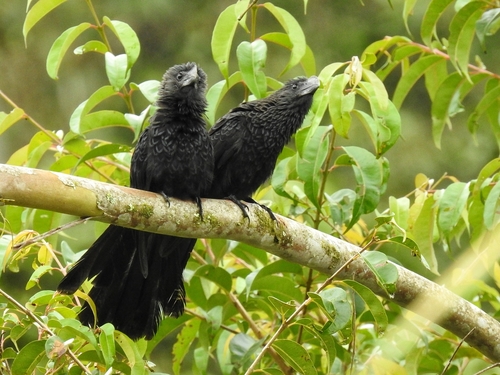
Smooth-billed Ani (Crotophaga ani) Smooth-billed Ani
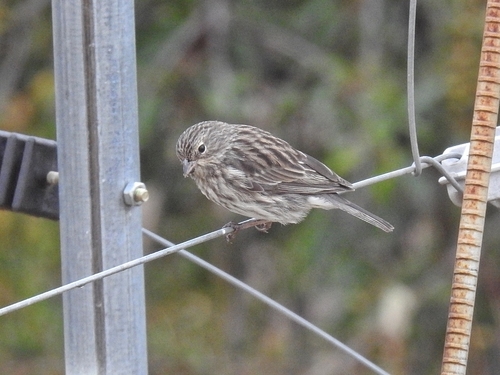
Ash-breasted Sierra Finch (Geospizopsis plebejus) Ash-breasted Sierra Finch

Media

Loading…

In short

The most reliable way to separate Smooth-billed Ani from Ash-breasted Sierra Finch is by overall structure and size: the ani is a much larger, long-tailed, glossy black bird with a huge, deep-ridged bill, while the sierra finch is a small, short-tailed, grayish finch with a normal conical bill. In flight or perched, the ani’s size and shape are unmistakable, and its all-black plumage contrasts with the sierra finch’s ash-gray and brownish tones. If only a quick view is had, focus on bill shape and tail length. Habitat and social behavior also differ strongly, with anis in noisy groups in open lowlands and sierra finches in high-altitude shrub or grassland, usually in pairs or small flocks.

Identification tips

  1. Size is the most immediate clue: Smooth-billed Ani is much larger than any sierra finch; if the bird looks crow-sized, it is not a finch. This holds for all ages and sexes.
  2. Bill shape is diagnostic: Ani has a massive, deep, ridged bill that is arched and laterally compressed; sierra finch has a short, conical, typical finch bill. Even at a distance, the ani’s bill looks oversized for its head.
  3. Tail length and shape: Ani’s tail is very long and often held cocked or drooped; sierra finch’s tail is short and never as prominent.
  4. Plumage color: Ani is glossy black all over, with no pale or brown areas; sierra finch is ash-gray with brownish or grayish upperparts and blackish wings/tail in some subspecies. No sierra finch is ever all-black or glossy.
  5. Iris color: Ani has a brown iris, which may be visible in good light; sierra finch’s eye color is not noted as distinctive.
  6. Group behavior: Ani is always in noisy, tight groups, often running or hopping together; sierra finch is usually in pairs or small flocks, not as gregarious or vocal.
  7. Flight style: Ani’s flight is weak and wobbly, often low to the ground; sierra finch has a typical finch bounding flight, more direct and agile.
  8. Feeding behavior: Ani often forages on the ground, sometimes around livestock, and may be seen picking ticks from animals; sierra finch feeds on seeds and insects in open, shrubby or grassy areas, never associating with livestock.
  9. Habitat: Ani is in lowland open country, farmland, or disturbed areas; sierra finch is in high-altitude Andean shrubland or grassland. If you are above the treeline in the Andes, you are likely seeing a sierra finch, not an ani.
  10. Vocalizations: Ani’s call is a loud, whining 'ooo-leeek,' often given in chorus; sierra finch’s calls are not described, but are unlikely to be as loud or complex.
  11. Season and sex: No significant seasonal or sexual dimorphism is noted for either species in the notes, so these are not useful for separation.
  12. Juvenile/immature plumage: No age-specific wing or flight marks are described for either species, so rely on structure and overall color for all ages.
  13. Common pitfalls: At a distance, a lone ani might be mistaken for a large blackbird or grackle, but never for a finch if size and bill are seen. A sierra finch might be confused with other small Andean finches, but never with an ani if bill and tail are checked.
  14. Context: If you see a noisy group of large, black birds in a lowland pasture, they are almost certainly anis. If you see small, grayish birds in a high Andean grassland, they are sierra finches.
  15. When in doubt: Focus on bill size and shape, tail length, and overall size—these are always reliable for separating these two species.

Size

Smooth-billed Ani is dramatically larger: about 35 cm in length and 97 g in mass, with a long tail and heavy, ridged bill. In contrast, Ash-breasted Sierra Finch is a small bird, only 11–11.5 cm long and weighing 13–17.4 g. The ani is nearly three times as long and over five times as heavy as the sierra finch. Even at a distance, the ani’s size and elongated shape stand out, while the sierra finch appears compact and sparrow-like.

Plumage

No age-specific upperwing patterns are described for either species, so focus is on overall coloration and structure. Smooth-billed Ani is glossy black all over, including wings and tail, with a brown iris. There is no seasonal or age-related variation noted. Ash-breasted Sierra Finch, depending on subspecies, is generally ash-gray above and below, with some brownish or grayish tones on the upperparts and flanks, and a blackish tail and wings in some forms. The finch never appears all-black or glossy. The ani’s uniform black plumage is unique among open-country birds of its size, while the sierra finch’s gray and brown pattern is typical of small Andean finches.

Behaviour

Smooth-billed Ani is highly gregarious, always in noisy groups, often running on the ground or perching together in the open. Its flight is weak and wobbly, and it is often seen feeding on the ground or near grazing animals. Ash-breasted Sierra Finch is usually seen in pairs or small flocks, feeding on seeds and insects in shrubby or grassy highland habitats. It has a typical finch-like, bounding flight and is not notably noisy or social beyond its small groups.

Habitat

Smooth-billed Ani is found in open and semi-open lowland country, including farmland, pastures, and disturbed areas, from southern Florida through the Caribbean and much of Central and South America. It is absent from high-altitude regions. Ash-breasted Sierra Finch is restricted to subtropical or tropical dry shrubland and high-altitude grassland in the Andes of South America (Argentina, Bolivia, Chile, Ecuador, Peru). The two species rarely, if ever, overlap in habitat: anis in lowland open country, sierra finches in high Andean zones.

Voice

Smooth-billed Ani gives a distinctive whining 'ooo-leeek' call, often repeated in chorus by groups. Ash-breasted Sierra Finch’s vocalizations are not described in the notes, but as a finch, its calls are likely to be short, simple chirps or trills, never as loud or drawn-out as the ani’s calls.

Submit a better description

Use the same sections as the comparison. Your text is published immediately.

The most reliable way to separate Smooth-billed Ani from Ash-breasted Sierra Finch is by overall structure and size: the ani is a much larger, long-tailed, glossy black bird with a huge, deep-ridged bill, while the sierra finch is a small, short-tailed, grayish finch with a normal conical bill. In flight or perched, the ani’s size and shape are unmistakable, and its all-black plumage contrasts with the sierra finch’s ash-gray and brownish tones. If only a quick view is had, focus on bill shape and tail length. Habitat and social behavior also differ strongly, with anis in noisy groups in open lowlands and sierra finches in high-altitude shrub or grassland, usually in pairs or small flocks.

  1. Size is the most immediate clue: Smooth-billed Ani is much larger than any sierra finch; if the bird looks crow-sized, it is not a finch. This holds for all ages and sexes.
  2. Bill shape is diagnostic: Ani has a massive, deep, ridged bill that is arched and laterally compressed; sierra finch has a short, conical, typical finch bill. Even at a distance, the ani’s bill looks oversized for its head.
  3. Tail length and shape: Ani’s tail is very long and often held cocked or drooped; sierra finch’s tail is short and never as prominent.
  4. Plumage color: Ani is glossy black all over, with no pale or brown areas; sierra finch is ash-gray with brownish or grayish upperparts and blackish wings/tail in some subspecies. No sierra finch is ever all-black or glossy.
  5. Iris color: Ani has a brown iris, which may be visible in good light; sierra finch’s eye color is not noted as distinctive.
  6. Group behavior: Ani is always in noisy, tight groups, often running or hopping together; sierra finch is usually in pairs or small flocks, not as gregarious or vocal.
  7. Flight style: Ani’s flight is weak and wobbly, often low to the ground; sierra finch has a typical finch bounding flight, more direct and agile.
  8. Feeding behavior: Ani often forages on the ground, sometimes around livestock, and may be seen picking ticks from animals; sierra finch feeds on seeds and insects in open, shrubby or grassy areas, never associating with livestock.
  9. Habitat: Ani is in lowland open country, farmland, or disturbed areas; sierra finch is in high-altitude Andean shrubland or grassland. If you are above the treeline in the Andes, you are likely seeing a sierra finch, not an ani.
  10. Vocalizations: Ani’s call is a loud, whining 'ooo-leeek,' often given in chorus; sierra finch’s calls are not described, but are unlikely to be as loud or complex.
  11. Season and sex: No significant seasonal or sexual dimorphism is noted for either species in the notes, so these are not useful for separation.
  12. Juvenile/immature plumage: No age-specific wing or flight marks are described for either species, so rely on structure and overall color for all ages.
  13. Common pitfalls: At a distance, a lone ani might be mistaken for a large blackbird or grackle, but never for a finch if size and bill are seen. A sierra finch might be confused with other small Andean finches, but never with an ani if bill and tail are checked.
  14. Context: If you see a noisy group of large, black birds in a lowland pasture, they are almost certainly anis. If you see small, grayish birds in a high Andean grassland, they are sierra finches.
  15. When in doubt: Focus on bill size and shape, tail length, and overall size—these are always reliable for separating these two species.

Smooth-billed Ani is dramatically larger: about 35 cm in length and 97 g in mass, with a long tail and heavy, ridged bill. In contrast, Ash-breasted Sierra Finch is a small bird, only 11–11.5 cm long and weighing 13–17.4 g. The ani is nearly three times as long and over five times as heavy as the sierra finch. Even at a distance, the ani’s size and elongated shape stand out, while the sierra finch appears compact and sparrow-like.

No age-specific upperwing patterns are described for either species, so focus is on overall coloration and structure. Smooth-billed Ani is glossy black all over, including wings and tail, with a brown iris. There is no seasonal or age-related variation noted. Ash-breasted Sierra Finch, depending on subspecies, is generally ash-gray above and below, with some brownish or grayish tones on the upperparts and flanks, and a blackish tail and wings in some forms. The finch never appears all-black or glossy. The ani’s uniform black plumage is unique among open-country birds of its size, while the sierra finch’s gray and brown pattern is typical of small Andean finches.

Smooth-billed Ani is highly gregarious, always in noisy groups, often running on the ground or perching together in the open. Its flight is weak and wobbly, and it is often seen feeding on the ground or near grazing animals. Ash-breasted Sierra Finch is usually seen in pairs or small flocks, feeding on seeds and insects in shrubby or grassy highland habitats. It has a typical finch-like, bounding flight and is not notably noisy or social beyond its small groups.

Smooth-billed Ani is found in open and semi-open lowland country, including farmland, pastures, and disturbed areas, from southern Florida through the Caribbean and much of Central and South America. It is absent from high-altitude regions. Ash-breasted Sierra Finch is restricted to subtropical or tropical dry shrubland and high-altitude grassland in the Andes of South America (Argentina, Bolivia, Chile, Ecuador, Peru). The two species rarely, if ever, overlap in habitat: anis in lowland open country, sierra finches in high Andean zones.

Smooth-billed Ani gives a distinctive whining 'ooo-leeek' call, often repeated in chorus by groups. Ash-breasted Sierra Finch’s vocalizations are not described in the notes, but as a finch, its calls are likely to be short, simple chirps or trills, never as loud or drawn-out as the ani’s calls.

Discard your changes?

You have unsaved edits. If you leave now, those changes will be lost.

Smooth-billed Ani · Ash-breasted Sierra Finch · My Tricky Birds