

anu-preto vs ash-breasted sierra finch
Crotophaga ani versus Geospizopsis plebejus
Jogue um quiz com anu-preto e ash-breasted sierra finch
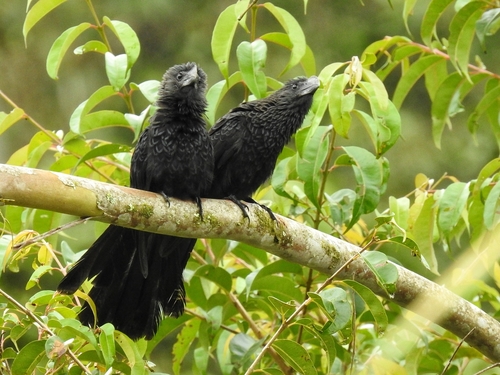 anu-preto
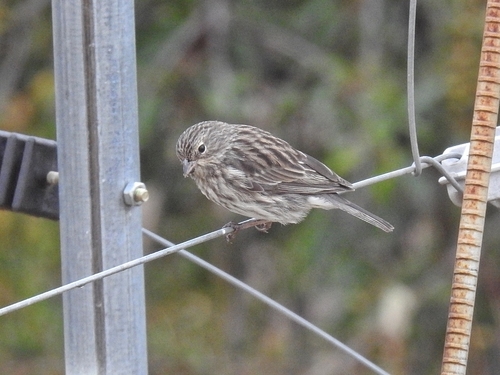 ash-breasted sierra finch
Em resumo
A maneira mais confiável de separar o anu-preto do ash-breasted sierra finch é pela estrutura e tamanho geral: o anu é uma ave muito maior, de cauda longa, preta e brilhante, com um bico enorme e profundo, enquanto o sierra finch é um pequeno tentilhão de cauda curta, acinzentado, com um bico cônico normal. Em voo ou empoleirado, o tamanho e a forma do anu são inconfundíveis, e seu plumagem totalmente preta contrasta com os tons acinzentados e marrons do sierra finch. Se apenas uma visão rápida for obtida, concentre-se na forma do bico e no comprimento da cauda. O habitat e o comportamento social também diferem fortemente, com anis em grupos barulhentos em planícies abertas e sierra finches em arbustos ou gramados de alta altitude, geralmente em pares ou pequenos bandos.
Dicas de identificação
- O tamanho é a pista mais imediata: O anu-preto é muito maior do que qualquer sierra finch; se a ave parecer do tamanho de um corvo, não é um tentilhão. Isso se aplica a todas as idades e sexos.
- A forma do bico é diagnóstica: O anu tem um bico maciço, profundo e estriado que é arqueado e comprimido lateralmente; o sierra finch tem um bico curto, cônico, típico de tentilhão. Mesmo à distância, o bico do anu parece grande demais para sua cabeça.
- Comprimento e forma da cauda: A cauda do anu é muito longa e frequentemente mantida ereta ou caída; a cauda do sierra finch é curta e nunca tão proeminente.
- Cor do plumagem: O anu é preto brilhante por toda parte, sem áreas claras ou marrons; o sierra finch é acinzentado com partes superiores marrons ou acinzentadas e asas/cauda escuras em algumas subespécies. Nenhum sierra finch é totalmente preto ou brilhante.
- Cor da íris: O anu tem uma íris marrom, que pode ser visível em boa luz; a cor dos olhos do sierra finch não é notada como distintiva.
- Comportamento em grupo: O anu está sempre em grupos barulhentos e apertados, frequentemente correndo ou pulando juntos; o sierra finch geralmente está em pares ou pequenos bandos, não tão gregários ou vocais.
- Estilo de voo: O voo do anu é fraco e instável, frequentemente baixo ao chão; o sierra finch tem um voo típico de tentilhão, mais direto e ágil.
- Comportamento alimentar: O anu frequentemente forrageia no chão, às vezes ao redor de gado, e pode ser visto removendo carrapatos de animais; o sierra finch se alimenta de sementes e insetos em áreas abertas, arbustivas ou gramadas, nunca se associando a gado.
- Habitat: O anu está em áreas abertas de baixa altitude, terras agrícolas ou áreas perturbadas; o sierra finch está em arbustos secos ou gramados de alta altitude nos Andes. Se você estiver acima da linha das árvores nos Andes, provavelmente está vendo um sierra finch, não um anu.
- Vocalizações: O chamado do anu é um alto e choroso 'ooo-leeek', frequentemente dado em coro; os chamados do sierra finch não são descritos, mas é improvável que sejam tão altos ou complexos.
- Estação e sexo: Nenhum dimorfismo sexual ou sazonal significativo é notado para nenhuma das espécies nas notas, então esses não são úteis para separação.
- Plumagem juvenil/imatura: Nenhum padrão específico de asa ou marca de voo é descrito para nenhuma das espécies, então confie na estrutura e na cor geral para todas as idades.
- Armadilhas comuns: À distância, um único anu pode ser confundido com um grande pássaro preto ou gralha, mas nunca com um tentilhão se o tamanho e o bico forem vistos. Um sierra finch pode ser confundido com outros pequenos tentilhões andinos, mas nunca com um anu se o bico e a cauda forem verificados.
- Contexto: Se você ver um grupo barulhento de grandes pássaros pretos em um pasto de baixa altitude, eles são quase certamente anis. Se você ver pequenos pássaros acinzentados em um gramado alto andino, eles são sierra finches.
- Quando em dúvida: Concentre-se no tamanho e na forma do bico, no comprimento da cauda e no tamanho geral—esses são sempre confiáveis para separar essas duas espécies.
Tamanho
O anu-preto é dramaticamente maior: cerca de 35 cm de comprimento e 97 g de massa, com uma cauda longa e um bico pesado e estriado. Em contraste, o ash-breasted sierra finch é um pequeno pássaro, medindo apenas 11–11,5 cm de comprimento e pesando 13–17,4 g. O anu é quase três vezes mais longo e mais de cinco vezes mais pesado que o sierra finch. Mesmo à distância, o tamanho e a forma alongada do anu se destacam, enquanto o sierra finch parece compacto e semelhante a um pardal.
Plumagem
Nenhum padrão de asa específico para a idade é descrito para nenhuma das espécies, então o foco está na coloração e estrutura geral. O anu-preto é preto brilhante por toda parte, incluindo asas e cauda, com uma íris marrom. Não há variação sazonal ou relacionada à idade notada. O ash-breasted sierra finch, dependendo da subespécie, é geralmente acinzentado acima e abaixo, com alguns tons marrons ou acinzentados nas partes superiores e flancos, e uma cauda e asas escuras em algumas formas. O tentilhão nunca aparece totalmente preto ou brilhante. O plumagem uniforme e preta do anu é única entre as aves de campo abertas de seu tamanho, enquanto o padrão cinza e marrom do sierra finch é típico de pequenos tentilhões andinos.
Comportamento
O anu-preto é altamente gregário, sempre em grupos barulhentos, frequentemente correndo no chão ou empoleirando-se juntos em áreas abertas. Seu voo é fraco e instável, e frequentemente é visto se alimentando no chão ou perto de animais pastando. O ash-breasted sierra finch é geralmente visto em pares ou pequenos bandos, se alimentando de sementes e insetos em habitats arbustivos ou gramados de alta altitude. Ele tem um voo típico de tentilhão, saltitante, e não é notavelmente barulhento ou social além de seus pequenos grupos.
Habitat
O anu-preto é encontrado em áreas abertas e semi-abertas de baixa altitude, incluindo terras agrícolas, pastagens e áreas perturbadas, desde o sul da Flórida através do Caribe e grande parte da América Central e do Sul. Ele está ausente de regiões de alta altitude. O ash-breasted sierra finch é restrito a arbustos secos subtropicais ou tropicais e gramados de alta altitude nos Andes da América do Sul (Argentina, Bolívia, Chile, Equador, Peru). As duas espécies raramente, se é que alguma vez, se sobrepõem em habitat: anis em áreas abertas de baixa altitude, sierra finches em zonas andinas altas.
Voz
O anu-preto emite um chamado característico de choroso 'ooo-leeek', frequentemente repetido em coro por grupos. As vocalizações do ash-breasted sierra finch não são descritas nas notas, mas como um tentilhão, seus chamados provavelmente são curtos, simples piados ou trilos, nunca tão altos ou prolongados quanto os chamados do anu.
anu-preto · ash-breasted sierra finch · Minhas aves difíceis