

Siberian Thrush vs Blue-and-white Flycatcher
Geokichla sibirica versus Cyanoptila cyanomelana
Play a quiz with Siberian Thrush and Blue-and-white Flycatcher
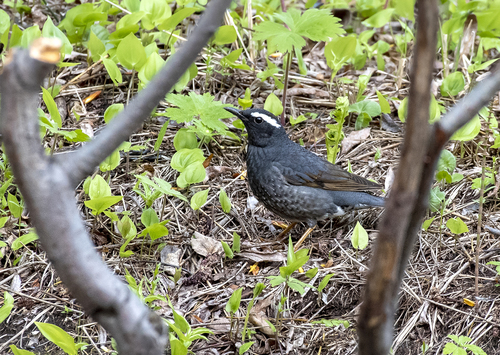 Siberian Thrush
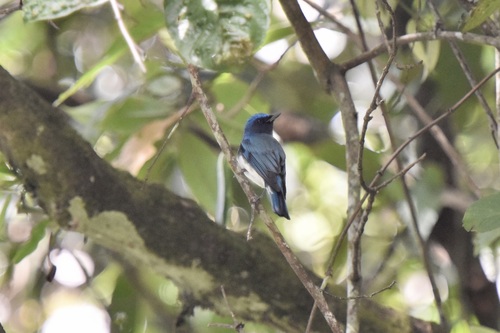 Blue-and-white Flycatcher
In short
The most reliable field mark to separate Siberian Thrush from Blue-and-white Flycatcher is the bold black band on the white underwings of Siberian Thrush, visible in flight in both sexes and all ages—a feature the flycatcher completely lacks. If you see a bird in flight with this underwing pattern, it's a Siberian Thrush. Perched, adult male Blue-and-white Flycatchers are deep cobalt blue above and white below, while Siberian Thrush males are much darker overall. Females and immatures of both species can be brownish, but the flycatcher is smaller, slimmer, and lacks the Siberian Thrush's distinctive underwing pattern. Structure and size also help: Siberian Thrush is much heavier and bulkier than the flycatcher.
Identification tips
- Underwing pattern in flight (all ages, both sexes): If you see a bold black band on white underwings, it's Siberian Thrush. Blue-and-white Flycatcher never shows this pattern.
- Size and structure: Siberian Thrush is much bulkier and heavier than Blue-and-white Flycatcher. The thrush has a robust, thrush-like build; the flycatcher is slim, small-headed, and delicate.
- Adult male plumage: Blue-and-white Flycatcher males are deep cobalt blue above with clean white underparts and black on the face and breast. Siberian Thrush males are dark overall, lacking blue tones.
- Female/immature confusion: Both can appear brownish, but female/immature flycatchers are smaller, slimmer, and have a smaller head. Siberian Thrush females are bulkier and still show the underwing pattern in flight.
- Tail pattern: Blue-and-white Flycatcher shows a white patch at the base of the outer tail feathers, especially when fanned. Siberian Thrush lacks this but has the underwing band.
- Perched posture: Flycatchers often perch upright and alert, sometimes flicking wings and tail. Thrushes perch more horizontally and appear heavier.
- Foraging behavior: Siberian Thrush is usually seen on the ground, flipping leaves or moving through undergrowth. Blue-and-white Flycatcher is more often seen sallying from perches in the mid- to upper canopy.
- Habitat use: In migration, both may occur in wooded areas, but Siberian Thrush prefers dense, low cover, while the flycatcher is more arboreal.
- Vocalizations: If you hear a short, melancholic whistle, it's likely Blue-and-white Flycatcher. Siberian Thrush's song is not described here.
- Sex/age pitfalls: Immature male flycatchers may show blue wings but are otherwise brownish—do not mistake them for female thrushes; check size and underwing in flight.
- White below: Both can show white underparts, but only the flycatcher has a clean, crisp white belly in adult males; the thrush is darker and more uniform.
- Bill shape: Not described in detail, but flycatchers generally have a finer, more pointed bill than the stouter thrush.
- Direct comparison: If seen together, the size, structure, and underwing pattern make separation straightforward. Alone, focus on underwing in flight and overall jizz.
- Seasonal context: Both are migrants and may overlap in time and place, so do not rely on season alone.
- Fallback: If in doubt and you cannot see the underwing or size, look for a combination of structural and behavioral clues, but beware of brown immatures of both species.
Size
Siberian Thrush is nearly three times as heavy as Blue-and-white Flycatcher (65g vs 23g) [wikidata]. In the field, Siberian Thrush appears robust and thrush-like, similar in bulk to a Song Thrush, while Blue-and-white Flycatcher is noticeably smaller, slimmer, and more delicate, typical of flycatchers. The flycatcher also has a proportionally smaller head and a lighter, more agile build. If you see both together, the size difference is obvious, but beware of lone birds—use other marks as well.
Plumage
- Flight/underwing (all ages, both sexes): Siberian Thrush shows a bold black band on white underwings, visible in flight—a unique and diagnostic feature among thrushes and not present in Blue-and-white Flycatcher at any age [wikipedia].
- Adult males (perched): Blue-and-white Flycatcher males are deep cobalt blue above, with black on the face and upper breast, and clean white below. Siberian Thrush males are much darker overall, with no blue tones and a more uniform appearance.
- Females/immatures: Female and young Blue-and-white Flycatchers are gray-brown above and pale below, with a smaller head and more delicate look. Immature males have blue wings but are otherwise brownish. Siberian Thrush females are also brownish but bulkier, and still show the black-and-white underwing in flight. The flycatcher may show a white patch at the base of the outer tail feathers, but not on the underwing.
- Tail: Blue-and-white Flycatcher has a prominent white patch at the base of the outer tail feathers, especially visible when fanned; Siberian Thrush lacks this.
Behaviour
Siberian Thrush behaves like a typical thrush: forages on the ground, often in leaf litter, and moves with strong, direct flights. Blue-and-white Flycatcher is more arboreal, sallying from perches to catch insects and often flicking its wings and tail. In flight, Siberian Thrush appears heavier and more direct, while the flycatcher is lighter and more agile, with quick, darting movements. Perched, the flycatcher may appear upright and alert, while the thrush is more horizontal and robust.
Habitat
Both species can occur in similar broad-leaved or mixed forests during migration, but Siberian Thrush is more likely to be found foraging on the ground, especially in dense undergrowth or near forest edges. Blue-and-white Flycatcher prefers higher perches in the mid- to upper canopy and is less often seen on the ground. During migration, both may overlap in wooded parks or gardens, but their microhabitat preferences differ: look for the thrush low and the flycatcher higher up.
Voice
Blue-and-white Flycatcher has a short, melancholic series of whistles, which can be diagnostic if heard. Siberian Thrush's vocalizations are not described in the provided notes, so do not rely on voice alone unless the flycatcher is singing.
Siberian Thrush · Blue-and-white Flycatcher · My Tricky Birds