

Motmot

Shore Plover vs Pied Cormorant

Thinornis novaeseelandiae versus Phalacrocorax varius

Play a quiz with Shore Plover and Pied Cormorant
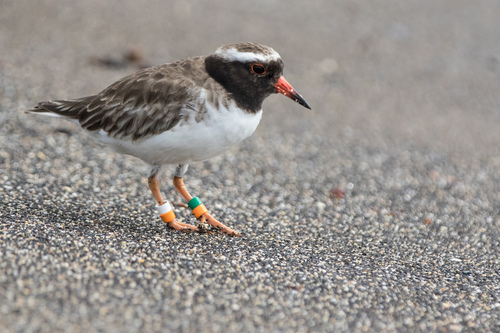
Shore Plover (Thinornis novaeseelandiae) Shore Plover
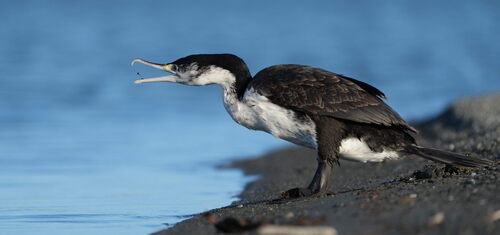
Pied Cormorant (Phalacrocorax varius) Pied Cormorant

Media

Loading…

In short

The most reliable field mark between Shore Plover and Pied Cormorant is overall structure and size: Pied Cormorant is a massive, long-necked, long-billed waterbird, while Shore Plover is a tiny, compact shorebird with a short bill and bright orange-red legs. In flight or at rest, the cormorant’s black-and-white plumage and large hooked bill are unmistakable compared to the plover’s brown upperparts, white underparts, and distinctive head pattern. Juvenile Shore Plovers show a strongly scaly brown back, while Pied Cormorant juveniles resemble adults in pattern but may be duller. Even at a distance, the cormorant’s habit of perching upright and spreading its wings is never matched by the plover. Confusion is most likely with distant or poorly seen birds, but size, shape, and habitat are nearly always decisive.

Identification tips

  1. Size is decisive: Pied Cormorant is over 30 times heavier and three times as long as Shore Plover. If the bird is anything larger than a starling, it cannot be a Shore Plover.
  2. Structure and jizz: Cormorant is long-necked, long-bodied, and sits upright; plover is compact, short-necked, and crouches low.
  3. Bill shape and color: Cormorant has a large, hooked, pale bill; plover has a short, straight, orange-red bill with a dark tip (brighter in males).
  4. Legs and feet: Cormorant’s legs and feet are black and webbed for swimming; plover’s legs are bright orange-red and unwebbed, adapted for running.
  5. Plumage pattern (adult): Cormorant is sharply black above and white below, with a white face and neck and a yellow patch at the base of the bill. Plovers are brown above, white below, with a white band below a brown cap and a dark (male) or brown (female) face mask.
  6. Juvenile plumage: Young Shore Plovers have a strongly scaly brown back and lack the full face mask; juvenile cormorants look like adults but may be duller in contrast.
  7. Wing pattern in flight: Cormorant shows black upperwings with no white bar; plover shows a narrow white wingbar along the full length of the brown wing.
  8. Tail pattern: Plovers have a brown tail with white sides; cormorants have a black tail with no white.
  9. Behavior: Cormorant often perches upright and spreads wings to dry; plover never does this, instead running quickly along the ground.
  10. Habitat: Plovers are found only on predator-free offshore islands, hugging the shoreline; cormorants are widespread on coasts, estuaries, and large inland waters.
  11. Flight style: Cormorant flies with neck outstretched in strong, direct flight; plover flies low and fast with rapid wingbeats and short glides.
  12. Context: If seen swimming or diving, it is a cormorant; plovers do not swim.
  13. Bill and leg color at distance: The plover’s orange-red legs and bill can be a giveaway in good light; cormorant’s are always dark.
  14. Head pattern: The plover’s white head band and dark mask are unique; cormorant has a plain white face with a yellow patch at the bill base.
  15. Abundance: Shore Plover is one of the world’s rarest shorebirds, so any bird seen outside a known site is almost certainly not this species.

Size

Pied Cormorant is vastly larger than Shore Plover: adult cormorants weigh around 1955 g and stand 65–85 cm tall with a 110–130 cm wingspan [wikidata][wikipedia], while Shore Plovers are tiny at just 61 g and about 20 cm long [wikidata][wikipedia]. The cormorant is over 30 times heavier and more than three times as long. In the field, this translates to a cormorant being goose-sized, towering over the sparrow-sized plover. Even at a distance, the cormorant’s long neck and heavy build are obvious, while the plover is compact and low to the ground.

Plumage

Juvenile Shore Plovers have a brown back with broad pale fringes, creating a strong scaly effect, and lack the full dark face mask of adults. Adults show a brown upper side, white underparts, a white head band below a brown cap, and a black (male) or brown (female) mask. The wings have a narrow white wingbar and the tail is brown with white sides. Pied Cormorant of all ages is sharply black above and white below, with a white face and neck, black cap, and a small yellow patch between bill and eye. The cormorant’s wings are black above, lacking any white wingbar. The cormorant’s bill is large and hooked, while the plover’s is short and orange-red with a dark tip. The cormorant’s legs and feet are black and webbed; the plover’s are bright orange-red and unwebbed. In flight, the cormorant shows a strong black-and-white contrast, while the plover appears brown above with a narrow white wingbar.

Behaviour

Pied Cormorant is often seen perched upright on rocks, posts, or trees, frequently spreading its wings to dry after diving. It swims low in the water, dives for fish, and may form loose flocks. Shore Plover is a terrestrial shorebird, running quickly on the ground, feeding on invertebrates along rocky or sandy shores, and rarely if ever swims. It nests under cover or in burrows, unlike the cormorant, which nests in trees or on open ledges. The cormorant’s flight is strong, direct, and often high, with neck outstretched; the plover’s flight is low, rapid, and fluttery, with short glides.

Habitat

Shore Plovers are now restricted to a few predator-free offshore islands in New Zealand, always close to rocky or sandy shorelines, and never far from cover. They are extremely rare and local. Pied Cormorant is widespread and common along coasts, estuaries, and large inland waters throughout New Zealand and Australia, often seen on open water, perched on rocks, or flying over large distances. The two species rarely overlap closely in habitat: plovers stick to open shorelines, cormorants to water and prominent perches.

Submit a better description

Use the same sections as the comparison. Your text is published immediately.

The most reliable field mark between Shore Plover and Pied Cormorant is overall structure and size: Pied Cormorant is a massive, long-necked, long-billed waterbird, while Shore Plover is a tiny, compact shorebird with a short bill and bright orange-red legs. In flight or at rest, the cormorant’s black-and-white plumage and large hooked bill are unmistakable compared to the plover’s brown upperparts, white underparts, and distinctive head pattern. Juvenile Shore Plovers show a strongly scaly brown back, while Pied Cormorant juveniles resemble adults in pattern but may be duller. Even at a distance, the cormorant’s habit of perching upright and spreading its wings is never matched by the plover. Confusion is most likely with distant or poorly seen birds, but size, shape, and habitat are nearly always decisive.

  1. Size is decisive: Pied Cormorant is over 30 times heavier and three times as long as Shore Plover. If the bird is anything larger than a starling, it cannot be a Shore Plover.
  2. Structure and jizz: Cormorant is long-necked, long-bodied, and sits upright; plover is compact, short-necked, and crouches low.
  3. Bill shape and color: Cormorant has a large, hooked, pale bill; plover has a short, straight, orange-red bill with a dark tip (brighter in males).
  4. Legs and feet: Cormorant’s legs and feet are black and webbed for swimming; plover’s legs are bright orange-red and unwebbed, adapted for running.
  5. Plumage pattern (adult): Cormorant is sharply black above and white below, with a white face and neck and a yellow patch at the base of the bill. Plovers are brown above, white below, with a white band below a brown cap and a dark (male) or brown (female) face mask.
  6. Juvenile plumage: Young Shore Plovers have a strongly scaly brown back and lack the full face mask; juvenile cormorants look like adults but may be duller in contrast.
  7. Wing pattern in flight: Cormorant shows black upperwings with no white bar; plover shows a narrow white wingbar along the full length of the brown wing.
  8. Tail pattern: Plovers have a brown tail with white sides; cormorants have a black tail with no white.
  9. Behavior: Cormorant often perches upright and spreads wings to dry; plover never does this, instead running quickly along the ground.
  10. Habitat: Plovers are found only on predator-free offshore islands, hugging the shoreline; cormorants are widespread on coasts, estuaries, and large inland waters.
  11. Flight style: Cormorant flies with neck outstretched in strong, direct flight; plover flies low and fast with rapid wingbeats and short glides.
  12. Context: If seen swimming or diving, it is a cormorant; plovers do not swim.
  13. Bill and leg color at distance: The plover’s orange-red legs and bill can be a giveaway in good light; cormorant’s are always dark.
  14. Head pattern: The plover’s white head band and dark mask are unique; cormorant has a plain white face with a yellow patch at the bill base.
  15. Abundance: Shore Plover is one of the world’s rarest shorebirds, so any bird seen outside a known site is almost certainly not this species.

Pied Cormorant is vastly larger than Shore Plover: adult cormorants weigh around 1955 g and stand 65–85 cm tall with a 110–130 cm wingspan [wikidata][wikipedia], while Shore Plovers are tiny at just 61 g and about 20 cm long [wikidata][wikipedia]. The cormorant is over 30 times heavier and more than three times as long. In the field, this translates to a cormorant being goose-sized, towering over the sparrow-sized plover. Even at a distance, the cormorant’s long neck and heavy build are obvious, while the plover is compact and low to the ground.

Juvenile Shore Plovers have a brown back with broad pale fringes, creating a strong scaly effect, and lack the full dark face mask of adults. Adults show a brown upper side, white underparts, a white head band below a brown cap, and a black (male) or brown (female) mask. The wings have a narrow white wingbar and the tail is brown with white sides. Pied Cormorant of all ages is sharply black above and white below, with a white face and neck, black cap, and a small yellow patch between bill and eye. The cormorant’s wings are black above, lacking any white wingbar. The cormorant’s bill is large and hooked, while the plover’s is short and orange-red with a dark tip. The cormorant’s legs and feet are black and webbed; the plover’s are bright orange-red and unwebbed. In flight, the cormorant shows a strong black-and-white contrast, while the plover appears brown above with a narrow white wingbar.

Pied Cormorant is often seen perched upright on rocks, posts, or trees, frequently spreading its wings to dry after diving. It swims low in the water, dives for fish, and may form loose flocks. Shore Plover is a terrestrial shorebird, running quickly on the ground, feeding on invertebrates along rocky or sandy shores, and rarely if ever swims. It nests under cover or in burrows, unlike the cormorant, which nests in trees or on open ledges. The cormorant’s flight is strong, direct, and often high, with neck outstretched; the plover’s flight is low, rapid, and fluttery, with short glides.

Shore Plovers are now restricted to a few predator-free offshore islands in New Zealand, always close to rocky or sandy shorelines, and never far from cover. They are extremely rare and local. Pied Cormorant is widespread and common along coasts, estuaries, and large inland waters throughout New Zealand and Australia, often seen on open water, perched on rocks, or flying over large distances. The two species rarely overlap closely in habitat: plovers stick to open shorelines, cormorants to water and prominent perches.

Discard your changes?

You have unsaved edits. If you leave now, those changes will be lost.

Shore Plover · Pied Cormorant · My Tricky Birds