

Motmot

ノドグロチドリ 対 マミジロウ

Thinornis novaeseelandiae 対 Phalacrocorax varius

ノドグロチドリとマミジロウのクイズ
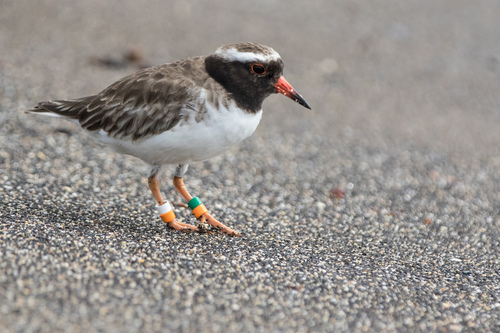
ノドグロチドリ (Thinornis novaeseelandiae) ノドグロチドリ
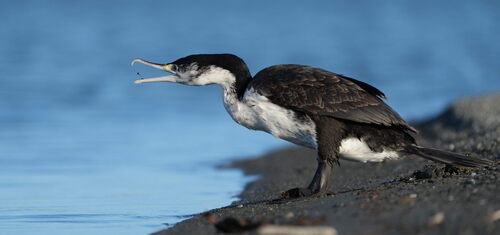
マミジロウ (Phalacrocorax varius) マミジロウ

メディア

読み込み中…

要点

ノドグロチドリとマミジロウの最も信頼できるフィールドマークは、全体の構造とサイズです:マミジロウは巨大で、長い首と長いくちばしを持つ水鳥ですが、ノドグロチドリは小さく、コンパクトな shorebird で、短いくちばしと明るいオレンジ色の脚を持っています。飛んでいるときや休んでいるとき、マミジロウの白黒の羽毛と大きなくちばしは、ノドグロチドリの茶色の上面、白い下面、そして特徴的な頭の模様と比べて明確です。幼鳥のノドグロチドリは、強く鱗状の茶色の背中を示し、マミジロウの幼鳥は模様が大人に似ていますが、色が鈍い場合があります。遠くからでも、マミジロウの直立して止まっている習性と翼を広げる行動は、ノドグロチドリには決して見られません。混乱は、遠くにいるか、見えにくい鳥で最も起こりやすいですが、サイズ、形、そして生息地はほぼ常に決定的です。

識別のコツ

  1. サイズが決定的:マミジロウはノドグロチドリの30倍以上の重さがあり、長さは3倍です。もしその鳥がスターリングよりも大きければ、それはノドグロチドリではありません。
  2. 構造と印象:マミジロウは長い首、長い体を持ち、直立して座ります;ノドグロチドリはコンパクトで、短い首を持ち、低くしゃがみます。
  3. くちばしの形と色:マミジロウは大きく、フック状の淡いくちばしを持っています;ノドグロチドリは短く、まっすぐで、オレンジ色のくちばしに暗い先端があります(オスはより明るいです)。
  4. 脚と足:マミジロウの脚と足は黒く、水泳用の水かきがあります;ノドグロチドリの脚は明るいオレンジ色で、水かきがなく、走るために適応しています。
  5. 羽毛の模様(成鳥):マミジロウは上面が鋭く黒く、下面が白く、白い顔と首、そしてくちばしの根元に黄色の斑点があります。ノドグロチドリは上面が茶色、下面が白く、茶色の帽子の下に白い帯があり、暗い(オス)または茶色の(メス)顔のマスクがあります。
  6. 幼鳥の羽毛:若いノドグロチドリは強く鱗状の茶色の背中を持ち、完全な顔のマスクがありません;幼鳥のマミジロウは大人に似ていますが、コントラストが鈍い場合があります。
  7. 飛行中の翼の模様:マミジロウは白いバーがない黒い上翼を示します;ノドグロチドリは茶色の翼の全長にわたって狭い白い翼帯を示します。
  8. 尾の模様:ノドグロチドリは白い側面を持つ茶色の尾を持っています;マミジロウは白がない黒い尾を持っています。
  9. 行動:マミジロウはしばしば直立して止まり、翼を広げて乾かします;ノドグロチドリはこれを決してせず、代わりに地面を素早く走ります。
  10. 生息地:ノドグロチドリは捕食者のいない沖合の島にのみ生息し、海岸に寄り添っています;マミジロウはニュージーランドとオーストラリアの海岸、河口、大きな内陸水域に広く分布しています。
  11. 飛行スタイル:マミジロウは首を伸ばして強く、直接的に飛びます;ノドグロチドリは低く、速く、急速な羽ばたきと短い滑空で飛びます。
  12. 文脈:泳いでいるか潜っているのが見られた場合、それはマミジロウです;ノドグロチドリは泳ぎません。
  13. 遠くからのくちばしと脚の色:ノドグロチドリのオレンジ色の脚とくちばしは、良い光の中で目立つことがあります;マミジロウのものは常に暗いです。
  14. 頭の模様:ノドグロチドリの白い頭の帯と暗いマスクはユニークです;マミジロウはくちばしの根元に黄色の斑点がある平坦な白い顔を持っています。
  15. 豊富さ:ノドグロチドリは世界で最も希少な shorebird の一つであり、知られている場所の外で見られる鳥はほぼ確実にこの種ではありません。

大きさ

マミジロウはノドグロチドリよりもはるかに大きいです:成鳥のマミジロウは約1955gで、65〜85cmの高さで、110〜130cmの翼幅を持っています [wikidata][wikipedia]。一方、ノドグロチドリはわずか61gで、約20cmの長さです [wikidata][wikipedia]。マミジロウは30倍以上重く、長さも3倍以上です。フィールドでは、これはマミジロウがガチョウサイズで、スズメサイズのノドグロチドリを圧倒することを意味します。遠くからでも、マミジロウの長い首と重い体は明らかであり、ノドグロチドリはコンパクトで地面に低くあります。

羽色

幼鳥のノドグロチドリは、広い淡い縁取りのある茶色の背中を持ち、強い鱗状の効果を生み出し、成鳥の完全な暗い顔のマスクがありません。成鳥は茶色の上面、白い下面、茶色の帽子の下に白い頭の帯、そして黒(オス)または茶色(メス)のマスクを示します。翼には狭い白い翼帯があり、尾は白い側面を持つ茶色です。すべての年齢のマミジロウは、上面が鋭く黒く、下面が白く、白い顔と首、黒い帽子、そしてくちばしと目の間に小さな黄色の斑点があります。マミジロウの翼は上面が黒く、白い翼帯はありません。マミジロウのくちばしは大きくフック状で、ノドグロチドリのくちばしは短くオレンジ色で暗い先端があります。マミジロウの脚と足は黒く水かきがあります;ノドグロチドリの脚は明るいオレンジ色で水かきがありません。飛行中、マミジロウは強い白黒のコントラストを示し、ノドグロチドリは上面が茶色で狭い白い翼帯を持っています。

行動

マミジロウはしばしば岩、柱、または木に直立して止まり、潜った後に翼を広げて乾かします。水中を低く泳ぎ、魚を捕まえ、緩い群れを形成することがあります。ノドグロチドリは陸生の shorebird で、地面を素早く走り、岩や砂の海岸で無脊椎動物を食べ、泳ぐことはほとんどありません。マミジロウとは異なり、ノドグロチドリは覆いの下や巣穴に巣を作ります。マミジロウの飛行は強く、直接的で、しばしば高く、首を伸ばしています;ノドグロチドリの飛行は低く、急速で、ひらひらしており、短い滑空を伴います。

生息環境

ノドグロチドリは現在、ニュージーランドの捕食者のいない沖合の島に制限されており、常に岩や砂の海岸に近く、覆いから遠くありません。彼らは非常に希少で、地域的です。マミジロウはニュージーランドとオーストラリアの海岸、河口、大きな内陸水域に広く分布し、しばしば開けた水面で見られ、岩に止まったり、大きな距離を飛んだりします。これらの2種は生息地で密接に重なることはほとんどありません:ノドグロチドリは開けた海岸に固執し、マミジロウは水と目立つ止まり木に固執します。

より良い説明を送る

比較と同じ項目を使ってください。文章はすぐに公開されます。

The most reliable field mark between Shore Plover and Pied Cormorant is overall structure and size: Pied Cormorant is a massive, long-necked, long-billed waterbird, while Shore Plover is a tiny, compact shorebird with a short bill and bright orange-red legs. In flight or at rest, the cormorant’s black-and-white plumage and large hooked bill are unmistakable compared to the plover’s brown upperparts, white underparts, and distinctive head pattern. Juvenile Shore Plovers show a strongly scaly brown back, while Pied Cormorant juveniles resemble adults in pattern but may be duller. Even at a distance, the cormorant’s habit of perching upright and spreading its wings is never matched by the plover. Confusion is most likely with distant or poorly seen birds, but size, shape, and habitat are nearly always decisive.

  1. Size is decisive: Pied Cormorant is over 30 times heavier and three times as long as Shore Plover. If the bird is anything larger than a starling, it cannot be a Shore Plover.
  2. Structure and jizz: Cormorant is long-necked, long-bodied, and sits upright; plover is compact, short-necked, and crouches low.
  3. Bill shape and color: Cormorant has a large, hooked, pale bill; plover has a short, straight, orange-red bill with a dark tip (brighter in males).
  4. Legs and feet: Cormorant’s legs and feet are black and webbed for swimming; plover’s legs are bright orange-red and unwebbed, adapted for running.
  5. Plumage pattern (adult): Cormorant is sharply black above and white below, with a white face and neck and a yellow patch at the base of the bill. Plovers are brown above, white below, with a white band below a brown cap and a dark (male) or brown (female) face mask.
  6. Juvenile plumage: Young Shore Plovers have a strongly scaly brown back and lack the full face mask; juvenile cormorants look like adults but may be duller in contrast.
  7. Wing pattern in flight: Cormorant shows black upperwings with no white bar; plover shows a narrow white wingbar along the full length of the brown wing.
  8. Tail pattern: Plovers have a brown tail with white sides; cormorants have a black tail with no white.
  9. Behavior: Cormorant often perches upright and spreads wings to dry; plover never does this, instead running quickly along the ground.
  10. Habitat: Plovers are found only on predator-free offshore islands, hugging the shoreline; cormorants are widespread on coasts, estuaries, and large inland waters.
  11. Flight style: Cormorant flies with neck outstretched in strong, direct flight; plover flies low and fast with rapid wingbeats and short glides.
  12. Context: If seen swimming or diving, it is a cormorant; plovers do not swim.
  13. Bill and leg color at distance: The plover’s orange-red legs and bill can be a giveaway in good light; cormorant’s are always dark.
  14. Head pattern: The plover’s white head band and dark mask are unique; cormorant has a plain white face with a yellow patch at the bill base.
  15. Abundance: Shore Plover is one of the world’s rarest shorebirds, so any bird seen outside a known site is almost certainly not this species.

Pied Cormorant is vastly larger than Shore Plover: adult cormorants weigh around 1955 g and stand 65–85 cm tall with a 110–130 cm wingspan [wikidata][wikipedia], while Shore Plovers are tiny at just 61 g and about 20 cm long [wikidata][wikipedia]. The cormorant is over 30 times heavier and more than three times as long. In the field, this translates to a cormorant being goose-sized, towering over the sparrow-sized plover. Even at a distance, the cormorant’s long neck and heavy build are obvious, while the plover is compact and low to the ground.

Juvenile Shore Plovers have a brown back with broad pale fringes, creating a strong scaly effect, and lack the full dark face mask of adults. Adults show a brown upper side, white underparts, a white head band below a brown cap, and a black (male) or brown (female) mask. The wings have a narrow white wingbar and the tail is brown with white sides. Pied Cormorant of all ages is sharply black above and white below, with a white face and neck, black cap, and a small yellow patch between bill and eye. The cormorant’s wings are black above, lacking any white wingbar. The cormorant’s bill is large and hooked, while the plover’s is short and orange-red with a dark tip. The cormorant’s legs and feet are black and webbed; the plover’s are bright orange-red and unwebbed. In flight, the cormorant shows a strong black-and-white contrast, while the plover appears brown above with a narrow white wingbar.

Pied Cormorant is often seen perched upright on rocks, posts, or trees, frequently spreading its wings to dry after diving. It swims low in the water, dives for fish, and may form loose flocks. Shore Plover is a terrestrial shorebird, running quickly on the ground, feeding on invertebrates along rocky or sandy shores, and rarely if ever swims. It nests under cover or in burrows, unlike the cormorant, which nests in trees or on open ledges. The cormorant’s flight is strong, direct, and often high, with neck outstretched; the plover’s flight is low, rapid, and fluttery, with short glides.

Shore Plovers are now restricted to a few predator-free offshore islands in New Zealand, always close to rocky or sandy shorelines, and never far from cover. They are extremely rare and local. Pied Cormorant is widespread and common along coasts, estuaries, and large inland waters throughout New Zealand and Australia, often seen on open water, perched on rocks, or flying over large distances. The two species rarely overlap closely in habitat: plovers stick to open shorelines, cormorants to water and prominent perches.

変更を破棄しますか?

保存していない編集があります。今離れると失われます。

ノドグロチドリ · マミジロウ · 苦手な鳥