

Motmot

Rufous-bellied Heron vs Malagasy Pond Heron

Ardeola rufiventris versus Ardeola idae

Play a quiz with Rufous-bellied Heron and Malagasy Pond Heron
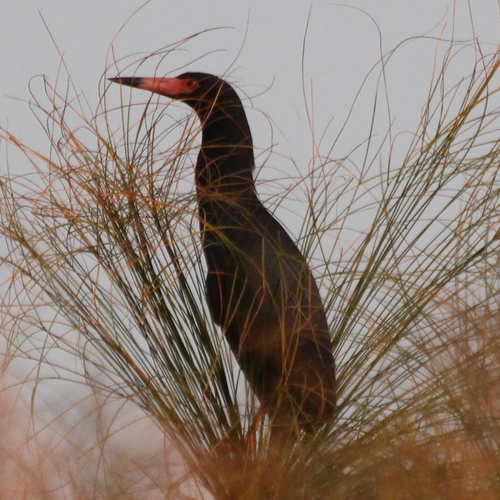
Rufous-bellied Heron (Ardeola rufiventris) Rufous-bellied Heron

Malagasy Pond Heron (Ardeola idae) Malagasy Pond Heron

Media

Loading…

In short

The most reliable way to separate Rufous-bellied Heron from Malagasy Pond Heron is by their adult flight plumage: Rufous-bellied Heron shows a dark grey head, back, and breast with a rufous belly and underwings, while Malagasy Pond Heron in non-breeding and juvenile plumage has mostly brownish upperparts and strikingly white flight feathers. Juvenile Malagasy Pond Herons are paler and browner than adult Rufous-bellied Herons, which darken with age. In breeding season, Malagasy Pond Heron adults become almost entirely white, unlike the consistently dark-and-rufous Rufous-bellied. Structure and size are similar, but bill and leg color, as well as posture and habitat, can help when plumage is ambiguous.

Identification tips

  1. Juvenile/immature in flight: Look for white flight feathers—Malagasy Pond Heron (all ages except chick) shows prominent white wings in flight, while Rufous-bellied Heron (all ages) has dark wings and body with no white.
  2. Adult breeding plumage: Malagasy Pond Heron becomes almost entirely snow white with a deep blue bill during breeding; Rufous-bellied Heron is never white, always showing dark grey and rufous.
  3. Adult non-breeding plumage: Malagasy Pond Heron is brownish with buff and black crown, but still shows white flight feathers; Rufous-bellied Heron remains dark grey with rufous belly and underparts.
  4. Bill color: In non-breeding Malagasy Pond Heron, the bill is green with a black tip; in juveniles, it's dull orange. Rufous-bellied Heron has a less distinctive bill (not described as green or orange in sources).
  5. Leg color: Rufous-bellied Heron has bright yellow legs and feet, especially striking in flight against the dark underbody. Malagasy Pond Heron's leg color is not highlighted as distinctive.
  6. Posture: Rufous-bellied Heron often adopts a horizontal, bittern-like hiding posture; Malagasy Pond Heron is less described in this way.
  7. Eye color: Juvenile Malagasy Pond Heron has pale green eyes; adult has yellow. Rufous-bellied Heron eye color is not specified as a field mark.
  8. Tail and underparts: Rufous-bellied Heron shows rufous belly, wings, and tail, contrasting with dark grey upperparts; Malagasy Pond Heron lacks this rufous coloration at all ages.
  9. Habitat context: In southern Africa, a small dark heron in vegetated wetlands is likely Rufous-bellied. In Madagascar or Seychelles, or in mixed heron colonies with many white birds, suspect Malagasy Pond Heron.
  10. Seasonal context: If seen in Africa outside the breeding season (May–October), a white or brownish heron with white wings is likely Malagasy Pond Heron. Rufous-bellied Heron is resident and does not show seasonal white plumage.
  11. Colony behavior: Malagasy Pond Heron breeds colonially, often with other herons; Rufous-bellied Heron is more solitary or in small groups.
  12. Abundance: Malagasy Pond Heron is rare and endangered, with very low numbers in Africa; Rufous-bellied Heron is more widespread in southern Africa.
  13. Pitfall: Do not confuse a pale juvenile Rufous-bellied Heron for Malagasy Pond Heron—check for white in the wings (present only in Malagasy Pond Heron) and rufous belly (only in Rufous-bellied).
  14. Pitfall: Adult Malagasy Pond Heron in breeding plumage is all white and could be mistaken for other white herons, but never for Rufous-bellied Heron, which is always dark and rufous.
  15. When in doubt: Focus on wing color in flight and belly color when perched; these are the most reliable field marks across all ages.

Size

Both species are small pond herons of similar build. Malagasy Pond Heron is slightly larger, reaching 45–50 cm in height and weighing 250–350 g, but this difference is subtle and not reliable in the field unless both are side by side. There is little sexual dimorphism in either species. Rufous-bellied Heron is described as a small heron but lacks detailed measurements in the sources; expect them to be close in size, with Malagasy Pond Heron possibly appearing a bit bulkier.

Plumage

Juvenile and non-breeding Malagasy Pond Herons have brown upperparts with prominent white flight feathers; in flight, the white wings contrast sharply with the rest of the body. Their bills are dull orange and eyes pale green at this stage. Rufous-bellied Heron juveniles are paler and browner than adults but lack the extensive white in the wings, instead showing a more uniform dark grey with rufous belly and underparts, even in young birds. As they mature, Rufous-bellied Herons darken, with adults showing a consistent dark grey head, back, and breast, and rufous belly, wings, and tail. In flight, their bright yellow legs and feet stand out against the dark underbody. Adult Malagasy Pond Herons in breeding plumage are almost entirely snow white with a deep blue bill, which is never matched by Rufous-bellied Heron. Out of breeding, Malagasy Pond Herons revert to brownish with buff and black on the crown and back, but always keep the white flight feathers, which is the key contrast. Rufous-bellied Heron never shows white wings or all-white plumage.

Behaviour

Rufous-bellied Heron is a skulker, often adopting a bittern-like horizontal posture when hiding and typically forages in well-vegetated wetlands or shallow water, usually on the landward side. It is mostly sedentary, moving only locally with seasonal floods. Malagasy Pond Heron is highly territorial and migratory, breeding in Madagascar and wintering in eastern Africa. It nests colonially but forages alone or in very small numbers, often well inland from nesting sites. Territorial disputes are rare in Africa due to low numbers. Both species are inconspicuous, but Malagasy Pond Heron is more likely to be found in mixed-species colonies during breeding.

Habitat

Rufous-bellied Heron is found in southern Africa, favoring well-vegetated wetlands, floodplains, and shallow waters, usually on the landward side. Malagasy Pond Heron breeds in Madagascar, Réunion, and Seychelles, and winters in eastern mainland Africa. During breeding, it uses reedbeds and coastal islands, often in mixed heron colonies, but forages inland. Outside breeding, it is rare and local in Africa, often seen singly or in pairs. Overlap is possible in eastern Africa during the Malagasy Pond Heron's non-breeding season, but Rufous-bellied Heron is more widespread and regular in southern Africa.

Submit a better description

Use the same sections as the comparison. Your text is published immediately.

The most reliable way to separate Rufous-bellied Heron from Malagasy Pond Heron is by their adult flight plumage: Rufous-bellied Heron shows a dark grey head, back, and breast with a rufous belly and underwings, while Malagasy Pond Heron in non-breeding and juvenile plumage has mostly brownish upperparts and strikingly white flight feathers. Juvenile Malagasy Pond Herons are paler and browner than adult Rufous-bellied Herons, which darken with age. In breeding season, Malagasy Pond Heron adults become almost entirely white, unlike the consistently dark-and-rufous Rufous-bellied. Structure and size are similar, but bill and leg color, as well as posture and habitat, can help when plumage is ambiguous.

  1. Juvenile/immature in flight: Look for white flight feathers—Malagasy Pond Heron (all ages except chick) shows prominent white wings in flight, while Rufous-bellied Heron (all ages) has dark wings and body with no white.
  2. Adult breeding plumage: Malagasy Pond Heron becomes almost entirely snow white with a deep blue bill during breeding; Rufous-bellied Heron is never white, always showing dark grey and rufous.
  3. Adult non-breeding plumage: Malagasy Pond Heron is brownish with buff and black crown, but still shows white flight feathers; Rufous-bellied Heron remains dark grey with rufous belly and underparts.
  4. Bill color: In non-breeding Malagasy Pond Heron, the bill is green with a black tip; in juveniles, it's dull orange. Rufous-bellied Heron has a less distinctive bill (not described as green or orange in sources).
  5. Leg color: Rufous-bellied Heron has bright yellow legs and feet, especially striking in flight against the dark underbody. Malagasy Pond Heron's leg color is not highlighted as distinctive.
  6. Posture: Rufous-bellied Heron often adopts a horizontal, bittern-like hiding posture; Malagasy Pond Heron is less described in this way.
  7. Eye color: Juvenile Malagasy Pond Heron has pale green eyes; adult has yellow. Rufous-bellied Heron eye color is not specified as a field mark.
  8. Tail and underparts: Rufous-bellied Heron shows rufous belly, wings, and tail, contrasting with dark grey upperparts; Malagasy Pond Heron lacks this rufous coloration at all ages.
  9. Habitat context: In southern Africa, a small dark heron in vegetated wetlands is likely Rufous-bellied. In Madagascar or Seychelles, or in mixed heron colonies with many white birds, suspect Malagasy Pond Heron.
  10. Seasonal context: If seen in Africa outside the breeding season (May–October), a white or brownish heron with white wings is likely Malagasy Pond Heron. Rufous-bellied Heron is resident and does not show seasonal white plumage.
  11. Colony behavior: Malagasy Pond Heron breeds colonially, often with other herons; Rufous-bellied Heron is more solitary or in small groups.
  12. Abundance: Malagasy Pond Heron is rare and endangered, with very low numbers in Africa; Rufous-bellied Heron is more widespread in southern Africa.
  13. Pitfall: Do not confuse a pale juvenile Rufous-bellied Heron for Malagasy Pond Heron—check for white in the wings (present only in Malagasy Pond Heron) and rufous belly (only in Rufous-bellied).
  14. Pitfall: Adult Malagasy Pond Heron in breeding plumage is all white and could be mistaken for other white herons, but never for Rufous-bellied Heron, which is always dark and rufous.
  15. When in doubt: Focus on wing color in flight and belly color when perched; these are the most reliable field marks across all ages.

Both species are small pond herons of similar build. Malagasy Pond Heron is slightly larger, reaching 45–50 cm in height and weighing 250–350 g, but this difference is subtle and not reliable in the field unless both are side by side. There is little sexual dimorphism in either species. Rufous-bellied Heron is described as a small heron but lacks detailed measurements in the sources; expect them to be close in size, with Malagasy Pond Heron possibly appearing a bit bulkier.

Juvenile and non-breeding Malagasy Pond Herons have brown upperparts with prominent white flight feathers; in flight, the white wings contrast sharply with the rest of the body. Their bills are dull orange and eyes pale green at this stage. Rufous-bellied Heron juveniles are paler and browner than adults but lack the extensive white in the wings, instead showing a more uniform dark grey with rufous belly and underparts, even in young birds. As they mature, Rufous-bellied Herons darken, with adults showing a consistent dark grey head, back, and breast, and rufous belly, wings, and tail. In flight, their bright yellow legs and feet stand out against the dark underbody. Adult Malagasy Pond Herons in breeding plumage are almost entirely snow white with a deep blue bill, which is never matched by Rufous-bellied Heron. Out of breeding, Malagasy Pond Herons revert to brownish with buff and black on the crown and back, but always keep the white flight feathers, which is the key contrast. Rufous-bellied Heron never shows white wings or all-white plumage.

Rufous-bellied Heron is a skulker, often adopting a bittern-like horizontal posture when hiding and typically forages in well-vegetated wetlands or shallow water, usually on the landward side. It is mostly sedentary, moving only locally with seasonal floods. Malagasy Pond Heron is highly territorial and migratory, breeding in Madagascar and wintering in eastern Africa. It nests colonially but forages alone or in very small numbers, often well inland from nesting sites. Territorial disputes are rare in Africa due to low numbers. Both species are inconspicuous, but Malagasy Pond Heron is more likely to be found in mixed-species colonies during breeding.

Rufous-bellied Heron is found in southern Africa, favoring well-vegetated wetlands, floodplains, and shallow waters, usually on the landward side. Malagasy Pond Heron breeds in Madagascar, Réunion, and Seychelles, and winters in eastern mainland Africa. During breeding, it uses reedbeds and coastal islands, often in mixed heron colonies, but forages inland. Outside breeding, it is rare and local in Africa, often seen singly or in pairs. Overlap is possible in eastern Africa during the Malagasy Pond Heron's non-breeding season, but Rufous-bellied Heron is more widespread and regular in southern Africa.

Discard your changes?

You have unsaved edits. If you leave now, those changes will be lost.

Rufous-bellied Heron · Malagasy Pond Heron · My Tricky Birds