

Motmot

Rose-throated Becard vs Black-and-yellow Silky-flycatcher

Pachyramphus aglaiae versus Phainoptila melanoxantha

Play a quiz with Rose-throated Becard and Black-and-yellow Silky-flycatcher
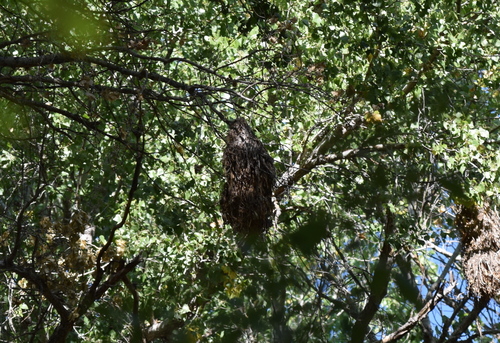
Rose-throated Becard (Pachyramphus aglaiae) Rose-throated Becard
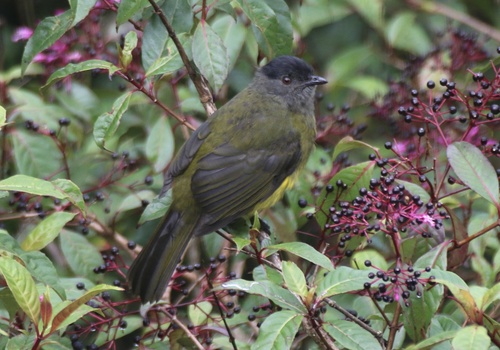
Black-and-yellow Silky-flycatcher (Phainoptila melanoxantha) Black-and-yellow Silky-flycatcher

Media

Loading…

In short

The most reliable field mark to separate Rose-throated Becard from Black-and-yellow Silky-flycatcher is overall plumage color and pattern: the silky-flycatcher is boldly black and yellow with a bright yellow rump and underparts, while the becard is much more subdued, with males being mostly gray and females brownish. Juvenile and female becards can be especially confusing, but the silky-flycatcher’s heavy body, rounded tail, and striking color blocks are unique. In flight or perched, the silky-flycatcher’s yellow rump and underparts stand out, while becards always lack this contrast. Both species occur in Central America, but the becard ranges farther north and is found in lower elevations compared to the highland-restricted silky-flycatcher.

Identification tips

  1. Yellow vs. No Yellow: Black-and-yellow Silky-flycatcher always shows bright yellow on the rump, flanks, undertail, and (in some subspecies) the entire breast. Rose-throated Becard never shows yellow in any plumage or age.
  2. Head and Crest: Male becards have a dark gray to black crown or crest, often raised, while silky-flycatchers have a smooth, rounded black head (male) or sooty gray (female/juvenile) without a crest.
  3. Throat Patch: Adult male becards may show a rose-colored throat patch, but this is variable and may be absent, especially in rainforest populations. Silky-flycatchers have a black (male) or dark gray (female/juvenile) throat, never pink or rose.
  4. Body Structure: Silky-flycatchers are heavy-bodied with a wide, rounded tail and compact look. Becards are large-headed but slimmer, with a less robust body and a more typical flycatcher jizz.
  5. Female/Juvenile Confusion: Female and juvenile becards are rusty brown above and pale buffy below, lacking any yellow or olive tones. Female/juvenile silky-flycatchers are sooty gray to olive-green with yellow flanks and undertail, and never show rusty or buffy tones.
  6. Breast and Belly: Silky-flycatcher males have an olive-green breast with a gray center (nominate) or all yellow (P. m. parkeri), and bright yellow lower belly. Becards are always gray (male) or pale buffy (female/immature) below, never olive or yellow.
  7. Tail: Silky-flycatcher’s tail is wide and rounded, while becard’s tail is more typical and not especially broad or rounded.
  8. Flight Appearance: No distinctive upperwing pattern is described for either, but the silky-flycatcher’s yellow rump and underparts are visible in flight, while becard remains plain gray or brown.
  9. Bill: Both have black bills, but the silky-flycatcher’s is proportionally smaller relative to head size; becard’s bill is heavier and more hooked, typical of tityrids.
  10. Iris Color: Silky-flycatcher has a dull red iris, which may be seen at close range; becard’s iris color is not described but is not noted as distinctive.
  11. Habitat: If seen in highland forest in Costa Rica or Panama, especially above 1500 m, expect silky-flycatcher; in lowlands or north of Costa Rica, expect becard.
  12. Voice: Becard’s short, sliding, two-noted song or piercing cry is distinctive; silky-flycatcher’s voice is not described here.
  13. Nest Structure: If you observe a large, domed, hanging nest, it is likely a becard; a mossy cup nest low in a sapling is silky-flycatcher.
  14. Sexual Dimorphism: Both species show sexual dimorphism, but the silky-flycatcher’s male is much more strikingly colored than the female, while becard’s male is only subtly different from the female except for the throat patch.
  15. Seasonal Variation: Becard males in drier areas are paler gray, while rainforest birds are darker and may lack the rose throat; silky-flycatcher’s color pattern is consistent across seasons but varies slightly by subspecies.

Size

Both species are medium-sized passerines, but the Black-and-yellow Silky-flycatcher is notably heavier-bodied (average mass ~58–60 g [wikidata]) and appears bulkier and more robust, with a wide rounded tail. The Rose-throated Becard’s mass is not provided, but it is generally described as medium-sized and large-headed, not as heavy-set as the silky-flycatcher. In the field, the silky-flycatcher may look stouter and more compact, while the becard has a proportionally larger head and a more slender appearance.

Plumage

Juvenile and female plumages are the most likely to be confused. Juvenile Black-and-yellow Silky-flycatchers resemble adult females but are duller, with a sooty crown, faint dusky streaks on the breast, and olive-green flanks. Adult females have a dark gray hindneck, face, and throat blending to a dark olive-green breast, with yellow flanks and undertail coverts. In contrast, female Rose-throated Becards are mostly rusty brown above and pale buffy below, lacking any yellow. Young male becards may show a variable pink throat patch but otherwise resemble females. Adult male becards are mostly gray with a dark crest and, in some populations, a rose-colored throat patch (which may be absent in rainforest birds). The silky-flycatcher male is unmistakable: black head, back, wings, and tail, with a bright yellow rump and underparts, and an olive-green breast. The silky-flycatcher’s yellow is always present and extensive, while becards never show yellow in any plumage. No distinctive upperwing pattern is described for either species in flight, but the silky-flycatcher's color blocks remain obvious even when flying.

Behaviour

Rose-throated Becards are typically solitary or in pairs, sometimes loosely associating with other species near nests. They are vigilant and territorial, especially males during breeding. Black-and-yellow Silky-flycatchers are heavy-bodied and may appear more sluggish or deliberate in movement. Their behavior is less described, but their structure suggests a less acrobatic, more perch-and-sally style. Both species build suspended nests, but the becard’s is a large, domed, hanging structure, while the silky-flycatcher’s is a mossy cup placed lower in saplings or trees.

Habitat

Rose-throated Becard occurs from the southern US through Central America to western Panama, mostly in lowland and foothill forests, including drier and wetter areas. Black-and-yellow Silky-flycatcher is restricted to highland forests of Costa Rica and Panama. If you are in the highlands of Costa Rica or Panama, the silky-flycatcher is likely; elsewhere, especially north of Costa Rica or at lower elevations, it is almost certainly a becard.

Voice

Rose-throated Becard’s song is a short, sliding, two-noted phrase, and one of its calls is a unique piercing cry. No vocalizations are described for the Black-and-yellow Silky-flycatcher in the provided notes, so voice is only useful for confirming becard when the song or call is heard.

Submit a better description

Use the same sections as the comparison. Your text is published immediately.

The most reliable field mark to separate Rose-throated Becard from Black-and-yellow Silky-flycatcher is overall plumage color and pattern: the silky-flycatcher is boldly black and yellow with a bright yellow rump and underparts, while the becard is much more subdued, with males being mostly gray and females brownish. Juvenile and female becards can be especially confusing, but the silky-flycatcher’s heavy body, rounded tail, and striking color blocks are unique. In flight or perched, the silky-flycatcher’s yellow rump and underparts stand out, while becards always lack this contrast. Both species occur in Central America, but the becard ranges farther north and is found in lower elevations compared to the highland-restricted silky-flycatcher.

  1. Yellow vs. No Yellow: Black-and-yellow Silky-flycatcher always shows bright yellow on the rump, flanks, undertail, and (in some subspecies) the entire breast. Rose-throated Becard never shows yellow in any plumage or age.
  2. Head and Crest: Male becards have a dark gray to black crown or crest, often raised, while silky-flycatchers have a smooth, rounded black head (male) or sooty gray (female/juvenile) without a crest.
  3. Throat Patch: Adult male becards may show a rose-colored throat patch, but this is variable and may be absent, especially in rainforest populations. Silky-flycatchers have a black (male) or dark gray (female/juvenile) throat, never pink or rose.
  4. Body Structure: Silky-flycatchers are heavy-bodied with a wide, rounded tail and compact look. Becards are large-headed but slimmer, with a less robust body and a more typical flycatcher jizz.
  5. Female/Juvenile Confusion: Female and juvenile becards are rusty brown above and pale buffy below, lacking any yellow or olive tones. Female/juvenile silky-flycatchers are sooty gray to olive-green with yellow flanks and undertail, and never show rusty or buffy tones.
  6. Breast and Belly: Silky-flycatcher males have an olive-green breast with a gray center (nominate) or all yellow (P. m. parkeri), and bright yellow lower belly. Becards are always gray (male) or pale buffy (female/immature) below, never olive or yellow.
  7. Tail: Silky-flycatcher’s tail is wide and rounded, while becard’s tail is more typical and not especially broad or rounded.
  8. Flight Appearance: No distinctive upperwing pattern is described for either, but the silky-flycatcher’s yellow rump and underparts are visible in flight, while becard remains plain gray or brown.
  9. Bill: Both have black bills, but the silky-flycatcher’s is proportionally smaller relative to head size; becard’s bill is heavier and more hooked, typical of tityrids.
  10. Iris Color: Silky-flycatcher has a dull red iris, which may be seen at close range; becard’s iris color is not described but is not noted as distinctive.
  11. Habitat: If seen in highland forest in Costa Rica or Panama, especially above 1500 m, expect silky-flycatcher; in lowlands or north of Costa Rica, expect becard.
  12. Voice: Becard’s short, sliding, two-noted song or piercing cry is distinctive; silky-flycatcher’s voice is not described here.
  13. Nest Structure: If you observe a large, domed, hanging nest, it is likely a becard; a mossy cup nest low in a sapling is silky-flycatcher.
  14. Sexual Dimorphism: Both species show sexual dimorphism, but the silky-flycatcher’s male is much more strikingly colored than the female, while becard’s male is only subtly different from the female except for the throat patch.
  15. Seasonal Variation: Becard males in drier areas are paler gray, while rainforest birds are darker and may lack the rose throat; silky-flycatcher’s color pattern is consistent across seasons but varies slightly by subspecies.

Both species are medium-sized passerines, but the Black-and-yellow Silky-flycatcher is notably heavier-bodied (average mass ~58–60 g [wikidata]) and appears bulkier and more robust, with a wide rounded tail. The Rose-throated Becard’s mass is not provided, but it is generally described as medium-sized and large-headed, not as heavy-set as the silky-flycatcher. In the field, the silky-flycatcher may look stouter and more compact, while the becard has a proportionally larger head and a more slender appearance.

Juvenile and female plumages are the most likely to be confused. Juvenile Black-and-yellow Silky-flycatchers resemble adult females but are duller, with a sooty crown, faint dusky streaks on the breast, and olive-green flanks. Adult females have a dark gray hindneck, face, and throat blending to a dark olive-green breast, with yellow flanks and undertail coverts. In contrast, female Rose-throated Becards are mostly rusty brown above and pale buffy below, lacking any yellow. Young male becards may show a variable pink throat patch but otherwise resemble females. Adult male becards are mostly gray with a dark crest and, in some populations, a rose-colored throat patch (which may be absent in rainforest birds). The silky-flycatcher male is unmistakable: black head, back, wings, and tail, with a bright yellow rump and underparts, and an olive-green breast. The silky-flycatcher’s yellow is always present and extensive, while becards never show yellow in any plumage. No distinctive upperwing pattern is described for either species in flight, but the silky-flycatcher's color blocks remain obvious even when flying.

Rose-throated Becards are typically solitary or in pairs, sometimes loosely associating with other species near nests. They are vigilant and territorial, especially males during breeding. Black-and-yellow Silky-flycatchers are heavy-bodied and may appear more sluggish or deliberate in movement. Their behavior is less described, but their structure suggests a less acrobatic, more perch-and-sally style. Both species build suspended nests, but the becard’s is a large, domed, hanging structure, while the silky-flycatcher’s is a mossy cup placed lower in saplings or trees.

Rose-throated Becard occurs from the southern US through Central America to western Panama, mostly in lowland and foothill forests, including drier and wetter areas. Black-and-yellow Silky-flycatcher is restricted to highland forests of Costa Rica and Panama. If you are in the highlands of Costa Rica or Panama, the silky-flycatcher is likely; elsewhere, especially north of Costa Rica or at lower elevations, it is almost certainly a becard.

Rose-throated Becard’s song is a short, sliding, two-noted phrase, and one of its calls is a unique piercing cry. No vocalizations are described for the Black-and-yellow Silky-flycatcher in the provided notes, so voice is only useful for confirming becard when the song or call is heard.

Discard your changes?

You have unsaved edits. If you leave now, those changes will be lost.

Rose-throated Becard · Black-and-yellow Silky-flycatcher · My Tricky Birds