

Black-and-yellow Silky-flycatcher
Phainoptila melanoxantha
Silky-flycatchers (Ptiliogonatidae) · Passeriformes · Silky-flycatchers
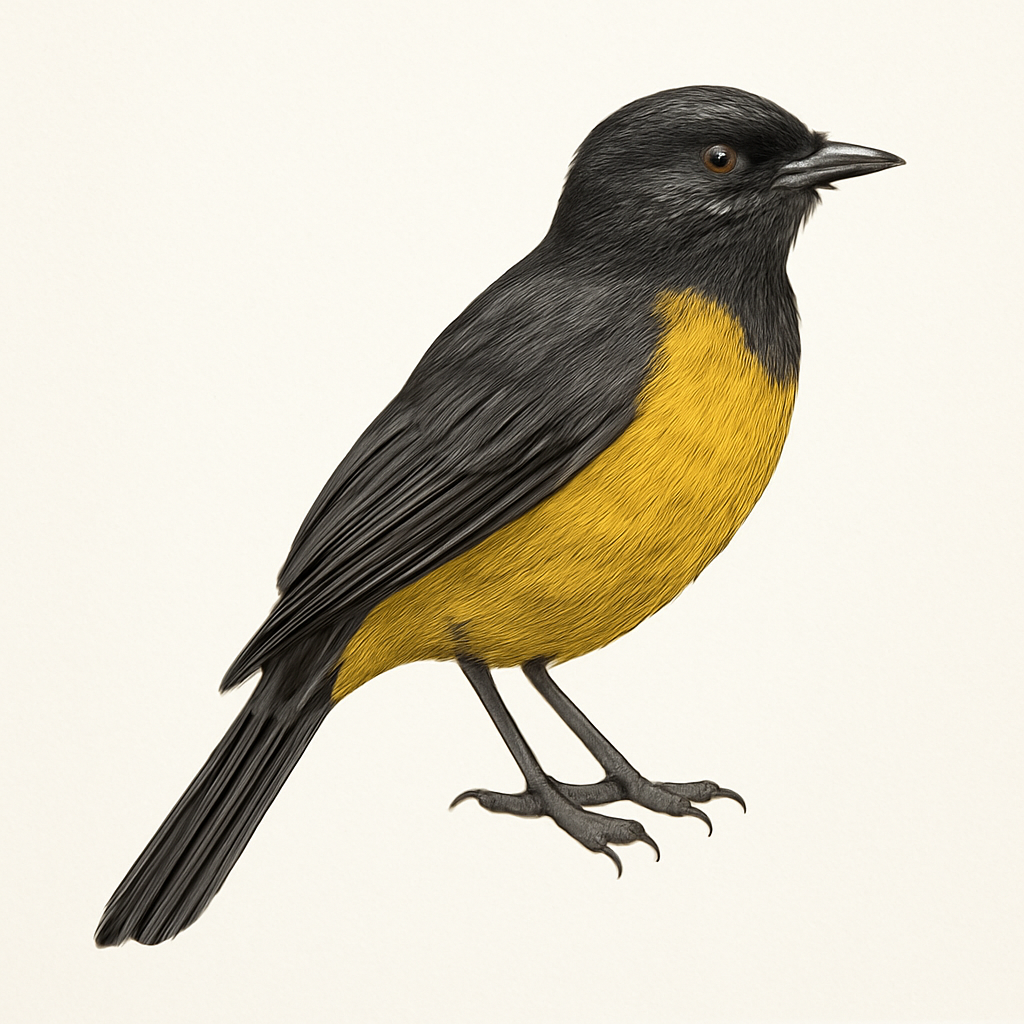
Play a quiz with Black-and-yellow Silky-flycatcher and similar species
View all photos, video and sound
Review needed
Motmot is a community-driven project, and many photos still need a human check. If you know this bird, you can help by reviewing its images.
O-o, we ran out of AI credits. I develop Motmot in my spare time, and there is no funding behind it right now. If you would like to help it grow, write to me at info@motmot.club.
How to identify Black-and-yellow Silky-flycatcher
Writing identification notes…
This looks up identification notes in open sources, then asks the model to write them. It can take a minute.
Log in to generate identification notes for this bird.
Often mixed up with
In quizzes, players most often confuse Black-and-yellow Silky-flycatcher with these birds—either this species was picked by mistake, or the other way around.
| Species | Mix-ups |
|---|---|
| Cedar Waxwing Bombycilla cedrorum | 2 |
| Long-tailed Silky-flycatcher Ptiliogonys caudatus | 2 |
| Rose-throated Becard Pachyramphus aglaiae | 1 |
| Black-bellied Wren Pheugopedius fasciatoventris | 1 |
| Clay-coloured Thrush Turdus grayi | 1 |
Family
The silky-flycatchers are a small family, Ptiliogonatidae, of passerine birds. The family contains only four species in three genera. They were formerly included in the family Bombycillidae with waxwings, and are also related to the hypocolius in the family Hypocoliidae, the palmchat in the family Dulidae, the hylocitrea in the family Hylocitreidae, and the now-extinct Hawaiian family Mohoidae.
Order
A passerine () is any bird of the order Passeriformes (; from Latin passer 'sparrow' and formis '-shaped'), which includes more than half of all bird species. Sometimes known as perching birds, passerines generally have an anisodactyl arrangement of their toes (three pointing forward and one back), which facilitates perching. With more than 140 families and some 6,500 identified species, Passeriformes is the largest order of birds and one of the most diverse clades of terrestrial vertebrates, representing 60% of …