

Red-throated Pipit vs Buff-bellied Pipit
Anthus cervinus versus Anthus rubescens
Play a quiz with Red-throated Pipit and Buff-bellied Pipit
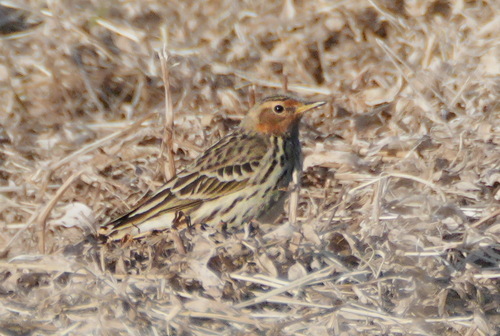 Red-throated Pipit
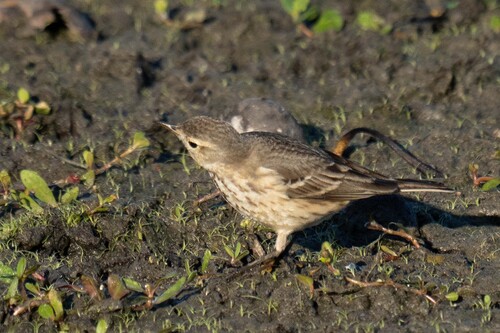 Buff-bellied Pipit
In short
The most reliable field mark to separate Red-throated Pipit from Buff-bellied Pipit is the much heavier and more extensive streaking on the Red-throated Pipit, especially on the cap, back, flanks, rump, and chest, which is present even in non-breeding and immature plumages. In breeding plumage, Red-throated Pipit adults show a distinctive brick-red face and throat, never matched by Buff-bellied Pipit. Buff-bellied Pipit is generally paler and less streaked below, with a buff-toned breast and flanks and a whitish belly. Both species are similar in size and structure, and both can appear rather plain and undistinguished outside the breeding season, but the density and extent of streaking remain a key separator. In flight, listen for the call: Red-throated Pipit gives a sharp 'psii', while Buff-bellied Pipit gives a squeaky 'sip'.
Identification tips
- Heavily Streaked Plumage (All Ages): Red-throated Pipit is much more heavily streaked above and below than Buff-bellied Pipit. Look for dense black streaks on the cap, back, flanks, rump, and chest, as well as prominent whitish mantle stripes. This is the single most reliable mark in all plumages except adult breeding Buff-bellied Pipit, which never approaches this level of streaking.
- Breeding Adult Red Throat: Only Red-throated Pipit adults in breeding plumage show a brick-red face and throat. Buff-bellied Pipit never shows any red or rufous on the face or throat.
- Buff-bellied Underparts: Buff-bellied Pipit has a buff-toned breast and flanks with diffuse streaking and a whitish belly. Red-throated Pipit is more streaked and lacks the clear buff wash.
- Juvenile/Immature Upperparts: Juvenile and immature Red-throated Pipits have more extensive and darker streaking on the upperparts, including the cap and mantle, compared to the paler, lightly streaked Buff-bellied Pipit.
- Flight Call: Listen for the call when birds are flushed or in flight. Red-throated Pipit gives a sharp 'psii', while Buff-bellied Pipit gives a squeaky 'sip'.
- Face Pattern: Outside breeding plumage, Red-throated Pipit may still show a more contrasting face pattern due to streaking, while Buff-bellied Pipit has a plainer, less marked face.
- Belly Color: Buff-bellied Pipit always has a whitish belly, contrasting with the buff breast and flanks. Red-throated Pipit is more uniformly streaked below.
- Leg and Bill Color: Both species have dark legs and bill, but Buff-bellied Pipit may appear slightly darker overall. This is not a strong separator.
- Habitat Context: Both species can occur in similar open, tundra-like habitats, especially as vagrants in Western Europe. Do not rely on habitat alone for separation.
- Behavior: Both species walk or run on the ground and have strong, direct flight. Behavior is not a reliable separator.
- Seasonal Pitfalls: Outside the breeding season, Red-throated Pipit loses its red throat and can appear much plainer, but the heavier streaking remains. Buff-bellied Pipit does not change much seasonally.
- Flock Structure: Buff-bellied Pipit immatures may form small flocks after fledging, but this is not a reliable field mark for separation.
- Vagrancy: Both species are rare vagrants in Western Europe, so do not assume identity based on location alone.
- Overall Impression: If the bird looks heavily and extensively streaked, especially on the upperparts and flanks, favor Red-throated Pipit. If it looks pale, with a buff breast and flanks and a whitish belly, favor Buff-bellied Pipit.
- When in Doubt: If views are brief or distant, prioritize the density and extent of streaking and any hint of red on the face or throat for Red-throated Pipit. Use call if available.
Size
Both species are small pipits and are very similar in size and proportions, with no reliable difference in length, mass, or overall structure based on available sources. Bill and leg color are not strongly contrasting between the two, though Buff-bellied Pipit may show slightly darker legs and bill. Structural features such as tail length and primary projection are not highlighted as diagnostic in the available notes.
Plumage
-
Juvenile and Immature Plumage: Red-throated Pipit of all ages (including juveniles and immatures) is notably more heavily streaked above and below than Buff-bellied Pipit. Look for dense black streaks on the cap, back, flanks, rump, and chest, with prominent whitish mantle stripes. Buff-bellied Pipit juveniles and immatures are paler, with lightly streaked grey-brown upperparts and diffuse, less extensive streaking below, mainly on the buff-toned breast and flanks. The belly is always whitish in Buff-bellied Pipit.
-
Adult Breeding Plumage: Red-throated Pipit adults in breeding plumage are unmistakable, with a brick-red face and throat. Buff-bellied Pipit never shows any red or rufous on the face or throat, remaining grey-brown above and buff below.
-
Non-breeding/Basic Plumage: Red-throated Pipit loses most of the red on the face and throat outside the breeding season, but still retains much heavier streaking above and below than Buff-bellied Pipit. Buff-bellied Pipit remains pale and diffusely streaked, with a buff breast and flanks and a whitish belly. Both can appear plain and undistinguished at a distance, but the density of streaking is the best separator.
Behaviour
Both species are ground-dwelling, often seen running or walking on open ground, and both are insectivorous. They can be seen singly or in small flocks outside the breeding season. Buff-bellied Pipit is noted for its tendency to run around on the ground and form small flocks of immatures after fledging. Both species have strong, direct flight, but this is not a reliable separator. Breeding behavior is not diagnostic for field identification.
Habitat
Both species breed in tundra or open, sparsely vegetated areas in the far north. Red-throated Pipit breeds across the far north of Europe and the Palearctic, with a foothold in northern Alaska, and winters in Africa and Southeast Asia. Buff-bellied Pipit (American Pipit) breeds in North American tundra and winters further south, including the Pacific and Atlantic coasts of North America and Central America. Both can be found in open, lightly vegetated areas outside the breeding season. In Western Europe, both are rare vagrants, so context is not always helpful for separation.
Voice
Red-throated Pipit gives a sharp, characteristic 'psii' call in flight. Buff-bellied Pipit gives a squeaky 'sip' call. These calls are distinct and can be a useful separator if heard well, especially in flight or when flushed.