

Bisbita Gorjirrojo vs Bisbita Norteamericano
Anthus cervinus frente a Anthus rubescens
Juega un quiz con Bisbita Gorjirrojo y Bisbita Norteamericano
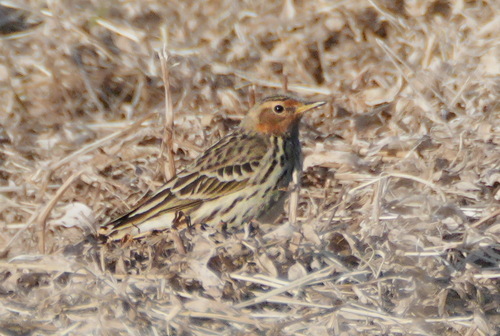 Bisbita Gorjirrojo
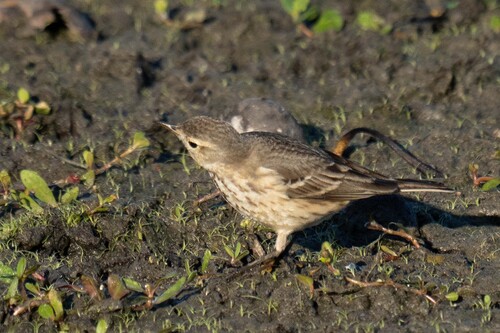 Bisbita Norteamericano
En breve
La marca de campo más confiable para separar el Bisbita Gorjirrojo del Bisbita Norteamericano es el patrón de estriado mucho más pesado y extenso en el Bisbita Gorjirrojo, especialmente en la cabeza, espalda, flancos, rabadilla y pecho, que está presente incluso en plumajes no reproductivos e inmaduros. En plumaje de cría, los adultos de Bisbita Gorjirrojo muestran una cara y garganta de un distintivo color rojo ladrillo, que nunca es igualado por el Bisbita Norteamericano. El Bisbita Norteamericano es generalmente más pálido y menos estriado por debajo, con un pecho y flancos de tono amarillento y un vientre blanquecino. Ambas especies son similares en tamaño y estructura, y ambas pueden parecer bastante simples y poco distintivas fuera de la temporada de cría, pero la densidad y extensión del estriado siguen siendo un separador clave. En vuelo, escucha el canto: el Bisbita Gorjirrojo emite un agudo 'psii', mientras que el Bisbita Norteamericano emite un chirrido 'sip'.
Consejos de identificación
- Plumaje Fuertemente Estriado (Todas las Edades): El Bisbita Gorjirrojo está mucho más estriado por encima y por debajo que el Bisbita Norteamericano. Busca estrías negras densas en la cabeza, espalda, flancos, rabadilla y pecho, así como franjas de manto blanquecinas prominentes. Esta es la marca más confiable en todos los plumajes excepto en el Bisbita Norteamericano adulto en plumaje de cría, que nunca se acerca a este nivel de estriado.
- Adulto de Cría con Garganta Roja: Solo los adultos de Bisbita Gorjirrojo en plumaje de cría muestran una cara y garganta de color rojo ladrillo. El Bisbita Norteamericano nunca muestra rojo o rufo en la cara o garganta.
- Partes Inferiores del Bisbita Norteamericano: El Bisbita Norteamericano tiene un pecho y flancos de tono amarillento con estriado difuso y un vientre blanquecino. El Bisbita Gorjirrojo está más estriado y carece del lavado amarillento claro.
- Partes Superiores de Juveniles/Inmaduros: Los juveniles e inmaduros de Bisbita Gorjirrojo tienen un estriado más extenso y oscuro en las partes superiores, incluyendo la cabeza y el manto, en comparación con el Bisbita Norteamericano, que es más pálido y ligeramente estriado.
- Canto en Vuelo: Escucha el canto cuando los pájaros son levantados o están en vuelo. El Bisbita Gorjirrojo emite un agudo 'psii', mientras que el Bisbita Norteamericano emite un chirrido 'sip'.
- Patrón Facial: Fuera del plumaje de cría, el Bisbita Gorjirrojo puede mostrar un patrón facial más contrastante debido al estriado, mientras que el Bisbita Norteamericano tiene una cara más simple y menos marcada.
- Color del Vientre: El Bisbita Norteamericano siempre tiene un vientre blanquecino, contrastando con el pecho y flancos amarillentos. El Bisbita Gorjirrojo está más uniformemente estriado por debajo.
- Color de Piernas y Pico: Ambas especies tienen piernas y pico oscuros, pero el Bisbita Norteamericano puede parecer ligeramente más oscuro en general. Este no es un separador fuerte.
- Contexto de Hábitat: Ambas especies pueden ocurrir en hábitats similares abiertos, similares a la tundra, especialmente como vagabundos en Europa Occidental. No confíes solo en el hábitat para la separación.
- Comportamiento: Ambas especies caminan o corren en el suelo y tienen un vuelo fuerte y directo. El comportamiento no es un separador confiable.
- Trampas Estacionales: Fuera de la temporada de cría, el Bisbita Gorjirrojo pierde su garganta roja y puede parecer mucho más simple, pero el estriado más pesado permanece. El Bisbita Norteamericano no cambia mucho estacionalmente.
- Estructura de Bandada: Los inmaduros de Bisbita Norteamericano pueden formar pequeñas bandadas después de volar, pero esta no es una marca de campo confiable para la separación.
- Vagabundeo: Ambas especies son vagabundos raros en Europa Occidental, así que no asumas la identidad solo por la ubicación.
- Impresión General: Si el pájaro parece fuertemente y extensamente estriado, especialmente en las partes superiores y flancos, favorece al Bisbita Gorjirrojo. Si parece pálido, con un pecho y flancos amarillentos y un vientre blanquecino, favorece al Bisbita Norteamericano.
- Cuando Dudes: Si las vistas son breves o distantes, prioriza la densidad y extensión del estriado y cualquier indicio de rojo en la cara o garganta para el Bisbita Gorjirrojo. Usa el canto si está disponible.
Tamaño
Ambas especies son pequeños bisbitas y son muy similares en tamaño y proporciones, sin diferencia confiable en longitud, masa o estructura general según las fuentes disponibles. El color del pico y las piernas no son fuertemente contrastantes entre los dos, aunque el Bisbita Norteamericano puede mostrar piernas y pico ligeramente más oscuros. Las características estructurales como la longitud de la cola y la proyección de las primarias no se destacan como diagnósticas en las notas disponibles.
Plumaje
-
Plumaje Juvenil e Inmaduro: El Bisbita Gorjirrojo de todas las edades (incluyendo juveniles e inmaduros) está notablemente más estriado por encima y por debajo que el Bisbita Norteamericano. Busca estrías negras densas en la cabeza, espalda, flancos, rabadilla y pecho, con franjas de manto blanquecinas prominentes. Los juveniles e inmaduros del Bisbita Norteamericano son más pálidos, con partes superiores de color marrón grisáceo ligeramente estriadas y estriado difuso, menos extenso por debajo, principalmente en el pecho y flancos de tono amarillento. El vientre es siempre blanquecino en el Bisbita Norteamericano.
-
Plumaje de Cría Adulto: Los adultos de Bisbita Gorjirrojo en plumaje de cría son inconfundibles, con una cara y garganta de color rojo ladrillo. El Bisbita Norteamericano nunca muestra rojo o rufo en la cara o garganta, permaneciendo marrón grisáceo por encima y amarillento por debajo.
-
Plumaje No Reproductivo/Básico: El Bisbita Gorjirrojo pierde la mayor parte del rojo en la cara y garganta fuera de la temporada de cría, pero aún retiene un estriado mucho más pesado por encima y por debajo que el Bisbita Norteamericano. El Bisbita Norteamericano permanece pálido y estriado difusamente, con un pecho y flancos amarillentos y un vientre blanquecino. Ambos pueden parecer simples y poco distintivos a distancia, pero la densidad del estriado es el mejor separador.
Comportamiento
Ambas especies son terrestres, a menudo vistas corriendo o caminando en terreno abierto, y ambas son insectívoras. Pueden verse solas o en pequeñas bandadas fuera de la temporada de cría. El Bisbita Norteamericano es conocido por su tendencia a correr por el suelo y formar pequeñas bandadas de inmaduros después de volar. Ambas especies tienen un vuelo fuerte y directo, pero esto no es un separador confiable. El comportamiento de cría no es diagnóstico para la identificación en campo.
Hábitat
Ambas especies crían en tundra o áreas abiertas y escasamente vegetadas en el extremo norte. El Bisbita Gorjirrojo cría en el extremo norte de Europa y el Paleártico, con un asentamiento en el norte de Alaska, y inverna en África y el sudeste asiático. El Bisbita Norteamericano cría en la tundra de América del Norte y inverna más al sur, incluyendo las costas del Pacífico y Atlántico de América del Norte y América Central. Ambos pueden encontrarse en áreas abiertas y ligeramente vegetadas fuera de la temporada de cría. En Europa Occidental, ambos son vagabundos raros, por lo que el contexto no siempre es útil para la separación.
Voz
El Bisbita Gorjirrojo emite un canto agudo y característico 'psii' en vuelo. El Bisbita Norteamericano emite un canto chirriante 'sip'. Estos cantos son distintos y pueden ser un separador útil si se escuchan bien, especialmente en vuelo o cuando son levantados.
Bisbita Gorjirrojo · Bisbita Norteamericano · Mis aves difíciles