

Planalto Woodcreeper vs White-throated Woodcreeper
Dendrocolaptes platyrostris versus Xiphocolaptes albicollis
Play a quiz with Planalto Woodcreeper and White-throated Woodcreeper
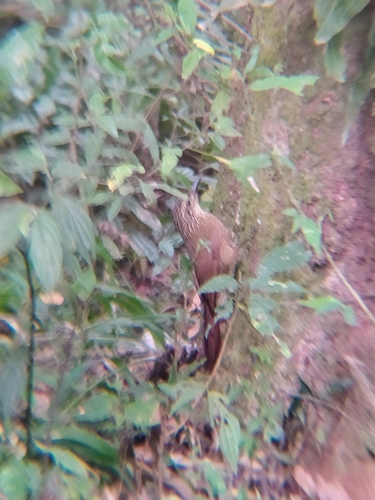 Planalto Woodcreeper
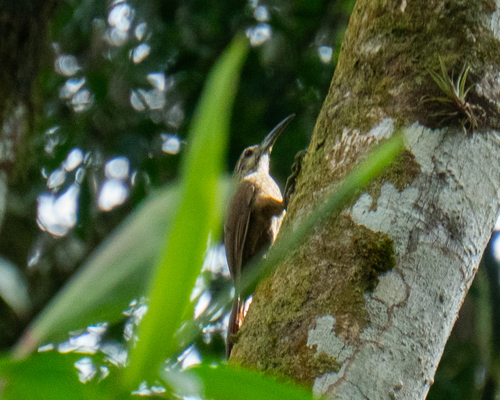 White-throated Woodcreeper
In short
The most reliable field mark between Planalto and White-throated Woodcreeper is overall structure: White-throated is much bulkier, with a heavy body, shorter tail, and a very long, strongly decurved bill, while Planalto is slimmer with a straighter, medium-length bill and longer tail. Both show bold pale streaks on the crown and breast, but White-throated has a striking white throat and heavier bill, whereas Planalto’s throat is only faintly streaked and its bill is more slender. In flight or perched, note the White-throated’s heavier build and shorter tail. Juvenile White-throateds show rusty-yellow crown spots, a feature not present in Planalto. Both species overlap in range and habitat, so careful attention to structure and throat color is essential.
Identification tips
- Bill shape and length: White-throated Woodcreeper has a very long, strongly decurved bill, while Planalto’s bill is medium-length and straight. This is a key field mark at any age or season.
- Body size and bulk: White-throated is nearly twice as heavy as Planalto and appears much bulkier, with a heavy body and shortish tail. Planalto is slimmer and more elongated, with a longer tail.
- Throat color: White-throated has a bright white to buffy white throat that stands out against its dark face; Planalto’s throat is whitish but less distinct, with faint streaking and mottling, blending more into the breast.
- Crown streaking: Both have pale streaks on a dark crown, but White-throated’s are broader and cream to buff, while Planalto’s are buff and slightly less bold.
- Juvenile crown spots: Only juvenile White-throated shows rusty-yellow spots on the crown; Planalto juveniles lack this feature.
- Breast and belly pattern: White-throated’s breast streaks are bold, pale, and edged with dark, and its belly and undertail coverts have distinct dark bars. Planalto’s streaks are strong but less broad, and its belly bars are thinner and less contrasting.
- Back and rump color: Planalto’s back and rump are olive-brown with thin buff streaks; White-throated’s back is brownish olive with faint streaks and a rusty chestnut rump.
- Tail color: Both have chestnut tails, but White-throated’s is darker with dark shafts, while Planalto’s is duller chestnut.
- Face pattern: White-throated has a more complex face pattern, with a pale supercilium and moustachial stripe, a dark post-ocular stripe, and a blackish cheek; Planalto’s face is dusky with bold buffy streaks and only a faint supercilium.
- Iris color: White-throated’s iris can be red to brown, while Planalto’s is brown. This is subtle and not always visible in the field.
- Leg color: Both have dark legs, but Planalto’s are greenish gray to black, while White-throated’s are highly variable but generally dark. Not a primary field mark.
- Subspecies variation: Be aware that paler subspecies exist in both species, but the throat color and bill shape remain reliable.
- Flight jizz: In flight, White-throated looks heavy and short-tailed, while Planalto appears slimmer and longer-tailed.
- Habitat overlap: Do not rely on habitat or range for separation, as both species occur together in much of their range.
- Voice: Not described in the notes; do not use for separation unless familiar with local calls.
Size
White-throated Woodcreeper is much larger and heavier, averaging 120 g and 27.5–33 cm in length, compared to Planalto’s 58 g and 25–27 cm. In the field, White-throated appears bulkier, with a noticeably heavier body and a shorter tail relative to its size. Planalto is slimmer and more elongated, with a proportionally longer tail. The difference in bill shape is also obvious: White-throated’s bill is long and strongly decurved, while Planalto’s is medium-length and straight. If both are seen together, the size and bulk difference is striking.
Plumage
- Juveniles: Only White-throated Woodcreeper juveniles have rusty-yellow spots on the crown and a shorter bill; Planalto juveniles are not described as having these features.
- Adults: Both species have blackish crowns with bold pale streaks, but White-throated’s streaks are cream to buff and more prominent. The throat is diagnostic: White-throated has a white to buffy white throat, sharply contrasting with the darker face, while Planalto’s throat is whitish but less distinct, with faint streaking and mottling. On the underparts, both have bold pale streaks on the breast, but White-throated’s are broader and have dark edges, and its belly and undertail coverts show distinct dark bars. Planalto’s belly and flanks are buffy brown with thin blackish bars, less contrasting. The back and rump of Planalto are olive-brown with thin buff streaks, while White-throated’s back is brownish olive with faint streaks and a rusty chestnut rump. The tail of both is chestnut, but White-throated’s is darker with dark shafts. Subspecies variation may affect overall paleness and streaking intensity, but the throat and bill remain reliable.
Behaviour
Both species are woodcreepers and show similar foraging behavior, climbing tree trunks and branches. However, White-throated’s heavier build and shorter tail may make its movements appear more ponderous compared to the slimmer, longer-tailed Planalto. In flight, White-throated looks bulkier and less agile, while Planalto appears more streamlined. Both species are typically solitary or in pairs and may join mixed-species flocks, but this is not a reliable separation point.
Habitat
Both species overlap in range (Argentina, Brazil, Paraguay) and are found in similar wooded habitats. Habitat alone is not diagnostic between them, as both occur in forests and woodlands within their overlapping ranges.
Planalto Woodcreeper · White-throated Woodcreeper · My Tricky Birds