

Plain-capped Starthroat vs White-bellied Mountain-gem
Heliomaster constantii versus Lampornis hemileucus
Play a quiz with Plain-capped Starthroat and White-bellied Mountain-gem
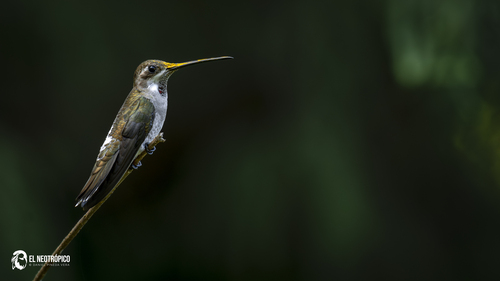 Plain-capped Starthroat
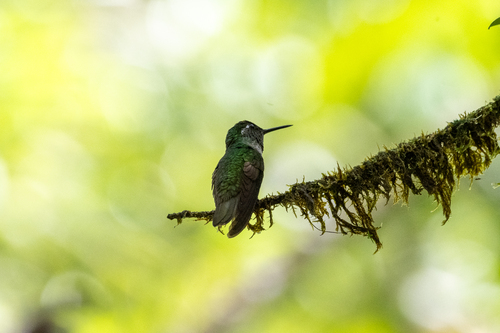 White-bellied Mountain-gem
In short
The most reliable field mark between Plain-capped Starthroat and White-bellied Mountain-gem is the underparts: Starthroat shows brownish-gray underparts with a white belly and a prominent white moustache, while Mountain-gem has crisp white underparts with green speckling along the sides and a blue-violet (male) or white/green-speckled (female) throat. Bill shape and length also differ: Starthroat has a notably long, almost straight black bill, while Mountain-gem's bill is shorter and medium-length. Both species have a white post-ocular stripe, but Starthroat's white rump streak and larger size are also helpful. Immature birds can be tricky, but Starthroat immatures have a sooty brown throat, while Mountain-gem juveniles show rusty fringes on green feathers. These features, especially underparts and bill structure, are your best field separation tools.
Identification tips
- Underparts color: Plain-capped Starthroat always shows brownish-gray underparts with a white belly, while White-bellied Mountain-gem has clean white underparts with green speckling along the sides. This is the most consistent field mark for all ages and sexes.
- Bill length and shape: Starthroat's bill is long and almost straight, noticeably longer than Mountain-gem's medium-length black bill. Use this when you have a clear side view.
- Gorget color (adult males): Starthroat males have a bright metallic red to purplish red gorget; Mountain-gem males have a blue-violet gorget. In females, Starthroat's throat is sooty to blackish, while Mountain-gem's is white with green speckles.
- White moustache: Starthroat has a broad white moustache stripe below the eye, which is more pronounced than any facial markings on Mountain-gem.
- White rump streak: Starthroat shows a wide white streak on the rump, visible in good light or in flight; Mountain-gem lacks this feature.
- Face and crown: Mountain-gem males have a glittering green face and crown, while Starthroat's crown is less metallic and the face is dusky.
- Tail pattern: Starthroat's tail has bronze green central feathers with dusky ends and blackish on the outer feathers with white inner edges. Mountain-gem's tail is bronzy with dusky gray bands near the end of the outer feathers.
- Juvenile/immature marks: Immature Starthroat has a sooty brown throat with grayish white feather margins. Juvenile Mountain-gem shows rusty fringes on green feathers, and young males have a dull bronze gorget. These marks are best checked in late summer/fall or outside the breeding season.
- Size impression: Starthroat is larger and heavier, with a more robust look and longer bill/tail. This is subtle but can help when seen with other hummingbirds.
- White post-ocular stripe: Both species have a white stripe behind the eye, so this mark alone is not diagnostic.
- Flank tufts: Starthroat has a large tuft of white feathers on the flanks, which can be visible when perched.
- Undertail coverts: Starthroat's undertail coverts are pale gray with wide white tips, while Mountain-gem's are not described as such.
- Sex differences: Both species show similar male/female patterns, but Mountain-gem females have a white throat with green speckles, while Starthroat females are similar to males but duller.
- Range context: In Panama, only Mountain-gem is expected. In Mexico, only Starthroat. In Costa Rica, check all marks carefully.
- Habitat context: If in highland forest in Costa Rica or Panama, Mountain-gem is more likely; in open or varied habitats, especially north of Costa Rica, Starthroat is more likely.
Size
Plain-capped Starthroat is distinctly larger and heavier (males ~7.4 g, females ~7.2 g, length 11–13 cm) compared to White-bellied Mountain-gem (males ~6.2 g, females ~5.1 g, length 10–11 cm) [wikipedia][wikidata]. The Starthroat appears more robust and elongated, especially due to its long bill and tail. In the field, this size difference is subtle but can be noticeable when both species are seen together or with reference to other hummingbirds.
Plumage
- Juvenile/Immature: Plain-capped Starthroat immatures have a dark sooty brown throat with grayish white feather margins, lacking the metallic gorget of adults. White-bellied Mountain-gem juveniles of both sexes show rusty fringes on green feathers, and young males have a dull bronze gorget. These juvenile features are most useful in the non-breeding season or late summer/fall.
- Adult males: Starthroat males have a sooty to blackish chin and a gorget that is bright metallic red to purplish red, with brownish-gray underparts and a white belly. Mountain-gem males have a glittering green face and crown, blue-violet gorget, and white underparts with green speckles along the sides.
- Adult females: Both species' females are similar to their respective males but less vibrant. Starthroat females share the same basic pattern as males. Mountain-gem females have a less glittering face/crown and a white throat with green speckles.
- Tail and rump: Starthroat has a wide white rump streak and central tail feathers that are bronze green with dusky ends; outer tail feathers have blackish ends and white inner edges. Mountain-gem's tail is bronzy with dusky gray bands near the end of the outer feathers, and uppertail coverts are bronzy.
- Facial marks: Both have a white post-ocular stripe, but Starthroat adds a broad white moustache and more dusky on the face.
Behaviour
Both species are typical hummingbirds in behavior, but Starthroat's larger size and longer bill may make its feeding style appear slightly more deliberate and less agile compared to the smaller, quicker Mountain-gem. No distinctive behavioral differences are noted in the sources for field separation.
Habitat
Plain-capped Starthroat ranges from Mexico to Costa Rica, while White-bellied Mountain-gem is restricted to Costa Rica and Panama [wikipedia]. In Costa Rica, both may overlap in range, but Mountain-gem is more likely in higher elevation forested areas, while Starthroat can be found in a broader range of elevations and habitats. However, habitat alone is not diagnostic where ranges overlap.
Plain-capped Starthroat · White-bellied Mountain-gem · My Tricky Birds