

Plain-capped Starthroat vs White-bellied Mountain-gem
Heliomaster constantii contro Lampornis hemileucus
Fai un quiz con Plain-capped Starthroat e White-bellied Mountain-gem
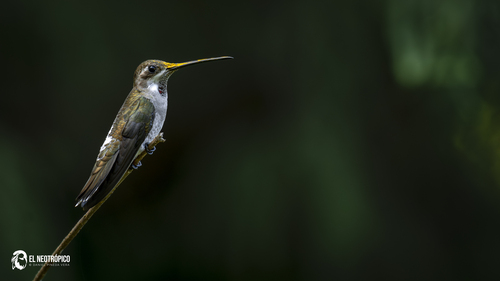 Plain-capped Starthroat
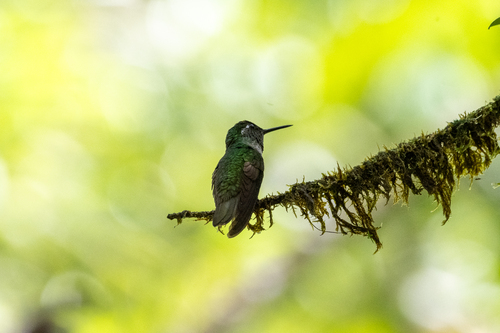 White-bellied Mountain-gem
In breve
Il segno distintivo più affidabile tra Plain-capped Starthroat e White-bellied Mountain-gem sono le parti inferiori: lo Starthroat presenta parti inferiori grigio-brune con un ventre bianco e un prominente baffo bianco, mentre il Mountain-gem ha parti inferiori bianche e nitide con macchie verdi lungo i fianchi e una gola blu-violetta (maschio) o bianca/macchiata di verde (femmina). Anche la forma e la lunghezza del becco differiscono: lo Starthroat ha un becco nero lungo e quasi dritto, mentre il becco del Mountain-gem è più corto e di lunghezza media. Entrambe le specie hanno una striscia post-oculare bianca, ma la striscia bianca sul dorso dello Starthroat e la sua dimensione maggiore sono anche utili. Gli uccelli immaturi possono essere difficili, ma gli immaturi dello Starthroat hanno una gola bruna e fuligginosa, mentre i giovani del Mountain-gem mostrano frange rugginose su piume verdi. Queste caratteristiche, specialmente le parti inferiori e la struttura del becco, sono i tuoi migliori strumenti di separazione sul campo.
Consigli di identificazione
- Colore delle parti inferiori: Plain-capped Starthroat mostra sempre parti inferiori grigio-brune con un ventre bianco, mentre White-bellied Mountain-gem ha parti inferiori bianche pulite con macchie verdi lungo i fianchi. Questo è il segno distintivo più coerente per tutte le età e i sessi.
- Lunghezza e forma del becco: Il becco dello Starthroat è lungo e quasi dritto, notevolmente più lungo del becco nero di lunghezza media del Mountain-gem. Usa questo quando hai una chiara vista laterale.
- Colore del gorget (maschi adulti): I maschi dello Starthroat hanno un gorget rosso metallico brillante a rosso purpureo; i maschi del Mountain-gem hanno un gorget blu-violetta. Nelle femmine, la gola dello Starthroat è fuligginosa a nerastra, mentre quella del Mountain-gem è bianca con macchie verdi.
- Baffo bianco: Lo Starthroat ha una larga striscia di baffo bianco sotto l'occhio, che è più pronunciata rispetto a qualsiasi marcatura facciale sul Mountain-gem.
- Striscia bianca sul dorso: Lo Starthroat mostra una larga striscia bianca sul dorso, visibile in buona luce o in volo; il Mountain-gem non ha questa caratteristica.
- Faccia e corona: I maschi del Mountain-gem hanno una faccia e una corona verdi scintillanti, mentre la corona dello Starthroat è meno metallica e la faccia è scura.
- Schema della coda: La coda dello Starthroat ha piume centrali verde bronzo con estremità scure e piume esterne nere con bordi bianchi interni. La coda del Mountain-gem è bronzata con bande grigie scure vicino all'estremità delle piume esterne.
- Segni giovanili/immaturi: Lo Starthroat immaturo ha una gola bruna fuligginosa con margini di piume bianchi grigi. Il giovane Mountain-gem mostra frange rugginose su piume verdi, e i giovani maschi hanno un gorget bronzo opaco. Questi segni sono meglio controllati a fine estate/fall o al di fuori della stagione riproduttiva.
- Impressione di dimensione: Lo Starthroat è più grande e pesante, con un aspetto più robusto e un becco/coda più lunghi. Questo è sottile ma può aiutare quando visto con altri colibrì.
- Striscia post-oculare bianca: Entrambe le specie hanno una striscia bianca dietro l'occhio, quindi questo segno da solo non è diagnostico.
- Ciuffi laterali: Lo Starthroat ha un grande ciuffo di piume bianche sui fianchi, che può essere visibile quando è posato.
- Copritrici della coda: Le copritrici della coda dello Starthroat sono grigie chiare con punte bianche larghe, mentre quelle del Mountain-gem non sono descritte in questo modo.
- Differenze sessuali: Entrambe le specie mostrano schemi simili maschio/femmina, ma le femmine del Mountain-gem hanno una gola bianca con macchie verdi, mentre le femmine dello Starthroat sono simili ai maschi ma più opache.
- Contesto di distribuzione: In Panama, ci si aspetta solo il Mountain-gem. In Messico, solo lo Starthroat. In Costa Rica, controlla tutti i segni con attenzione.
- Contesto dell'habitat: Se in una foresta montana in Costa Rica o Panama, il Mountain-gem è più probabile; in habitat aperti o vari, specialmente a nord del Costa Rica, lo Starthroat è più probabile.
Taglia
Plain-capped Starthroat è decisamente più grande e pesante (maschi ~7.4 g, femmine ~7.2 g, lunghezza 11–13 cm) rispetto a White-bellied Mountain-gem (maschi ~6.2 g, femmine ~5.1 g, lunghezza 10–11 cm) [wikipedia][wikidata]. Lo Starthroat appare più robusto ed allungato, specialmente a causa del suo lungo becco e coda. Sul campo, questa differenza di dimensione è sottile ma può essere evidente quando entrambe le specie sono viste insieme o in riferimento ad altri colibrì.
Piumaggio
- Giovanile/Immature: Gli immaturi di Plain-capped Starthroat hanno una gola bruna scura e fuligginosa con margini di piume bianchi grigi, privi del gorget metallico degli adulti. I giovani di White-bellied Mountain-gem di entrambi i sessi mostrano frange rugginose su piume verdi, e i giovani maschi hanno un gorget bronzo opaco. Queste caratteristiche giovanili sono più utili nella stagione non riproduttiva o a fine estate/fall.
- Maschi adulti: I maschi dello Starthroat hanno un mento fuligginoso a nerastra e un gorget che è rosso metallico brillante a rosso purpureo, con parti inferiori grigio-brune e un ventre bianco. I maschi del Mountain-gem hanno una faccia e una corona verdi scintillanti, un gorget blu-violetta e parti inferiori bianche con macchie verdi lungo i fianchi.
- Femmine adulte: Le femmine di entrambe le specie sono simili ai rispettivi maschi ma meno vivaci. Le femmine dello Starthroat condividono lo stesso schema di base dei maschi. Le femmine del Mountain-gem hanno una faccia/corona meno scintillante e una gola bianca con macchie verdi.
- Coda e dorso: Lo Starthroat ha una larga striscia bianca sul dorso e piume centrali della coda che sono verde bronzo con estremità scure; le piume esterne della coda hanno estremità nere e bordi bianchi interni. La coda del Mountain-gem è bronzata con bande grigie scure vicino all'estremità delle piume esterne, e le copritrici superiori della coda sono bronzate.
- Segni facciali: Entrambi hanno una striscia post-oculare bianca, ma lo Starthroat aggiunge un ampio baffo bianco e più scuro sulla faccia.
Comportamento
Entrambe le specie sono colibrì tipici nel comportamento, ma la maggiore dimensione e il becco più lungo dello Starthroat possono far sembrare il suo stile di alimentazione leggermente più deliberato e meno agile rispetto al più piccolo e veloce Mountain-gem. Non sono state notate differenze comportamentali distintive nelle fonti per la separazione sul campo.
Habitat
Plain-capped Starthroat si estende dal Messico alla Costa Rica, mentre White-bellied Mountain-gem è limitato alla Costa Rica e Panama [wikipedia]. In Costa Rica, entrambe le specie possono sovrapporsi nella distribuzione, ma il Mountain-gem è più probabile nelle aree forestali a elevata altitudine, mentre lo Starthroat può essere trovato in una gamma più ampia di altitudini e habitat. Tuttavia, l'habitat da solo non è diagnostico dove le distribuzioni si sovrappongono.
Plain-capped Starthroat · White-bellied Mountain-gem · I miei uccelli difficili