

plain-capped starthroat vs white-bellied mountain-gem
Heliomaster constantii versus Lampornis hemileucus
Jogue um quiz com plain-capped starthroat e white-bellied mountain-gem
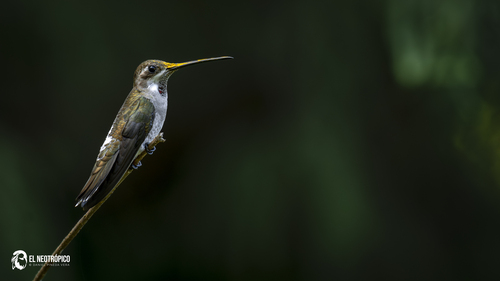 plain-capped starthroat
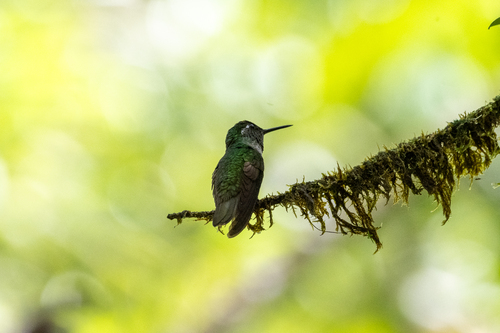 white-bellied mountain-gem
Em resumo
A marca de campo mais confiável entre plain-capped starthroat e white-bellied mountain-gem são as partes inferiores: o starthroat apresenta partes inferiores cinza-acastanhadas com um ventre branco e uma bigode branca proeminente, enquanto o mountain-gem tem partes inferiores brancas nítidas com manchas verdes ao longo dos lados e uma garganta azul-violeta (macho) ou branca/manchada de verde (fêmea). A forma e o comprimento do bico também diferem: o starthroat tem um bico preto notavelmente longo e quase reto, enquanto o bico do mountain-gem é mais curto e de comprimento médio. Ambas as espécies têm uma faixa branca pós-ocular, mas a faixa branca no rabo do starthroat e seu tamanho maior também são úteis. Pássaros imaturos podem ser complicados, mas os imaturos do starthroat têm uma garganta marrom esfumaçada, enquanto os juvenis do mountain-gem mostram bordas enferrujadas em penas verdes. Essas características, especialmente as partes inferiores e a estrutura do bico, são suas melhores ferramentas de separação em campo.
Dicas de identificação
- Cor das partes inferiores: O plain-capped starthroat sempre apresenta partes inferiores cinza-acastanhadas com um ventre branco, enquanto o white-bellied mountain-gem tem partes inferiores brancas limpas com manchas verdes ao longo dos lados. Esta é a marca de campo mais consistente para todas as idades e sexos.
- Comprimento e forma do bico: O bico do starthroat é longo e quase reto, notavelmente mais longo que o bico preto de comprimento médio do mountain-gem. Use isso quando você tiver uma visão lateral clara.
- Cor do gorget (machos adultos): Os machos do starthroat têm um gorget vermelho metálico brilhante a vermelho purpúreo; os machos do mountain-gem têm um gorget azul-violeta. Nas fêmeas, a garganta do starthroat é esfumaçada a negra, enquanto a do mountain-gem é branca com manchas verdes.
- Bigode branco: O starthroat tem uma faixa larga de bigode branco abaixo do olho, que é mais pronunciada do que qualquer marca facial no mountain-gem.
- Faixa branca no rabo: O starthroat apresenta uma ampla faixa branca no rabo, visível em boa luz ou em voo; o mountain-gem não possui essa característica.
- Face e coroa: Os machos do mountain-gem têm uma face e coroa verdes brilhantes, enquanto a coroa do starthroat é menos metálica e a face é escura.
- Padrão da cauda: A cauda do starthroat tem penas centrais verde bronze com extremidades escuras e penas externas com extremidades negras e bordas internas brancas. A cauda do mountain-gem é bronzeada com faixas cinza escuras perto da extremidade das penas externas.
- Marcas juvenis/imaturas: O imaturo do starthroat tem uma garganta marrom esfumaçada com bordas de penas brancas acinzentadas. O juvenil do mountain-gem apresenta bordas enferrujadas em penas verdes, e os machos jovens têm um gorget bronzeado opaco. Essas marcas são melhor verificadas no final do verão/outono ou fora da temporada de reprodução.
- Impressão de tamanho: O starthroat é maior e mais pesado, com uma aparência mais robusta e bico/cauda mais longos. Isso é sutil, mas pode ajudar quando visto com outros beija-flores.
- Faixa branca pós-ocular: Ambas as espécies têm uma faixa branca atrás do olho, então essa marca sozinha não é diagnóstica.
- Tufts laterais: O starthroat tem um grande tufo de penas brancas nas laterais, que pode ser visível quando empoleirado.
- Coberturas da cauda inferior: As coberturas da cauda inferior do starthroat são cinza pálido com pontas brancas largas, enquanto as do mountain-gem não são descritas dessa forma.
- Diferenças sexuais: Ambas as espécies mostram padrões semelhantes de macho/fêmea, mas as fêmeas do mountain-gem têm uma garganta branca com manchas verdes, enquanto as fêmeas do starthroat são semelhantes aos machos, mas mais opacas.
- Contexto de distribuição: No Panamá, apenas o mountain-gem é esperado. No México, apenas o starthroat. Na Costa Rica, verifique todas as marcas cuidadosamente.
- Contexto de habitat: Se estiver em floresta de montanha na Costa Rica ou Panamá, o mountain-gem é mais provável; em habitats abertos ou variados, especialmente ao norte da Costa Rica, o starthroat é mais provável.
Tamanho
O plain-capped starthroat é distintamente maior e mais pesado (machos ~7,4 g, fêmeas ~7,2 g, comprimento 11–13 cm) em comparação com o white-bellied mountain-gem (machos ~6,2 g, fêmeas ~5,1 g, comprimento 10–11 cm) [wikipedia][wikidata]. O starthroat parece mais robusto e alongado, especialmente devido ao seu bico e cauda longos. No campo, essa diferença de tamanho é sutil, mas pode ser notável quando ambas as espécies são vistas juntas ou em referência a outros beija-flores.
Plumagem
- Juvenil/Imaturo: Os imaturos do plain-capped starthroat têm uma garganta marrom escura esfumaçada com bordas de penas brancas acinzentadas, sem o gorget metálico dos adultos. Os juvenis do white-bellied mountain-gem de ambos os sexos apresentam bordas enferrujadas em penas verdes, e os machos jovens têm um gorget bronzeado opaco. Essas características juvenis são mais úteis na temporada fora da reprodução ou no final do verão/outono.
- Machos adultos: Os machos do starthroat têm um queixo esfumaçado a negro e um gorget que é vermelho metálico brilhante a vermelho purpúreo, com partes inferiores cinza-acastanhadas e um ventre branco. Os machos do mountain-gem têm uma face e coroa verdes brilhantes, gorget azul-violeta e partes inferiores brancas com manchas verdes ao longo dos lados.
- Fêmeas adultas: As fêmeas de ambas as espécies são semelhantes aos respectivos machos, mas menos vibrantes. As fêmeas do starthroat compartilham o mesmo padrão básico que os machos. As fêmeas do mountain-gem têm uma face/coroa menos brilhante e uma garganta branca com manchas verdes.
- Cauda e rabo: O starthroat tem uma ampla faixa branca no rabo e penas centrais da cauda que são verde bronze com extremidades escuras; as penas externas da cauda têm extremidades negras e bordas internas brancas. A cauda do mountain-gem é bronzeada com faixas cinza escuras perto da extremidade das penas externas, e as coberturas da cauda superior são bronzeadas.
- Marcas faciais: Ambas têm uma faixa branca pós-ocular, mas o starthroat adiciona um amplo bigode branco e mais escuro na face.
Comportamento
Ambas as espécies são típicas de beija-flores em comportamento, mas o tamanho maior e o bico mais longo do starthroat podem fazer seu estilo de alimentação parecer ligeiramente mais deliberado e menos ágil em comparação com o mountain-gem, que é menor e mais rápido. Nenhuma diferença comportamental distintiva é observada nas fontes para separação em campo.
Habitat
O plain-capped starthroat varia do México à Costa Rica, enquanto o white-bellied mountain-gem é restrito à Costa Rica e Panamá [wikipedia]. Na Costa Rica, ambas podem sobrepor-se em distribuição, mas o mountain-gem é mais provável em áreas florestais de maior elevação, enquanto o starthroat pode ser encontrado em uma gama mais ampla de elevações e habitats. No entanto, o habitat sozinho não é diagnóstico onde as distribuições se sobrepõem.
plain-capped starthroat · white-bellied mountain-gem · Minhas aves difíceis