

Piping Plover vs Siberian Sand Plover
Charadrius melodus versus Anarhynchus mongolus
Play a quiz with Piping Plover and Siberian Sand Plover
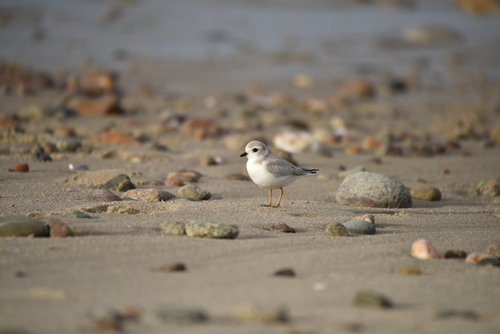 Piping Plover
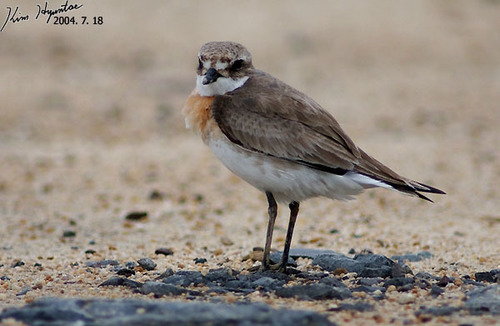 Siberian Sand Plover
In short
The most reliable way to separate Piping Plover from Siberian Sand Plover is by leg color: Piping Plover shows bright yellow-orange legs, while Siberian Sand Plover always has dark (black to grey) legs. In breeding plumage, Piping Plover has a single narrow black breast band and a black forehead bar, whereas Siberian Sand Plover males have a broad chestnut breast, chestnut forehead and nape, and a black mask. Nonbreeding and immature birds are trickier, but Piping Plover remains paler and stockier, with a short, stubby orange-and-black bill, while Siberian Sand Plover is longer-legged, longer-billed, and often shows a hint of rufous on the head. Structure and jizz are also useful: Piping Plover is compact and round-headed, while Siberian Sand Plover is leggier and more elongated. Both species can appear on sandy beaches, but their ranges rarely overlap.
Identification tips
- Leg Color (all ages/seasons): Piping Plover always has bright yellow-orange legs; Siberian Sand Plover always has dark (black to grey) legs. This is the single most reliable field mark when visible.
- Bill Color and Shape (all ages): Piping Plover has a short, stubby bill that is orange with a black tip. Siberian Sand Plover has a longer, slimmer, all-black bill. Bill color is especially useful in close views.
- Breast Band (breeding adults): Piping Plover shows a single, narrow black breast band (thicker in males, thinner or broken in females); Siberian Sand Plover breeding males have a broad chestnut breast band. Nonbreeding and juvenile Siberian Sand Plovers lack chestnut, but Piping Plover's band is always black (if present).
- Forehead and Head Pattern (breeding adults): Piping Plover has a black bar across the forehead from eye to eye. Siberian Sand Plover breeding males have a chestnut forehead and nape, plus a black mask through the eye. Nonbreeding/juvenile Siberian Sand Plovers may show a faint rufous wash on the head, but never a sharp black bar.
- Leg Length and Structure (all ages): Piping Plover is compact, with short legs and a round head. Siberian Sand Plover is longer-legged, more elongated, and stands taller. This difference is most obvious when both species are side by side, but still useful for lone birds.
- Upperparts Color (all ages): Piping Plover is pale sand-colored or dull gray/khaki above, blending in with pale sand. Siberian Sand Plover is generally greyer above, especially in breeding plumage.
- Underparts (all ages): Both species have white underparts, but Piping Plover is cleaner white below with a single band, while Siberian Sand Plover breeding males have a large chestnut area; in nonbreeding/juvenile, Siberian Sand Plover may appear similar but is usually slightly duskier.
- Flight/Upperwing Pattern: No distinctive upperwing patterns are noted for either species, so flight separation relies on structure and leg color if visible.
- Jizz (all ages): Piping Plover appears stocky and round-headed, with a short neck and stubby bill. Siberian Sand Plover is more upright, longer-legged, and longer-billed, with a more horizontal stance.
- Habitat/Range: Piping Plover is found only in North America; Siberian Sand Plover is an Old World species, breeding in Siberia and wintering in Asia/Australia. Out-of-range records are extremely rare and should be scrutinized for vagrancy.
- Sex Differences (Piping Plover): In breeding season, male Piping Plovers have a thicker black breast band and more prominent black forehead bar than females. Siberian Sand Plover females are duller than males but still show chestnut in breeding plumage.
- Nonbreeding/Juvenile Pitfalls: Both species become plainer in nonbreeding and juvenile plumage. Focus on leg color, bill shape, and structure when plumage is subdued.
- Voice: Siberian Sand Plover gives a hard trill in flight, but this is not a strong separator from Piping Plover based on available information.
- Context: If you encounter a small, pale plover with orange legs on a North American beach, it is almost certainly a Piping Plover. A longer-legged, dark-legged plover with a longer black bill in Asia or Australia is likely Siberian Sand Plover.
- Common Pitfalls: Do not rely solely on breast band presence or absence in nonbreeding birds; always check leg color and bill shape, especially in dull-plumaged individuals.
Size
Piping Plover is a small, sparrow-sized plover with a body mass around 55 g [wikidata]. Siberian Sand Plover is slightly larger and longer-legged, though precise mass is not given in the sources. In direct comparison, Siberian Sand Plover appears more elongated and stands taller due to its longer legs and bill. However, size alone is unreliable unless both are side by side.
Plumage
- Juvenile/Nonbreeding: Piping Plover juveniles and nonbreeding adults are pale sand-colored above with a faint or absent breast band and maintain yellow-orange legs. Siberian Sand Plover juveniles and nonbreeding birds lack the chestnut tones of breeding males, but may show a faint rufous wash on the head; their legs are always dark and their bill is black. Both lack strong head or breast markings in winter, but Piping Plover remains paler and more washed-out overall.
- Breeding Adult: Piping Plover has a single, narrow black breast band (thicker in males), a black bar across the forehead, and an orange bill with a black tip. Siberian Sand Plover breeding males have a broad chestnut breast, chestnut forehead and nape, a black eye mask, and a black bill. Females are duller but still show some chestnut.
- Flight/Upperwing: No distinctive age-specific upperwing patterns are described for either species in the sources provided, so separation in flight relies on overall structure and leg color if visible.
Behaviour
Both species forage on open sandy beaches using a run-and-pause technique. Siberian Sand Plover is described as taking fewer steps and shorter pauses than Greater Sand Plover, but this is not a useful field mark for separating it from Piping Plover. Piping Plover often appears more deliberate and less active than the more elongated, brisk-moving Siberian Sand Plover. Both species are wary and quick to flush if approached.
Habitat
Piping Plover breeds and feeds on coastal sand and gravel beaches in North America, especially in the Great Lakes, Atlantic, and Gulf coasts. Siberian Sand Plover breeds on bare coastal plains in northeastern Siberia and winters on sandy beaches in East and Southeast Asia and Australia. While both can be found on sandy beaches, their ranges do not overlap except as rare vagrants. If seen in North America, a bird with dark legs is unlikely to be Piping Plover; in Asia or Australia, a pale, orange-legged plover is unlikely to be Siberian Sand Plover.
Voice
Siberian Sand Plover has a hard trill as its flight call. No distinctive vocalization is described for Piping Plover in the sources provided, so voice is not a reliable separator here.