

Motmot

Philadelphia Vireo vs Brown-capped Vireo

Vireo philadelphicus versus Vireo leucophrys

Play a quiz with Philadelphia Vireo and Brown-capped Vireo
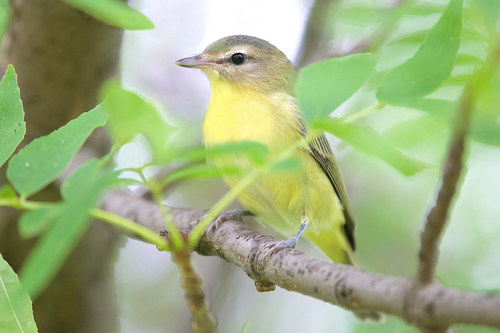
Philadelphia Vireo (Vireo philadelphicus) Philadelphia Vireo
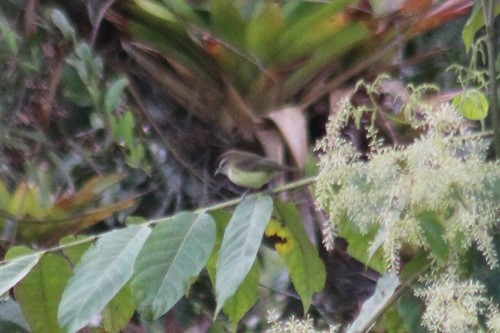
Brown-capped Vireo (Vireo leucophrys) Brown-capped Vireo

Media

Loading…

In short

The most reliable separation between Philadelphia Vireo and Brown-capped Vireo is the underpart color: Philadelphia Vireo shows distinctly yellower underparts throughout, while Brown-capped Vireo has a grayish white throat and upper breast with only pale yellow on the lower underparts. Both species lack wing bars and have a white supercilium, but Philadelphia Vireo has a grey crown and dark lores, whereas Brown-capped Vireo features a brown or olive-brown crown and a dusky spot on the lores. Structural differences are subtle, but Brown-capped Vireo is slightly larger and heavier on average. In the field, focus on the intensity and extent of yellow below and the crown color for the quickest separation.

Identification tips

  1. Underpart Color: Philadelphia Vireo shows bright yellow underparts throughout, especially on the breast and belly, while Brown-capped Vireo has grayish white on the throat and upper breast with only pale yellow on the lower underparts. This is the most reliable field mark for adults and immatures.
  2. Crown Color: Philadelphia Vireo has a grey crown, contrasting with the olive-brown upperparts. Brown-capped Vireo always has a brown or olive-brown crown, which may be darker or more sooty in some subspecies, but never grey. This is consistent across all ages.
  3. Lores and Face Pattern: Philadelphia Vireo has a dark line through the eye (dark lores) and a bold white supercilium. Brown-capped Vireo has a dusky spot on the lores, a dusky streak behind the eye, and grayish white ear coverts. The overall face pattern of Brown-capped is more diffuse and less sharply marked than Philadelphia.
  4. Supercilium: Both species have a white supercilium, but Philadelphia's is typically bolder and set off by the darker lores and grey crown, whereas Brown-capped's is less contrasting against the brown crown.
  5. Wing Bars and Eye Ring: Both lack wing bars and eye rings, so these are not helpful for separation.
  6. Upperparts: Philadelphia Vireo is mainly olive-brown above; Brown-capped Vireo is grayish olive to brownish olive-green, sometimes with yellow edges on the wing coverts. Subtle, but Brown-capped may appear slightly greener or duller.
  7. Bill and Legs: Both have stout bills and blue-grey legs, so these are not useful for separation in the field.
  8. Size: Brown-capped Vireo is slightly larger and heavier, but this is rarely diagnostic without direct comparison.
  9. Behavior: Both species forage actively in the canopy, but Brown-capped is more likely to join mixed-species flocks and hang upside down while feeding. Philadelphia may hover or sally for insects and is more solitary or in pairs.
  10. Habitat and Range: In North America, Philadelphia Vireo is expected in migration and breeding season, especially in Canada and the northern US. Brown-capped Vireo is a resident of montane forests from Mexico to Bolivia. If seen in Central or South American highlands, Brown-capped is far more likely.
  11. Vocalizations: Philadelphia Vireo's song is a series of clear, spaced phrases; Brown-capped Vireo gives a hurried, warbled song. Calls differ, but both can be confusingly similar to other vireos.
  12. Subspecies Variation: Brown-capped Vireo shows considerable subspecific variation in crown and back color, but all forms have less yellow below and a browner crown than Philadelphia Vireo. Watch for local variation if birding in Central or South America.
  13. Juvenile/Immature Plumage: No distinctive juvenile or immature upperwing or flight marks are described for either species, so focus on underpart color and crown even in young birds.
  14. Pitfalls: Bright light or shadow can make Philadelphia Vireo's yellow underparts appear paler, and Brown-capped Vireo can look yellower in some lights, but the throat and upper breast of Brown-capped always remain grayish white, not bright yellow.
  15. When in Doubt: If the bird has a grey crown and bright yellow underparts throughout, it's Philadelphia Vireo. If the crown is brown and the throat is whitish or grayish, it's Brown-capped Vireo.

Size

Brown-capped Vireo is marginally larger, measuring 11.5–12.5 cm in length and weighing 12–13.5 g. Philadelphia Vireo is not given a precise measurement in the notes, but is described as a small vireo and is generally similar in size to other North American vireos, likely slightly smaller than Brown-capped. In hand or with prolonged views, Brown-capped may appear a bit bulkier, but size alone is not a strong field mark due to overlap and observer bias.

Plumage

No age-specific upperwing or flight marks are described for either species, so focus on adult and general field marks. Philadelphia Vireo adults are olive-brown above with a grey crown, dark lores, and a bold white supercilium; underparts are bright yellow, especially on the breast and belly. Brown-capped Vireo adults (all subspecies) have an olive-brown to brown crown (never grey), a white supercilium, a dusky spot on the lores, and grayish white ear coverts. Their upperparts are grayish olive to brownish olive-green, with yellow edges on the wing coverts. The throat and upper breast are grayish white, with pale yellow restricted to the lower underparts. Both species lack wing bars and eye rings. Subspecies variation in Brown-capped Vireo affects crown and back color, but all show less yellow below and a browner or darker crown than Philadelphia Vireo.

Behaviour

Both species forage for insects in trees, often moving through the canopy and sometimes joining mixed-species flocks. Philadelphia Vireo may hover or sally for insects and is known to eat berries before migration. Brown-capped Vireo often hangs upside down to glean prey and is frequently seen in mixed flocks. Behavior is not a strong separator, but Brown-capped is more likely to be seen in the company of other tropical flocking species.

Habitat

Philadelphia Vireo breeds in the edges of deciduous and mixed woods across Canada and migrates to Mexico and Central America, only rarely reaching western Europe as a vagrant. Brown-capped Vireo is resident from Mexico through Central America to Bolivia, favoring montane and foothill forests. In North America, Philadelphia Vireo is the expected species; in Central and South American montane forests, Brown-capped Vireo is far more likely. Overlap is possible only in migration or at the northern edge of Brown-capped's range.

Voice

Philadelphia Vireo sings a series of three to five notes, weeezh weeezh weeezh, similar to Red-eyed Vireo but with longer pauses and higher notes. Brown-capped Vireo's song is a short, sweet warble, reminiscent of Warbling Vireo, with a silky, hurried quality and variable pattern. Its call is a wheezing, descending zreeEEEEw. Songs can be confusingly similar, but Philadelphia Vireo is more phrase-based and Brown-capped's song is more warbled and hurried.

Submit a better description

Use the same sections as the comparison. Your text is published immediately.

The most reliable separation between Philadelphia Vireo and Brown-capped Vireo is the underpart color: Philadelphia Vireo shows distinctly yellower underparts throughout, while Brown-capped Vireo has a grayish white throat and upper breast with only pale yellow on the lower underparts. Both species lack wing bars and have a white supercilium, but Philadelphia Vireo has a grey crown and dark lores, whereas Brown-capped Vireo features a brown or olive-brown crown and a dusky spot on the lores. Structural differences are subtle, but Brown-capped Vireo is slightly larger and heavier on average. In the field, focus on the intensity and extent of yellow below and the crown color for the quickest separation.

  1. Underpart Color: Philadelphia Vireo shows bright yellow underparts throughout, especially on the breast and belly, while Brown-capped Vireo has grayish white on the throat and upper breast with only pale yellow on the lower underparts. This is the most reliable field mark for adults and immatures.
  2. Crown Color: Philadelphia Vireo has a grey crown, contrasting with the olive-brown upperparts. Brown-capped Vireo always has a brown or olive-brown crown, which may be darker or more sooty in some subspecies, but never grey. This is consistent across all ages.
  3. Lores and Face Pattern: Philadelphia Vireo has a dark line through the eye (dark lores) and a bold white supercilium. Brown-capped Vireo has a dusky spot on the lores, a dusky streak behind the eye, and grayish white ear coverts. The overall face pattern of Brown-capped is more diffuse and less sharply marked than Philadelphia.
  4. Supercilium: Both species have a white supercilium, but Philadelphia's is typically bolder and set off by the darker lores and grey crown, whereas Brown-capped's is less contrasting against the brown crown.
  5. Wing Bars and Eye Ring: Both lack wing bars and eye rings, so these are not helpful for separation.
  6. Upperparts: Philadelphia Vireo is mainly olive-brown above; Brown-capped Vireo is grayish olive to brownish olive-green, sometimes with yellow edges on the wing coverts. Subtle, but Brown-capped may appear slightly greener or duller.
  7. Bill and Legs: Both have stout bills and blue-grey legs, so these are not useful for separation in the field.
  8. Size: Brown-capped Vireo is slightly larger and heavier, but this is rarely diagnostic without direct comparison.
  9. Behavior: Both species forage actively in the canopy, but Brown-capped is more likely to join mixed-species flocks and hang upside down while feeding. Philadelphia may hover or sally for insects and is more solitary or in pairs.
  10. Habitat and Range: In North America, Philadelphia Vireo is expected in migration and breeding season, especially in Canada and the northern US. Brown-capped Vireo is a resident of montane forests from Mexico to Bolivia. If seen in Central or South American highlands, Brown-capped is far more likely.
  11. Vocalizations: Philadelphia Vireo's song is a series of clear, spaced phrases; Brown-capped Vireo gives a hurried, warbled song. Calls differ, but both can be confusingly similar to other vireos.
  12. Subspecies Variation: Brown-capped Vireo shows considerable subspecific variation in crown and back color, but all forms have less yellow below and a browner crown than Philadelphia Vireo. Watch for local variation if birding in Central or South America.
  13. Juvenile/Immature Plumage: No distinctive juvenile or immature upperwing or flight marks are described for either species, so focus on underpart color and crown even in young birds.
  14. Pitfalls: Bright light or shadow can make Philadelphia Vireo's yellow underparts appear paler, and Brown-capped Vireo can look yellower in some lights, but the throat and upper breast of Brown-capped always remain grayish white, not bright yellow.
  15. When in Doubt: If the bird has a grey crown and bright yellow underparts throughout, it's Philadelphia Vireo. If the crown is brown and the throat is whitish or grayish, it's Brown-capped Vireo.

Brown-capped Vireo is marginally larger, measuring 11.5–12.5 cm in length and weighing 12–13.5 g. Philadelphia Vireo is not given a precise measurement in the notes, but is described as a small vireo and is generally similar in size to other North American vireos, likely slightly smaller than Brown-capped. In hand or with prolonged views, Brown-capped may appear a bit bulkier, but size alone is not a strong field mark due to overlap and observer bias.

No age-specific upperwing or flight marks are described for either species, so focus on adult and general field marks. Philadelphia Vireo adults are olive-brown above with a grey crown, dark lores, and a bold white supercilium; underparts are bright yellow, especially on the breast and belly. Brown-capped Vireo adults (all subspecies) have an olive-brown to brown crown (never grey), a white supercilium, a dusky spot on the lores, and grayish white ear coverts. Their upperparts are grayish olive to brownish olive-green, with yellow edges on the wing coverts. The throat and upper breast are grayish white, with pale yellow restricted to the lower underparts. Both species lack wing bars and eye rings. Subspecies variation in Brown-capped Vireo affects crown and back color, but all show less yellow below and a browner or darker crown than Philadelphia Vireo.

Both species forage for insects in trees, often moving through the canopy and sometimes joining mixed-species flocks. Philadelphia Vireo may hover or sally for insects and is known to eat berries before migration. Brown-capped Vireo often hangs upside down to glean prey and is frequently seen in mixed flocks. Behavior is not a strong separator, but Brown-capped is more likely to be seen in the company of other tropical flocking species.

Philadelphia Vireo breeds in the edges of deciduous and mixed woods across Canada and migrates to Mexico and Central America, only rarely reaching western Europe as a vagrant. Brown-capped Vireo is resident from Mexico through Central America to Bolivia, favoring montane and foothill forests. In North America, Philadelphia Vireo is the expected species; in Central and South American montane forests, Brown-capped Vireo is far more likely. Overlap is possible only in migration or at the northern edge of Brown-capped's range.

Philadelphia Vireo sings a series of three to five notes, weeezh weeezh weeezh, similar to Red-eyed Vireo but with longer pauses and higher notes. Brown-capped Vireo's song is a short, sweet warble, reminiscent of Warbling Vireo, with a silky, hurried quality and variable pattern. Its call is a wheezing, descending zreeEEEEw. Songs can be confusingly similar, but Philadelphia Vireo is more phrase-based and Brown-capped's song is more warbled and hurried.

Discard your changes?

You have unsaved edits. If you leave now, those changes will be lost.

Philadelphia Vireo · Brown-capped Vireo · My Tricky Birds