

Pearly-bellied Seedeater vs Rufous-rumped Seedeater
Sporophila pileata versus Sporophila hypochroma
Play a quiz with Pearly-bellied Seedeater and Rufous-rumped Seedeater
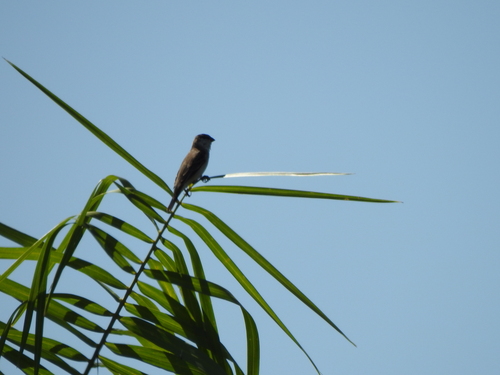 Pearly-bellied Seedeater
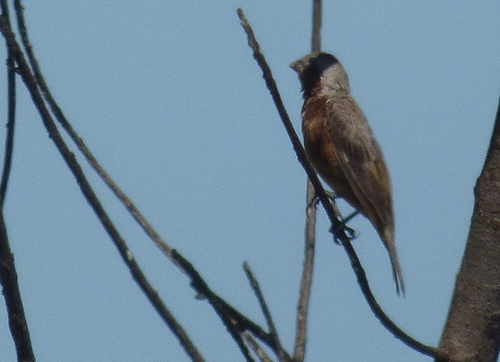 Rufous-rumped Seedeater
In short
The most reliable field mark between Pearly-bellied and Rufous-rumped Seedeaters is the male's head and underpart coloration: male Pearly-bellied shows a black cap and pale underparts, while male Rufous-rumped has a gray 'helmet' and rich chestnut face, rump, and underparts. Both sexes of both species show a small white patch at the base of the primaries on the folded wing, but the extent and context differ slightly. Females and juveniles are more challenging, but Pearly-bellied tends to be colder and paler below, while Rufous-rumped is warmer and more buff or chestnut. Both are tiny, short-billed seedeaters, so careful attention to subtle plumage and head pattern is essential, especially outside the breeding season or with immature birds.
Identification tips
- Adult male head pattern: Pearly-bellied has a sharply defined black cap down to the eye, with an off-white face and grayish-pink nape; Rufous-rumped has a gray crown and nape ('helmet') with a rich chestnut face. This is the single best mark in breeding males.
- Adult male underparts: Pearly-bellied males are pale below, with a whitish belly; Rufous-rumped males are deep chestnut from throat to belly. If you see a male with any chestnut below, it's Rufous-rumped.
- Adult male rump and back: Rufous-rumped males have a conspicuous chestnut lower back and rump, contrasting with grayish upper back; Pearly-bellied males are grayish-pink above with no rufous or chestnut.
- Female and juvenile upperparts: Pearly-bellied females/juveniles are olive-brown above, colder and grayer; Rufous-rumped are sandy or warm brown, often with a paler buff forehead and supercilium. Look for a warmer, more 'rufous' tone in Rufous-rumped.
- Female and juvenile underparts: Pearly-bellied is ochre-buff with a whitish belly; Rufous-rumped is warm buff, palest on the throat and belly but generally richer than Pearly-bellied. The difference is subtle but can be useful in good light.
- Wing pattern (all ages): Both show a small white patch at the base of the primaries on the folded wing; in Pearly-bellied, the coverts and tertials are edged very pale cinnamon-brown, while in Rufous-rumped, tertials are black with gray edges and the rest of the wing is darker brown. This is subtle but may help in direct comparison.
- Tail pattern: Rufous-rumped males have a mostly blackish tail with gray edges on the outer feathers; Pearly-bellied males have grayish brown uppertail coverts and a blackish tail, but without the gray edges. This is a minor mark.
- Bill color: Both have dark bills, but female Rufous-rumped may show a dark horn color rather than fully blackish. Not always visible.
- Leg color: Both are dark, but males of both species are blackish; female Rufous-rumped may be dusky rather than fully blackish.
- Iris color: Both species have dark brown irises; not a separator.
- Structure and size: Both are tiny, short-billed, and similar in overall shape. Structure is not helpful.
- Habitat and range: Both overlap extensively in range and habitat; do not use for separation.
- Seasonal context: Rufous-rumped is migratory, but details are unclear. If seen outside the breeding season, be extra cautious with female/immature IDs.
- Plumage pitfalls: Juveniles of both sexes resemble adult females and are best separated by subtle differences in overall tone (colder and paler in Pearly-bellied, warmer and buffier in Rufous-rumped) and, if visible, the presence of a buff supercilium in Rufous-rumped.
- White primary patch: Both sexes and all ages of both species show a small white patch at the base of the primaries on the folded wing. This is not diagnostic between these two, but absence would rule out both.
Size
Both species are among the smallest Sporophila, about 10 cm in length and weighing 7.6–10 g (Pearly-bellied) or around 9.7 g (Rufous-rumped, young male measured). Bill size and shape are similar: short, thick, and rounded. Size is not a reliable separator in the field.
Plumage
-
Juveniles and Females: Both resemble each other, with olive-brown (Pearly-bellied) or sandy/warm brown (Rufous-rumped) upperparts and buffy underparts. Pearly-bellied females/juveniles are colder-toned above and paler, more whitish on the belly; Rufous-rumped are warmer, with a sandy or buff tone and a paler buff supercilium sometimes present. Both show a small white patch at the base of the primaries, but the rest of the wing is darker brown in Rufous-rumped, with sandy edges to tertials, versus paler cinnamon-brown edges in Pearly-bellied.
-
Adult Males: Pearly-bellied males have a distinctive black cap extending to the eye, off-white face, grayish-pink nape and upperparts, and pale underparts with a whitish belly. Their wings are blackish with pale cinnamon-brown edges and a white primary patch. Rufous-rumped males have a gray crown and nape ('helmet'), chestnut face, lower back, rump, and underparts, and a blackish tail with gray-edged outer feathers. Their wings are blackish with a white primary patch and gray-edged tertials. The chestnut coloration is unique to Rufous-rumped; Pearly-bellied never shows this rich rufous or chestnut.
-
In Flight: Both show a small white patch at the base of the primaries, but the overall impression is colder and paler in Pearly-bellied, warmer and richer in Rufous-rumped.
Behaviour
No diagnostic behavioral differences are described. Both are typical small seedeaters, likely to be seen perched or foraging in grasslands or open country. Rufous-rumped is noted as migratory, but movement details are unclear.
Habitat
Both species overlap broadly in range and habitat, occurring in Argentina, Brazil, Paraguay, Uruguay, and possibly Bolivia (Pearly-bellied) or confirmed in Bolivia (Rufous-rumped). Both use open country and grassland habitats. Habitat is not a reliable separator.
Pearly-bellied Seedeater · Rufous-rumped Seedeater · My Tricky Birds