

Pacific Golden Plover vs Grey-necked Bunting
Pluvialis fulva versus Emberiza buchanani
Play a quiz with Pacific Golden Plover and Grey-necked Bunting
 Pacific Golden Plover
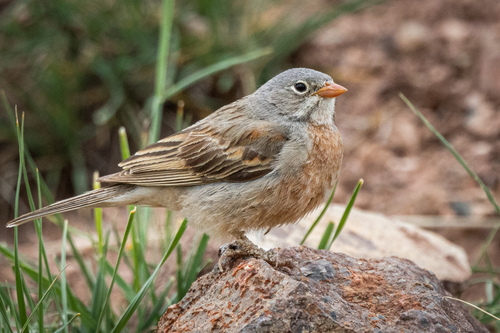 Grey-necked Bunting
In short
The most reliable way to separate Pacific Golden Plover from Grey-necked Bunting is by overall structure and bill shape: the plover is a robust, long-legged shorebird with a short, black bill, while the bunting is a small, slender songbird with a long, pinkish bill. In flight or at rest, the plover's gold-spotted upperparts and, in breeding plumage, its striking black-and-white face and underparts are unique; the bunting is much plainer, with a grey hood, white eye-ring, and pinkish underparts. Juvenile and nonbreeding plovers lose the bold black but remain gold-spangled above, never showing the bunting's grey head or white outer tail feathers. Habitat context is also a strong clue: plovers are typically in open fields or shorelines, buntings in dry, scrubby hillsides or weedy fields.
Identification tips
- Size and Structure: Pacific Golden Plover is much larger and heavier than Grey-necked Bunting. If the bird appears robust, with long legs and a short bill, think plover; if small, slim, and perching upright, think bunting. This holds for all ages and seasons.
- Bill Shape and Color: Plover has a short, straight, black bill; bunting has a long, conical, pinkish bill. Bill color is especially useful at close range or in good light.
- Leg Length and Color: Plover shows long, gray to black legs, often obvious even at a distance. Bunting's legs are much shorter and less conspicuous.
- Gold Spangling: Any gold-spotted upperparts (back, wings, crown) point to Pacific Golden Plover, regardless of age or season. Bunting is never gold-spangled.
- Face Pattern: In breeding plumage, male plover has a black face and neck bordered with white; female is similar but less distinct. Bunting always has a grey hood and a white eye-ring, never a black face or white border.
- Underparts: Breeding plover has black underparts; nonbreeding and juvenile plover are pale below. Bunting is pinkish brown below, never black.
- White Eye-ring: Grey-necked Bunting always shows a clear white eye-ring, especially in males. Plover never shows a white eye-ring.
- Tail Pattern: Bunting has whitish outer tail feathers, which may flash in flight or when flicked. Plover's tail is dark, never showing white.
- Flight Silhouette: Plover flies with long, pointed wings and a straight, stretched-out body; bunting has shorter, more rounded wings and a compact, sparrow-like shape.
- Perching vs. Ground Foraging: Bunting often perches on shrubs or wires; plover is almost always on the ground.
- Habitat Context: Open lawns, tundra, or shorelines suggest plover; dry, scrubby hillsides or weedy fields suggest bunting.
- Flock Size: Bunting is usually in small flocks; plover may be solitary or in small groups, rarely in large flocks away from migration.
- Voice: A metallic, jingling song or 'click' note is bunting; plover is generally silent in nonbreeding areas.
- Seasonal Plumage: In March–April, plovers may show partial molt with patchy black and gold; buntings do not show such changes.
- Sex Differences: Female plover in breeding plumage has less extensive black than male, but both sexes are gold-spangled; female bunting is duller but still shows the grey hood and white eye-ring.
Size
Pacific Golden Plover is much larger and heavier (adult mass ~135 g [wikidata]) than Grey-necked Bunting (no mass given, but typical Emberiza buntings are ~20–30 g). The plover is a medium-sized shorebird with a robust build, long legs, and a relatively short bill. The bunting is a small, slim songbird with a delicate, long, conical bill and shorter legs. In direct comparison, the plover will appear bulkier and longer-legged, with a more horizontal stance, while the bunting is petite and perches upright.
Plumage
- Juvenile/Nonbreeding: Pacific Golden Plover (all ages outside breeding) shows gold-spangled upperparts, a plain face, and pale underparts, lacking any grey hood or white eye-ring. Grey-necked Bunting (all ages) is never gold-spangled; instead, it is greyish above, with a distinctive grey hood, white eye-ring, and pinkish underparts. The bunting's outer tail feathers are whitish, a feature never shown by the plover.
- Breeding Adult: Male Pacific Golden Plover is boldly patterned with black face, neck, and underparts bordered by white, and gold-spotted upperparts. Female is similar but with less extensive black. Grey-necked Bunting male has a grey hood, white eye-ring, and pinkish brown underparts, lacking any black or gold; female is duller but still shows the moustachial stripe and white outer tail.
- Flight: No distinctive upperwing or tail pattern is described for either species in these sources, but the bunting's white outer tail feathers may flash in flight, while the plover shows uniform dark upperwings with gold spangling and no white in the tail.
Behaviour
Pacific Golden Plover typically forages by running and pausing in open areas, often alone or in small groups, and is wary and alert. It stands tall on long legs and may be seen probing or picking at the ground. Grey-necked Bunting is usually found in small flocks, perching on shrubs or foraging on the ground in a more hopping, sparrow-like manner. The bunting often sings from a perch, while the plover is mostly silent away from breeding grounds.
Habitat
Pacific Golden Plover prefers open spaces with short vegetation, including tundra, fields, pastures, and sometimes shorelines, but in migration and winter often feeds well away from water. In Hawaii, it adapts to lawns, parks, and even rooftops. Grey-necked Bunting favors dry, stony, or scrubby hillsides, weedy fields, and grasslands, usually away from water. Seeing a bird in a manicured lawn or open tundra suggests plover; in thorn scrub or weedy field, bunting is more likely.
Voice
Pacific Golden Plover is generally quiet on migration and wintering grounds; no distinctive call is described in these notes. Grey-necked Bunting gives a short, subdued 'click' note in winter and, in breeding season, a metallic, jingling song of 'swee-swee...dzwe-ee-dul' from a perch. If you hear a metallic, sparrow-like song, it's the bunting.
Pacific Golden Plover · Grey-necked Bunting · My Tricky Birds