

Orange River White-eye vs Southern Yellow White-eye
Zosterops pallidus versus Zosterops anderssoni
Play a quiz with Orange River White-eye and Southern Yellow White-eye
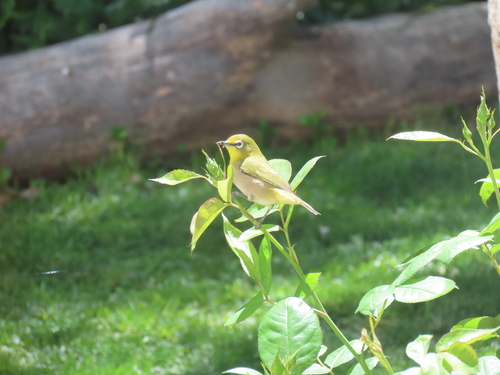 Orange River White-eye
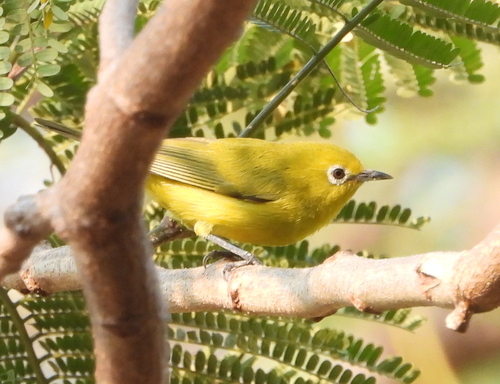 Southern Yellow White-eye
In short
The most reliable field mark to separate Orange River White-eye from Southern Yellow White-eye is the combination of plumage tones on the flanks and breast sides: Orange River White-eye shows a distinctive tawny-buff wash here, whereas Southern Yellow White-eye lacks this feature. Both species are small, greenish white-eyes with yellow throats and white eye-rings, and can occur together in southern Africa, making subtle plumage details critical. Juvenile Orange River White-eyes resemble adults but are paler, and their eye-rings develop after fledging. Structural differences and vocalizations are not documented as useful for separation in the available notes, so focus on flank color and overall tone when identifying these species in the field.
Identification tips
- Flank and side color: The single most diagnostic mark is the tawny-buff wash on the flanks and sides of the breast in Orange River White-eye. Southern Yellow White-eye lacks this, showing a more uniform yellow-green underpart.
- Juvenile eye-ring development: Juvenile Orange River White-eyes are paler than adults and develop their white eye-rings during the second month. If you see a pale, eye-ringed juvenile with buffy flanks, favor Orange River White-eye.
- Upperpart tone: Both species have pale olive-green upperparts, but Orange River White-eye may appear slightly paler overall, especially in fresh plumage. This is subtle and unreliable alone.
- Yellow throat and supraloral stripe: Both species show yellow throats and a yellow supraloral stripe; this is not diagnostic between them.
- Lores and bare parts: Both have black lores and bare parts, so this feature does not separate them.
- White eye-ring: Both species have a white eye-ring, which appears in juvenile Orange River White-eye after the first month. Presence of the eye-ring alone is not diagnostic.
- Sexes alike: Both species show no sexual dimorphism in plumage, so sex cannot be used for separation.
- Sympatry: Both species can occur together in central South Africa, so do not rely on range alone for identification.
- Subspecies variation: Orange River White-eye has several subspecies with slight differences in plumage and size, but the tawny-buff flanks are regionally diagnostic and consistent.
- Size: No reliable size difference is available; both are small white-eyes, and apparent size in the field is not a safe mark.
- Behavior: Both species are active, flocking, and arboreal; behavior is not useful for separation.
- Habitat: Both use similar habitats in southern Africa; do not use habitat as a primary field mark.
- Voice: No distinguishing vocal differences are documented in the available notes; do not rely on calls or song for separation.
- Pitfall – clean yellow underparts: If the bird lacks any buff or tawny on the flanks and is otherwise a typical yellow-throated white-eye, Southern Yellow White-eye is more likely, but beware of worn or faded Orange River White-eyes.
- Pitfall – regional overlap: In areas where both species occur, always check for the tawny-buff flanks before making an identification.
Size
Adult Orange River White-eye averages 11.1 g in body mass [wikidata], with a length of 10–13 cm from bill to tail tip [wikipedia]. No direct measurement is available for Southern Yellow White-eye, but as a Zosterops, it is expected to be similar in size. There is no evidence for a consistent size difference useful for field identification between these two species.
Plumage
- Juvenile/immature: Juvenile Orange River White-eyes are paler versions of the adult, with the diagnostic white eye-ring developing during the second month. No specific juvenile plumage information is available for Southern Yellow White-eye, but it is presumed similar to other Zosterops, lacking the tawny-buff flanks of Orange River White-eye at all ages.
- Adult: Orange River White-eye shows pale olive-green upperparts, a yellow throat and supraloral stripe, and a regionally diagnostic tawny-buff wash on the flanks and sides of the breast. The lores and bare parts are black, and the sexes are alike. Southern Yellow White-eye also has greenish upperparts and yellow on the face and throat, but lacks the tawny-buff on the flanks and breast sides, appearing cleaner and more uniformly yellow-green below. Both have white eye-rings, but only Orange River White-eye is noted for the tawny-buff sides.
Behaviour
No behavioral differences are noted in the available sources that would help separate these two species in the field. Both are typical active, social white-eyes, often seen in small flocks.
Habitat
Both species occur in southern Africa and can be found in overlapping regions, particularly in central South Africa. There is no habitat separation noted in the sources; both may be encountered in similar environments, so habitat is not a reliable field mark.
Orange River White-eye · Southern Yellow White-eye · My Tricky Birds