

Orange-billed Nightingale-Thrush vs Rufous-backed Robin
Catharus aurantiirostris versus Turdus rufopalliatus
Play a quiz with Orange-billed Nightingale-Thrush and Rufous-backed Robin
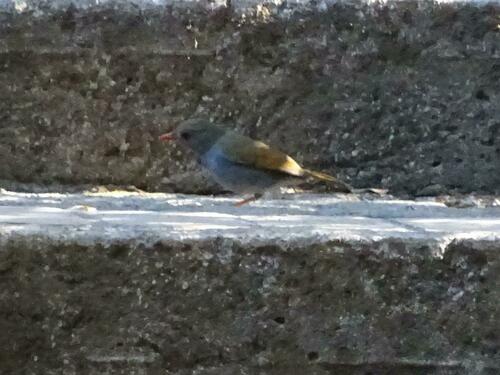 Orange-billed Nightingale-Thrush
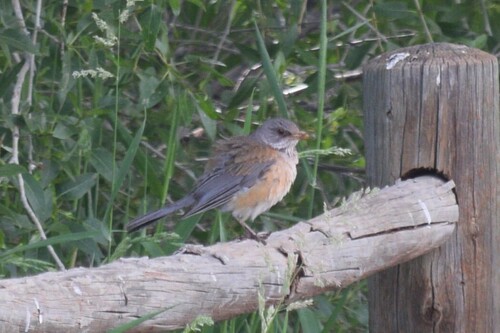 Rufous-backed Robin
In short
The most reliable field mark to separate Orange-billed Nightingale-Thrush from Rufous-backed Robin is overall size and bill color: the nightingale-thrush is much smaller and slimmer, with a distinctly long, strong orange bill, while the robin is larger and heavier-bodied with a yellow bill. In all plumages, the robin shows a striking contrast between its rufous back and gray wings, whereas the nightingale-thrush is more uniformly olive-brown to rufous, lacking the robin’s bold patterning. Juvenile nightingale-thrushes are brown with buff flecking, while juvenile robins show buffy stippling and dark barring below. Both species can show rufous tones, but the distribution and contrast of these colors are key for field separation. Always consider the bird's structure and bill color first, then check for the robin’s pale gray head and orange-chestnut flanks versus the nightingale-thrush’s plainer, more muted tones.
Identification tips
- Size and Structure: Rufous-backed Robin is much larger and bulkier than Orange-billed Nightingale-Thrush. If the bird appears robin-sized or larger than a sparrow, it is likely a robin. Nightingale-thrushes are noticeably smaller and more slender.
- Bill Color: Orange-billed Nightingale-Thrush has a long, strong, orange bill (sometimes orange-red in some subspecies), while Rufous-backed Robin has a yellow bill. Bill color is a quick and reliable check in good light.
- Head Pattern: Rufous-backed Robin shows a pale gray head with black lores and a yellow eye-ring. Orange-billed Nightingale-Thrush has a grayish brown face with a thin orange eye-ring, lacking the robin’s sharp contrast and black lores.
- Back and Wing Contrast: The robin has a dull chestnut (rufous) back and scapulars sharply set off against pale gray wings and tail. The nightingale-thrush is more uniform olive-brown to rufous, with rufous strongest on the back, rump, wings, and tail, but without the robin’s clear color separation.
- Underparts: Rufous-backed Robin has a white throat with dark streaks, orange-chestnut breast and flanks, and a white belly and vent. Orange-billed Nightingale-Thrush has a whitish throat darkening to pale gray underparts, lacking the robin’s bold orange and white contrast.
- Juvenile Plumage: Juvenile nightingale-thrushes are brown with buff flecking and mottling, appearing plain and soft-edged. Juvenile robins show buffy stippling above and strong dark barring below, making them look more patterned and contrasty.
- Leg Color: Nightingale-thrush has brownish orange legs and feet; robin’s legs are less distinctly colored but not as orange as the nightingale-thrush’s.
- Tail: Robin’s tail is longer and more robust, matching its overall size, while nightingale-thrush’s tail is proportionally shorter and slimmer.
- Sex Differences: Both species have similar plumage between sexes, but female robins are slightly duller than males; this is rarely diagnostic in the field.
- Subspecies Variation: Some nightingale-thrush subspecies show more rufous or gray on the head and wings, but none match the robin’s sharp gray/rufous contrast. Robin subspecies may vary in back color intensity but always retain the key pattern.
- Habitat Context: If seen in dense, shaded understory or following army ants, suspect nightingale-thrush. If in open woodland, gardens, or perched high, robin is more likely.
- Behavior: Nightingale-thrush is more furtive, often low and hidden; robin is bolder, sometimes foraging in the open.
- Eye-ring: Both have eye-rings, but nightingale-thrush’s is thin and orange, robin’s is yellow and more obvious against the pale gray head.
- Voice: Not diagnostic with current sources, but robins typically have louder, more melodious songs compared to the nightingale-thrush’s quieter calls.
- Geographic Range: Rufous-backed Robin is endemic to Mexico and adjacent U.S. borderlands; Orange-billed Nightingale-Thrush ranges from Mexico to northern South America. Overlap is limited, but vagrants are possible.
Size
Orange-billed Nightingale-Thrush is significantly smaller and lighter (about 27 g) than Rufous-backed Robin, which is a robust thrush weighing 72–85 g and reaching 21.5–25.5 cm in length. The robin is similar in size to an American Robin, appearing much bulkier and longer-winged than the compact, slender nightingale-thrush. In the field, the robin’s size and longer tail are immediately obvious when the two are seen side by side or compared to familiar thrushes.
Plumage
Juvenile Orange-billed Nightingale-Thrushes are mostly brown with buff flecking and mottling, lacking strong patterning on the underparts. Juvenile Rufous-backed Robins, by contrast, resemble adults but add buffy stippling and streaks above and dark mottling and barring below, making them look more patterned and contrasty. Adult nightingale-thrushes are olive-brown with a rufous tinge strongest on the crown, back, rump, wings, and tail, a grayish brown face with a thin orange eye-ring, and a whitish throat fading to pale gray underparts. They are rather uniform, with no sharp color breaks. Adult robins have a pale gray head with black lores, a yellow eye-ring, pale gray wings and tail, and a dull chestnut back and scapulars. Their throat and neck sides are white with dark streaks, and their breast and flanks are orange-chestnut, sharply contrasting with a white belly and vent. The robin’s bold color blocks and strong contrasts, especially the rufous back against gray wings and the orange-chestnut flanks, are not matched by the nightingale-thrush’s more blended tones. Subspecies variation in both species can affect rufous intensity, but the robin always shows a more patterned appearance.
Behaviour
Both species forage on or near the ground, often in the forest understory. Orange-billed Nightingale-Thrush is more likely to be seen flipping leaf litter in dense undergrowth, sometimes following army ant swarms. Rufous-backed Robin, being larger, often feeds more openly, sometimes in gardens or edges, and may be seen hopping on lawns or perching higher in trees. The robin’s movements are more robust and deliberate, while the nightingale-thrush is quicker and more furtive.
Habitat
Orange-billed Nightingale-Thrush favors dense forest understory, thickets, and shrubby areas, typically in more humid or shaded environments. Rufous-backed Robin is more often found in open woodlands, forest edges, gardens, and sometimes urban parks, especially in its Mexican range. While both can overlap in some edge habitats, the robin is less tied to dense cover and more likely to be seen in semi-open or human-modified areas.
Orange-billed Nightingale-Thrush · Rufous-backed Robin · My Tricky Birds