

Motmot

Olomao vs Bicknell's Thrush

Myadestes lanaiensis versus Catharus bicknelli

Play a quiz with Olomao and Bicknell's Thrush
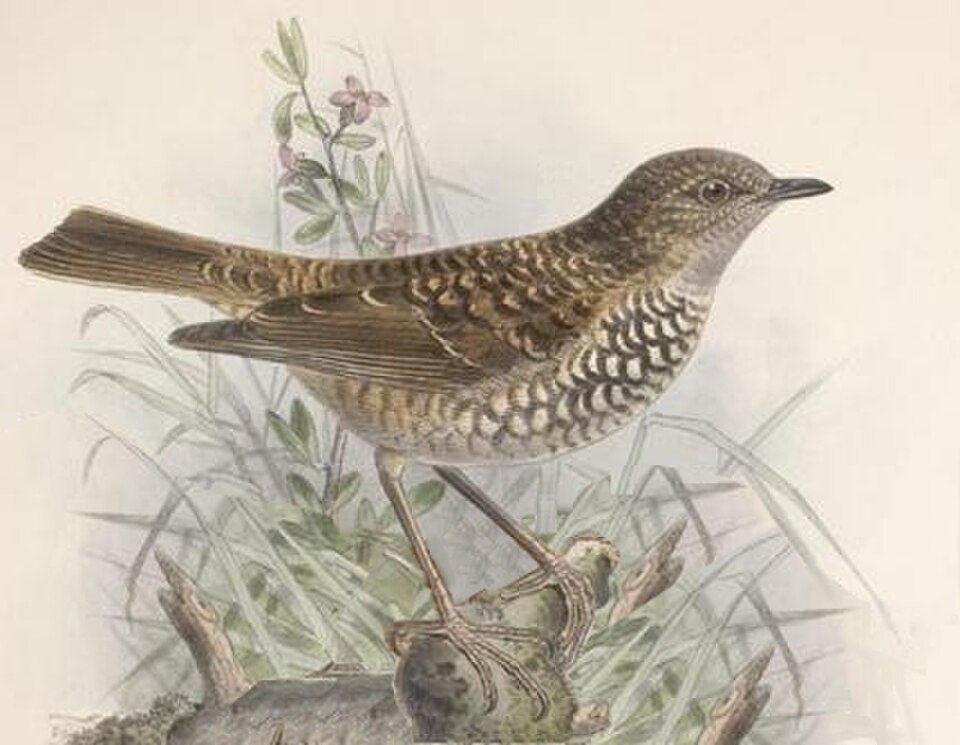
Olomao (Myadestes lanaiensis) Olomao
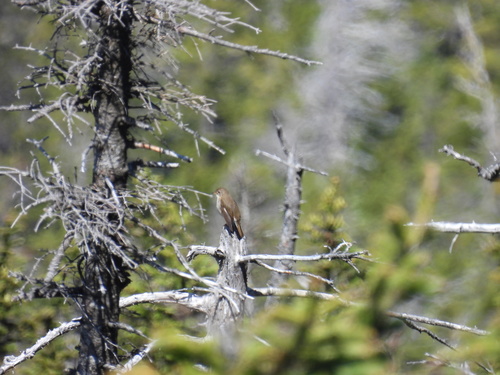
Bicknell's Thrush (Catharus bicknelli) Bicknell's Thrush

Media

Loading…

In short

The most reliable field separation between Olomao and Bicknell's Thrush is overall coloration: Olomao is distinctly dark brown above and gray below, while Bicknell's Thrush shows a warmer olive-brown to brownish back with a chestnut-tinged tail and off-white underparts with buffy spotting. Both are small thrushes with similar size and structure, but Olomao appears more somber and uniform, and is found only in dense Hawaiian understory, whereas Bicknell's Thrush is restricted to high-elevation northeastern North American forests. Vocalizations differ: Olomao gives a complex, gurgling, and sometimes raspy song, while Bicknell's Thrush sings a jumbled series of flute-like tones. In the field, habitat and overall color tone are your best clues.

Identification tips

  1. Overall color tone: Olomao is dark brown above and gray below, creating a somber, uniform appearance; Bicknell's Thrush is warmer olive-brown above, with a chestnut-tinged tail and off-white, buff-washed underparts with dusky spots.
  2. Tail color: Bicknell's Thrush shows a chestnut tinge to the tail (especially in fresh plumage), contrasting with the back; Olomao's tail is not described as contrasting and blends with the dark brown upperparts.
  3. Underparts: Olomao is gray below with little contrast; Bicknell's Thrush is off-white with a buffy wash and diffuse dusky spotting on the breast, fading toward the belly.
  4. Leg color: Olomao has blackish legs, while Bicknell's Thrush has pink legs—this can be seen in good light and close views.
  5. Bill pattern: Bicknell's Thrush has a two-toned bill (yellowish lower mandible base, blackish tip and upper mandible); Olomao's bill is not described as bicolored.
  6. Eye-ring and face: Bicknell's Thrush has a faint gray eye-ring and gray cheeks; Olomao lacks a described eye-ring and has a plainer face.
  7. Posture and behavior: Olomao often perches motionless and hunched in dense understory, sometimes quivering wings; Bicknell's Thrush is more active, often seen singing in the open atop conifers.
  8. Habitat and range: Olomao is strictly Hawaiian (Maui, Lānaʻi, Molokaʻi) in dense forest gulches; Bicknell's Thrush is a northeastern North American breeder of high-elevation coniferous forests. If the habitat or region is wrong, so is the ID.
  9. Vocalizations: Olomao's song is complex, with flute-like, gurgling, and raspy notes; Bicknell's Thrush gives a simpler, jumbled flute song ending on a high note. Olomao's call can be a catlike rasp or police whistle, unlike Bicknell's.
  10. Sex and age: Both species are similar between sexes and ages in the field; no strong age- or sex-based differences are described for separation.
  11. Flight and wing pattern: No distinctive age-specific flight or wing panel marks are described for either species; do not rely on wing pattern for separation.
  12. Size and structure: Both are similar in size (about 17–18 cm), with no meaningful difference in the field. Structure is not a reliable separator.
  13. Plumage wear: In Bicknell's Thrush, the chestnut tail contrast may fade in worn plumage, but underparts remain paler and more marked than Olomao.
  14. Confusion risk: In North America, Olomao is never present; in Hawaii, Bicknell's Thrush is never present. Always consider location first.
  15. Quiz pitfalls: If you see a small, plain, dark thrush in dense Hawaiian understory, it is Olomao; if you see a spotted-breasted, warmer brown thrush with a chestnut tail on a North American mountaintop, it is Bicknell's Thrush.

Size

Both species are very close in size, with Olomao reaching up to 7 inches (about 17.8 cm) and Bicknell's Thrush averaging 17–17.5 cm in length. Weight is also similar, with Bicknell's Thrush at 26–30g. There is no meaningful size difference in the field; both sexes are alike in both species, and neither shows strong sexual dimorphism in size or structure. Use plumage and context, not size, for separation.

Plumage

No age-specific wing or flight pattern marks are described for either species; both lack distinctive juvenile or immature upperwing panels or trailing edges. For all ages, Olomao is dark brown above and gray below, with a uniform, somber look and blackish legs. Bicknell's Thrush is olive-brown to brownish above, with a chestnut-tinged tail (especially fresh), off-white underparts with a buffy wash, and dusky breast spots that fade toward the belly. Bicknell's Thrush also has pink legs, a faint gray eye-ring, and a two-toned bill (yellowish lower mandible base, blackish tip and upper mandible). In worn plumage, the chestnut tail contrast may be less obvious, but the underparts remain paler and more marked than Olomao. Both species are similar between sexes and ages in the field.

Behaviour

Olomao often perches motionless in a hunched posture within dense understory, sometimes quivering its wings. Bicknell's Thrush is more likely to be seen foraging or singing in the open on coniferous mountaintops or in disturbed second-growth forests. Both species are primarily frugivorous and insectivorous, but Olomao's behavior is more secretive and sedentary, while Bicknell's Thrush can be active and conspicuous when singing.

Habitat

Habitat is a strong separator: Olomao is endemic to the Hawaiian Islands (Maui, Lānaʻi, Molokaʻi), strictly inhabiting densely vegetated gulches and forest understory. Bicknell's Thrush is found only in northeastern North America, breeding on high-elevation coniferous mountaintops and sometimes in disturbed forests. If you are not in the correct geographic region or habitat, the bird is almost certainly not the other species.

Voice

Olomao's song is a complex melody of flute-like notes, liquid warbles, and gurgling whistles, with a catlike rasp and a high-pitched, police-whistle-like call. Bicknell's Thrush gives a jumbled series of flute-like tones that rise to a higher note, generally less complex and without the gurgling or rasping quality. Both are musical, but Olomao's song is more varied and includes harsher elements.

Submit a better description

Use the same sections as the comparison. Your text is published immediately.

The most reliable field separation between Olomao and Bicknell's Thrush is overall coloration: Olomao is distinctly dark brown above and gray below, while Bicknell's Thrush shows a warmer olive-brown to brownish back with a chestnut-tinged tail and off-white underparts with buffy spotting. Both are small thrushes with similar size and structure, but Olomao appears more somber and uniform, and is found only in dense Hawaiian understory, whereas Bicknell's Thrush is restricted to high-elevation northeastern North American forests. Vocalizations differ: Olomao gives a complex, gurgling, and sometimes raspy song, while Bicknell's Thrush sings a jumbled series of flute-like tones. In the field, habitat and overall color tone are your best clues.

  1. Overall color tone: Olomao is dark brown above and gray below, creating a somber, uniform appearance; Bicknell's Thrush is warmer olive-brown above, with a chestnut-tinged tail and off-white, buff-washed underparts with dusky spots.
  2. Tail color: Bicknell's Thrush shows a chestnut tinge to the tail (especially in fresh plumage), contrasting with the back; Olomao's tail is not described as contrasting and blends with the dark brown upperparts.
  3. Underparts: Olomao is gray below with little contrast; Bicknell's Thrush is off-white with a buffy wash and diffuse dusky spotting on the breast, fading toward the belly.
  4. Leg color: Olomao has blackish legs, while Bicknell's Thrush has pink legs—this can be seen in good light and close views.
  5. Bill pattern: Bicknell's Thrush has a two-toned bill (yellowish lower mandible base, blackish tip and upper mandible); Olomao's bill is not described as bicolored.
  6. Eye-ring and face: Bicknell's Thrush has a faint gray eye-ring and gray cheeks; Olomao lacks a described eye-ring and has a plainer face.
  7. Posture and behavior: Olomao often perches motionless and hunched in dense understory, sometimes quivering wings; Bicknell's Thrush is more active, often seen singing in the open atop conifers.
  8. Habitat and range: Olomao is strictly Hawaiian (Maui, Lānaʻi, Molokaʻi) in dense forest gulches; Bicknell's Thrush is a northeastern North American breeder of high-elevation coniferous forests. If the habitat or region is wrong, so is the ID.
  9. Vocalizations: Olomao's song is complex, with flute-like, gurgling, and raspy notes; Bicknell's Thrush gives a simpler, jumbled flute song ending on a high note. Olomao's call can be a catlike rasp or police whistle, unlike Bicknell's.
  10. Sex and age: Both species are similar between sexes and ages in the field; no strong age- or sex-based differences are described for separation.
  11. Flight and wing pattern: No distinctive age-specific flight or wing panel marks are described for either species; do not rely on wing pattern for separation.
  12. Size and structure: Both are similar in size (about 17–18 cm), with no meaningful difference in the field. Structure is not a reliable separator.
  13. Plumage wear: In Bicknell's Thrush, the chestnut tail contrast may fade in worn plumage, but underparts remain paler and more marked than Olomao.
  14. Confusion risk: In North America, Olomao is never present; in Hawaii, Bicknell's Thrush is never present. Always consider location first.
  15. Quiz pitfalls: If you see a small, plain, dark thrush in dense Hawaiian understory, it is Olomao; if you see a spotted-breasted, warmer brown thrush with a chestnut tail on a North American mountaintop, it is Bicknell's Thrush.

Both species are very close in size, with Olomao reaching up to 7 inches (about 17.8 cm) and Bicknell's Thrush averaging 17–17.5 cm in length. Weight is also similar, with Bicknell's Thrush at 26–30g. There is no meaningful size difference in the field; both sexes are alike in both species, and neither shows strong sexual dimorphism in size or structure. Use plumage and context, not size, for separation.

No age-specific wing or flight pattern marks are described for either species; both lack distinctive juvenile or immature upperwing panels or trailing edges. For all ages, Olomao is dark brown above and gray below, with a uniform, somber look and blackish legs. Bicknell's Thrush is olive-brown to brownish above, with a chestnut-tinged tail (especially fresh), off-white underparts with a buffy wash, and dusky breast spots that fade toward the belly. Bicknell's Thrush also has pink legs, a faint gray eye-ring, and a two-toned bill (yellowish lower mandible base, blackish tip and upper mandible). In worn plumage, the chestnut tail contrast may be less obvious, but the underparts remain paler and more marked than Olomao. Both species are similar between sexes and ages in the field.

Olomao often perches motionless in a hunched posture within dense understory, sometimes quivering its wings. Bicknell's Thrush is more likely to be seen foraging or singing in the open on coniferous mountaintops or in disturbed second-growth forests. Both species are primarily frugivorous and insectivorous, but Olomao's behavior is more secretive and sedentary, while Bicknell's Thrush can be active and conspicuous when singing.

Habitat is a strong separator: Olomao is endemic to the Hawaiian Islands (Maui, Lānaʻi, Molokaʻi), strictly inhabiting densely vegetated gulches and forest understory. Bicknell's Thrush is found only in northeastern North America, breeding on high-elevation coniferous mountaintops and sometimes in disturbed forests. If you are not in the correct geographic region or habitat, the bird is almost certainly not the other species.

Olomao's song is a complex melody of flute-like notes, liquid warbles, and gurgling whistles, with a catlike rasp and a high-pitched, police-whistle-like call. Bicknell's Thrush gives a jumbled series of flute-like tones that rise to a higher note, generally less complex and without the gurgling or rasping quality. Both are musical, but Olomao's song is more varied and includes harsher elements.

Discard your changes?

You have unsaved edits. If you leave now, those changes will be lost.

Olomao · Bicknell's Thrush · My Tricky Birds