

Olive-streaked Flycatcher vs Olive-striped Flycatcher
Mionectes olivaceus versus Mionectes galbinus
Play a quiz with Olive-streaked Flycatcher and Olive-striped Flycatcher
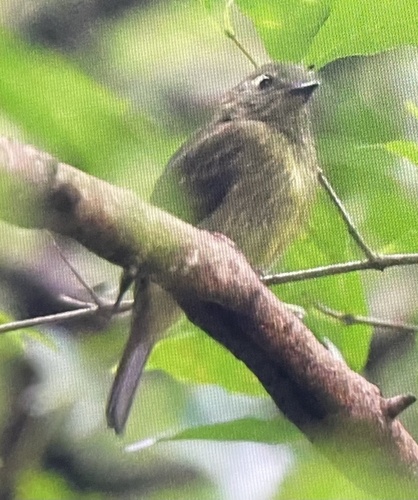 Olive-streaked Flycatcher
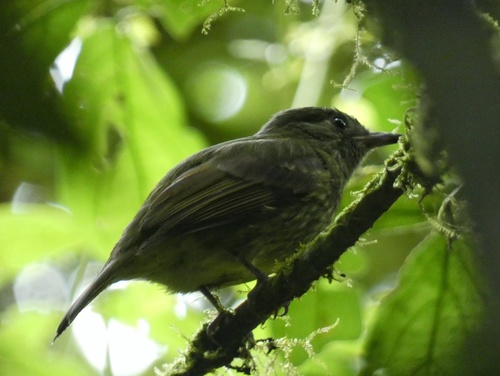 Olive-striped Flycatcher
In short
The most reliable field mark between Olive-streaked and Olive-striped Flycatchers is subtle but consistent: Olive-streaked has darker, more olive-toned upperparts and face, while Olive-striped is generally brighter yellow-green above with more yellowish edging on the wings. Both species are extremely similar in size and structure, and both sexes look alike, so careful attention to overall color tones and subtle facial details is key. Range is also a strong clue: Olive-streaked is limited to Costa Rica and Panama, while Olive-striped is found from Panama south and east through much of northern South America and Trinidad. In areas of overlap (Panama), separation requires close study of plumage and sometimes knowledge of local subspecies. Vocalizations are not well described for Olive-striped, so voice is not a reliable separator.
Identification tips
- Geographic range is often the best first check: Olive-streaked occurs only in Costa Rica and Panama, while Olive-striped is found from Panama south and east into South America and Trinidad. If you are outside Costa Rica or Panama, you almost certainly have Olive-striped.
- Upperparts color: Olive-streaked is darker and more uniformly olive above, especially on the face and crown. Olive-striped is brighter yellow-green above, sometimes with yellowish-green feather edges on the wings, especially in the nominate subspecies.
- Facial pattern: Olive-streaked has a dark olive face with white streaks and a small, often subtle, triangular white spot behind the eye. Olive-striped also has a white spot behind the eye, but the face is more streaked with yellowish-white and dark olive, often appearing less uniformly dark than Olive-streaked.
- Wing and tail color: Both have dusky olive wings and tail, but Olive-striped often shows thin yellowish-green edges to the flight feathers, especially in fresh plumage. Olive-streaked's wings are more uniformly dusky olive without prominent edging.
- Throat and breast streaking: Both species have dark olive and yellowish-white streaking on the throat and upper breast, but Olive-streaked's streaking is denser and the background color is darker. Olive-striped's streaking may appear finer and the background paler, especially in some subspecies.
- Belly color: Both have an unstreaked yellow belly, but Olive-striped's can be paler or richer yellow depending on subspecies, sometimes contrasting more with the streaked breast. Olive-streaked's belly is a warmer yellow.
- Bill color: Both have a dark bill, but older Olive-striped Flycatchers may show an orange base to the bill, which is less common in Olive-streaked.
- Iris and legs: Both have dark brown irises and dark gray or pinkish legs and feet; these are not useful for separation.
- Sex and age: Both sexes look alike in both species, and no age-specific wing or tail pattern differences are described that would help in the field.
- Vocalizations: If you hear a very high-pitched, fast, tinkling, undulating song or a clear, descending 'Tsew', you are likely hearing Olive-streaked. Olive-striped's voice is not well described, so absence of these sounds is not diagnostic.
- Behavior: Both species forage similarly, hover-gleaning fruit and sometimes following ant swarms. Behavior is not a reliable separator.
- Habitat: Both prefer dense understory and mid-levels of humid or montane forest. In Panama, both may occur in similar habitats, so do not rely on habitat alone there.
- Subspecies variation (Olive-striped): If you are in South America, be aware that some Olive-striped subspecies are darker above or paler below, but none are as uniformly dark as Olive-streaked.
- Pitfall—lighting and wear: In poor light or worn plumage, both species can appear duller or less streaked, making separation harder. Focus on overall tone and face pattern.
- Pitfall—range overlap: In Panama, both species may be present. Use a combination of range, upperparts tone, and face pattern for the best chance of correct identification.
Size
Both species are virtually identical in size, with Olive-streaked Flycatcher averaging about 13 cm in length, and Olive-striped Flycatcher ranging from 13 to 13.5 cm and weighing 10–17.5 g. There is no meaningful size or structural difference in the field; both appear as small, compact flycatchers with similar proportions.
Plumage
No age-specific wing or flight pattern differences are described for either species; both adults and immatures show similar wing and tail coloration. For perched birds, Olive-streaked Flycatcher is darker overall, with a dark olive face and crown, warm yellow-green upperparts, and dense dark olive and yellowish-white streaking on the throat and upper breast. Olive-striped Flycatcher is brighter yellow-green above, with yellowish-green edging on the flight feathers and a face streaked with dark olive and yellowish-white. Subspecies of Olive-striped can vary: some are darker above or paler below, but all tend to be less uniformly dark than Olive-streaked. Both have a small white spot behind the eye, but Olive-striped's is often more distinct. The belly of both is unstreaked yellow, but Olive-striped's can be paler or richer depending on subspecies. Bill color is similar, though older Olive-striped may show an orange base to the bill.
Behaviour
Both species forage in dense forest understory and mid-levels, often hover-gleaning fruit or picking it while perched. Both are typically solitary but may join mixed flocks or follow army ant swarms. There is no described difference in foraging style or general behavior that is useful for field separation.
Habitat
Habitat is a strong clue: Olive-streaked is restricted to Costa Rica and Panama, while Olive-striped is found in a much broader range, including Panama, northern South America, and Trinidad. In Panama, both may occur, so habitat alone is not diagnostic there. Both prefer dense forest understory and mid-levels, often in humid or montane forests.
Voice
Olive-streaked Flycatcher has a distinctive, extremely high-pitched, fast tinkling song and a clear, descending 'Tsew' call, mostly heard at dawn and in dense vegetation. Vocalizations for Olive-striped Flycatcher are not well described, so voice is not a reliable separator unless the song of Olive-streaked is heard clearly.
Olive-streaked Flycatcher · Olive-striped Flycatcher · My Tricky Birds