

Motmot

Olive-backed Pipit vs Red-throated Pipit

Anthus hodgsoni versus Anthus cervinus

Play a quiz with Olive-backed Pipit and Red-throated Pipit
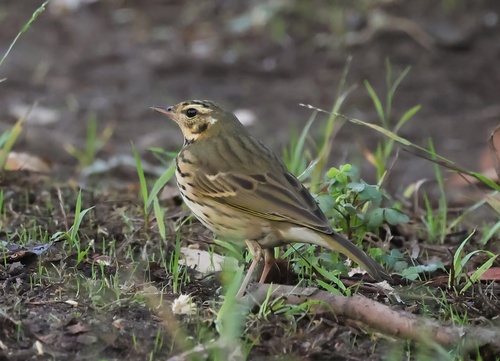
Olive-backed Pipit (Anthus hodgsoni) Olive-backed Pipit
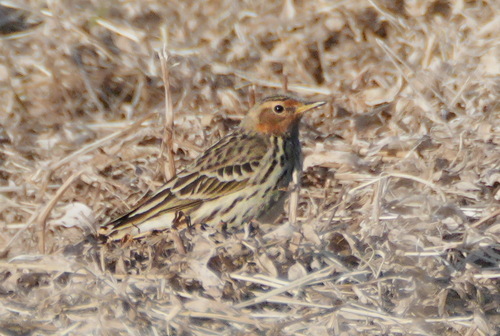
Red-throated Pipit (Anthus cervinus) Red-throated Pipit

Media

Loading…

In short

The most reliable field mark between Olive-backed Pipit and Red-throated Pipit is the overall back and head pattern: Olive-backed Pipit shows a more olive-toned, less streaked back and a sharply marked pale supercilium, while Red-throated Pipit is much more heavily streaked above, with obvious mantle stripes and a more extensively streaked cap and back. In breeding plumage, Red-throated Pipit adults have a distinctive brick-red face and throat, but in non-breeding and immature plumages, both species can look similar and are best separated by the degree and pattern of streaking. Both are small pipits with similar structure, but careful attention to upperpart coloration and streaking is key, especially in autumn and winter when confusion is most likely.

Identification tips

  1. Back and mantle streaking: Olive-backed Pipit has a more olive-toned, less streaked back, while Red-throated Pipit is heavily streaked above, with obvious pale mantle stripes. This is the single most reliable mark in all ages except adult breeding Red-throated Pipit.
  2. Supercilium: Olive-backed Pipit shows a well-marked, pale supercilium that contrasts strongly with the crown and ear coverts; Red-throated Pipit's supercilium is less distinct, often blurred by heavy streaking on the head.
  3. Head and cap streaking: Red-throated Pipit has a much more streaked cap and nape, giving a 'striped' look to the whole head; Olive-backed Pipit is cleaner-headed.
  4. Breeding plumage throat color: Adult Red-throated Pipit in breeding plumage has a brick-red face and throat, unique among pipits in the region. Olive-backed Pipit never shows any red.
  5. Underpart streaking: Both species are streaked below, but Red-throated Pipit is more heavily marked on the flanks, chest, and belly, with black streaks on a white background; Olive-backed Pipit is streaked mainly on the breast and flanks, often on a buffier base.
  6. Wingbars and tail pattern: Both show double pale wingbars and whitish outer tail feathers, but these are not reliable for separation.
  7. Flight style: Olive-backed Pipit has a jerky, undulating flight, but this overlaps with other pipits; Red-throated Pipit is described as strong and direct in flight, but this is subtle and not diagnostic.
  8. Perching behavior: Olive-backed Pipit may perch more readily in trees, especially when flushed, but both can be found on the ground or in low vegetation.
  9. Habitat context: In wooded or forest edge habitats, Olive-backed Pipit is more likely; in open tundra, grassland, or agricultural fields, especially in the far north or on migration, Red-throated Pipit is more likely.
  10. Call: Olive-backed Pipit's 'tseep' or 'spek' is higher-pitched and faster than Tree Pipit, while Red-throated Pipit's 'psii' is thinner and more drawn-out. Use with caution unless familiar with both.
  11. Season and location: Breeding season in the far north (tundra) points to Red-throated Pipit; in wooded areas of Asia, Olive-backed Pipit is more likely. In winter and on migration, both can overlap in Southeast Asia.
  12. Sex and age: Only adult male Red-throated Pipit in breeding plumage shows the red throat; all other ages and sexes are streaked brown above and below, so rely on streaking and supercilium.
  13. Pitfalls: Juvenile and first-winter birds of both species are most easily confused; focus on the density and extent of upperpart streaking and the clarity of the supercilium.
  14. Not size: Do not rely on size or structure for separation, as both are very similar in mass and proportions.
  15. Not wing formula: No distinctive wing pattern or primary projection differences are noted in the sources for field separation.

Size

Both species are small pipits, with Olive-backed Pipit having a recorded body mass of 22.0g [wikidata]. There is no direct mass given for Red-throated Pipit in the sources, but their overall size and structure are very similar and not reliably separable in the field by size alone.

Plumage

Juvenile and first-winter birds of both species can be confusing, but Olive-backed Pipit always shows a more olive-toned back with less extensive streaking, and a better-defined pale supercilium. Red-throated Pipit, in all non-breeding and immature plumages, is heavily streaked on the cap, back, rump, and flanks, with pale mantle stripes that can stand out in fresh plumage. In breeding plumage, adult Red-throated Pipit is unmistakable with its brick-red face and throat, while Olive-backed Pipit never shows any red. Below, both have streaking, but Red-throated Pipit is more heavily marked, especially on the flanks and chest. Both have whitish outer tail feathers and double wingbars, but these are not as diagnostic as the upperpart and head pattern.

Behaviour

Both species are ground-feeding pipits, often seen singly or in pairs, running on the ground and flying up into trees or shrubs when disturbed. Olive-backed Pipit is noted for its jerky, undulating flight, while Red-throated Pipit is described as having a strong, direct flight. These flight styles overlap and are not reliable for separation. Both species can perch in trees, but Olive-backed Pipit may do so more readily.

Habitat

Olive-backed Pipit breeds across southern, north-central, and eastern Asia, as well as northeastern European Russia, and winters in southern Asia and Indonesia. Red-throated Pipit breeds much farther north, in the far north of Europe, the Palearctic, and northern Alaska, and winters in Africa, Southeast Asia, and western Alaska. While their wintering ranges can overlap in Southeast Asia, Olive-backed Pipit is more likely in wooded or forest edge habitats, while Red-throated Pipit favors open tundra or grassland in the breeding season and open country in winter. However, both can occur together in open habitats on migration.

Voice

Olive-backed Pipit gives a single 'tseep' or 'spek' call, similar to Tree Pipit but faster and higher-pitched. Its song is lark-like and delivered in flight. Red-throated Pipit gives a characteristic 'psii' call in flight. Both calls are high-pitched and can be hard to separate without experience, but Red-throated Pipit's call is often described as thinner and more drawn-out.

Submit a better description

Use the same sections as the comparison. Your text is published immediately.

The most reliable field mark between Olive-backed Pipit and Red-throated Pipit is the overall back and head pattern: Olive-backed Pipit shows a more olive-toned, less streaked back and a sharply marked pale supercilium, while Red-throated Pipit is much more heavily streaked above, with obvious mantle stripes and a more extensively streaked cap and back. In breeding plumage, Red-throated Pipit adults have a distinctive brick-red face and throat, but in non-breeding and immature plumages, both species can look similar and are best separated by the degree and pattern of streaking. Both are small pipits with similar structure, but careful attention to upperpart coloration and streaking is key, especially in autumn and winter when confusion is most likely.

  1. Back and mantle streaking: Olive-backed Pipit has a more olive-toned, less streaked back, while Red-throated Pipit is heavily streaked above, with obvious pale mantle stripes. This is the single most reliable mark in all ages except adult breeding Red-throated Pipit.
  2. Supercilium: Olive-backed Pipit shows a well-marked, pale supercilium that contrasts strongly with the crown and ear coverts; Red-throated Pipit's supercilium is less distinct, often blurred by heavy streaking on the head.
  3. Head and cap streaking: Red-throated Pipit has a much more streaked cap and nape, giving a 'striped' look to the whole head; Olive-backed Pipit is cleaner-headed.
  4. Breeding plumage throat color: Adult Red-throated Pipit in breeding plumage has a brick-red face and throat, unique among pipits in the region. Olive-backed Pipit never shows any red.
  5. Underpart streaking: Both species are streaked below, but Red-throated Pipit is more heavily marked on the flanks, chest, and belly, with black streaks on a white background; Olive-backed Pipit is streaked mainly on the breast and flanks, often on a buffier base.
  6. Wingbars and tail pattern: Both show double pale wingbars and whitish outer tail feathers, but these are not reliable for separation.
  7. Flight style: Olive-backed Pipit has a jerky, undulating flight, but this overlaps with other pipits; Red-throated Pipit is described as strong and direct in flight, but this is subtle and not diagnostic.
  8. Perching behavior: Olive-backed Pipit may perch more readily in trees, especially when flushed, but both can be found on the ground or in low vegetation.
  9. Habitat context: In wooded or forest edge habitats, Olive-backed Pipit is more likely; in open tundra, grassland, or agricultural fields, especially in the far north or on migration, Red-throated Pipit is more likely.
  10. Call: Olive-backed Pipit's 'tseep' or 'spek' is higher-pitched and faster than Tree Pipit, while Red-throated Pipit's 'psii' is thinner and more drawn-out. Use with caution unless familiar with both.
  11. Season and location: Breeding season in the far north (tundra) points to Red-throated Pipit; in wooded areas of Asia, Olive-backed Pipit is more likely. In winter and on migration, both can overlap in Southeast Asia.
  12. Sex and age: Only adult male Red-throated Pipit in breeding plumage shows the red throat; all other ages and sexes are streaked brown above and below, so rely on streaking and supercilium.
  13. Pitfalls: Juvenile and first-winter birds of both species are most easily confused; focus on the density and extent of upperpart streaking and the clarity of the supercilium.
  14. Not size: Do not rely on size or structure for separation, as both are very similar in mass and proportions.
  15. Not wing formula: No distinctive wing pattern or primary projection differences are noted in the sources for field separation.

Both species are small pipits, with Olive-backed Pipit having a recorded body mass of 22.0g [wikidata]. There is no direct mass given for Red-throated Pipit in the sources, but their overall size and structure are very similar and not reliably separable in the field by size alone.

Juvenile and first-winter birds of both species can be confusing, but Olive-backed Pipit always shows a more olive-toned back with less extensive streaking, and a better-defined pale supercilium. Red-throated Pipit, in all non-breeding and immature plumages, is heavily streaked on the cap, back, rump, and flanks, with pale mantle stripes that can stand out in fresh plumage. In breeding plumage, adult Red-throated Pipit is unmistakable with its brick-red face and throat, while Olive-backed Pipit never shows any red. Below, both have streaking, but Red-throated Pipit is more heavily marked, especially on the flanks and chest. Both have whitish outer tail feathers and double wingbars, but these are not as diagnostic as the upperpart and head pattern.

Both species are ground-feeding pipits, often seen singly or in pairs, running on the ground and flying up into trees or shrubs when disturbed. Olive-backed Pipit is noted for its jerky, undulating flight, while Red-throated Pipit is described as having a strong, direct flight. These flight styles overlap and are not reliable for separation. Both species can perch in trees, but Olive-backed Pipit may do so more readily.

Olive-backed Pipit breeds across southern, north-central, and eastern Asia, as well as northeastern European Russia, and winters in southern Asia and Indonesia. Red-throated Pipit breeds much farther north, in the far north of Europe, the Palearctic, and northern Alaska, and winters in Africa, Southeast Asia, and western Alaska. While their wintering ranges can overlap in Southeast Asia, Olive-backed Pipit is more likely in wooded or forest edge habitats, while Red-throated Pipit favors open tundra or grassland in the breeding season and open country in winter. However, both can occur together in open habitats on migration.

Olive-backed Pipit gives a single 'tseep' or 'spek' call, similar to Tree Pipit but faster and higher-pitched. Its song is lark-like and delivered in flight. Red-throated Pipit gives a characteristic 'psii' call in flight. Both calls are high-pitched and can be hard to separate without experience, but Red-throated Pipit's call is often described as thinner and more drawn-out.

Discard your changes?

You have unsaved edits. If you leave now, those changes will be lost.

Olive-backed Pipit · Red-throated Pipit · My Tricky Birds