

Northern Fulmar vs Northern Gannet
Fulmarus glacialis versus Morus bassanus
Play a quiz with Northern Fulmar and Northern Gannet
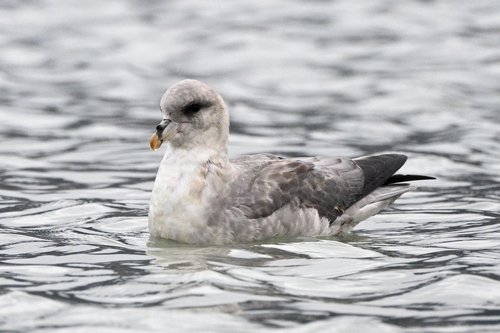 Northern Fulmar
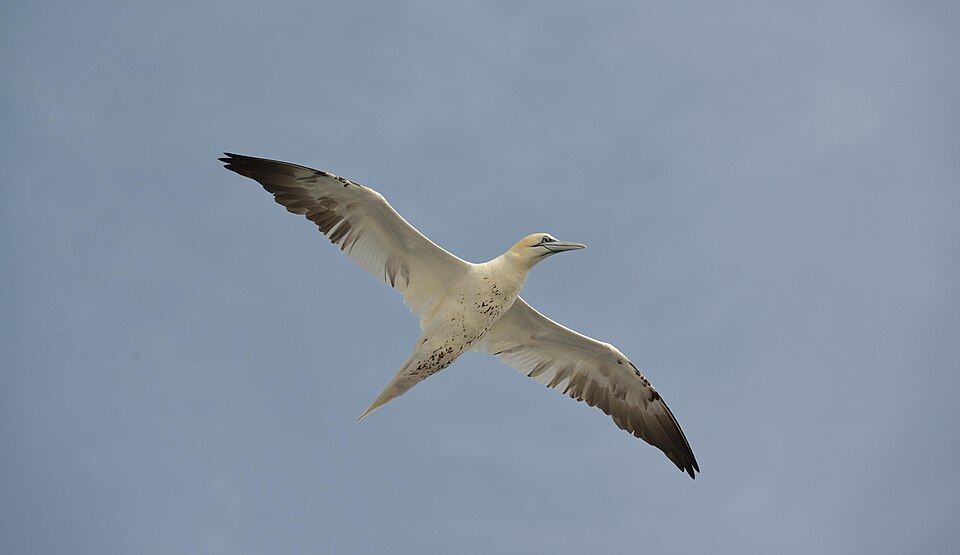 Northern Gannet
In short
The most reliable field mark to separate Northern Fulmar from Northern Gannet is overall structure and flight style: fulmars are compact, bull-necked birds with stiff, shallow wingbeats, while gannets are much larger, long-necked, and have long, slender wings with a more graceful, soaring flight. In all plumages, gannets show a mostly white body with black wingtips and a long, pointed bill, while fulmars are stockier, with a thick, pale bill and variable plumage from white-and-grey to all-dark. Juvenile gannets are dark brown and gradually whiten over several years, while fulmars (including immatures) never show the same sharp contrast or the long, elegant lines of a gannet. If you see a large, white seabird with a buff-tinged head, long neck, and black-tipped wings, it’s a gannet; a bull-necked, thick-billed bird with a stiffer flight is a fulmar.
Identification tips
-
Size is a major clue: Gannets are much larger and longer-winged than fulmars. If you see both together, the difference is obvious, but even singly, a gannet’s wingspan and length are nearly double those of a fulmar. Use this especially when judging birds in flight at a distance.
-
Flight style: Fulmars fly with stiff, shallow wingbeats and frequent glides, often close to the water, giving a shearing, petrel-like impression. Gannets have deep, powerful wingbeats, soar on long, narrow wings, and often glide high above the water. If the bird looks bull-necked and stiff-winged, it’s a fulmar; if it’s elegant and soars, it’s a gannet.
-
Bill shape and color: Gannets have a long, dagger-like blue-grey bill with black skin around the base and eyes. Fulmars have a thick, pale yellow bill with obvious tubular nostrils (naricorns) on top. This is often visible even at a distance with good optics.
-
Head and neck: Gannets have a long neck and, in breeding season, a buff-tinged head and nape. Fulmars have a shorter, thicker neck and never show a buff wash.
-
Plumage – adults: Adult gannets are mostly white with black wingtips and an all-white tail. Fulmars are never all-white: light morphs have a white head and underparts but grey wings and tail; dark morphs are uniformly grey. Gannets’ wings are sharply black-tipped, while fulmars’ wings are more evenly grey with pale inner primaries above.
-
Plumage – immatures: Juvenile and immature gannets are dark brown with white speckling, especially on the upperparts and underwings, and gradually whiten over several years. Fulmars do not show this pattern; young fulmars resemble adults of their morph, lacking the bold contrast and speckling of young gannets.
-
Tail: Gannets have an all-white tail in adults; fulmars’ tail is grey (light morph) or matches the body (dark morph). Gannets’ tail is longer and more pointed in flight.
-
Facial pattern: Gannets show black skin around the eyes and mouth, giving a masked look. Fulmars have a plainer face, with the most distinctive feature being the tubular nostrils on the bill.
-
Jizz at rest: On land, gannets are upright, tall, and elegant, while fulmars are squat, bull-necked, and often appear hunched.
-
Feeding behavior: Gannets are often seen plunge-diving from height; fulmars rarely dive and feed by picking at the surface.
-
Habitat context: If seen nesting on a high, exposed cliff in a dense, noisy colony, especially with plunge-diving birds offshore, gannets are likely. Fulmars nest more widely, including on lower cliffs and ledges.
-
Leg color: Fulmars have bluish legs, while gannets’ legs are dark.
-
Confusion risk: In poor visibility or at great distance, a pale fulmar might be mistaken for a gannet, but the size, structure, and flight style will still differ. Immature gannets are sometimes confused with dark morph fulmars, but the gannet’s longer wings, neck, and gradual whitening over years are distinctive.
-
Seasonal marks: The buff tinge to a gannet’s head is most obvious in breeding season. Fulmars do not show seasonal head color changes.
-
Bill plates: At close range, fulmars’ bills are divided into horny plates with a hooked tip, a feature of the Procellariiformes; gannets’ bills are smooth and pointed.
Size
Northern Gannet is dramatically larger than Northern Fulmar. Gannets reach 87–100 cm in length and have a wingspan of 170–180 cm, with an average adult mass of about 2999 g [wikidata]. Fulmars are much smaller: 46 cm long, wingspan 102–112 cm, and mass ranging from 450–1000 g [wikipedia]. In the field, gannets appear long, sleek, and imposing, while fulmars are compact and chunky. Even at a distance, the size difference is striking when both are seen together.
Plumage
-
Juvenile/Immature birds: Juvenile Northern Gannets are mostly dark brown with white speckling, especially on the upperparts and underwings. Over five years, they gradually become whiter, but immatures always show more black on the wings than adults. Juvenile and immature Fulmars, regardless of morph, never show this pattern: they are either pale with grey wings and tail (light morph) or uniformly grey (dark morph), lacking the bold black-and-white contrast of young gannets.
-
Adults: Adult Northern Gannets are strikingly white with a buff-tinged head (especially in breeding season), black wingtips, and an all-white tail. Fulmars, even in their lightest morph, have a grey mantle and wings, white head and underparts, and a pale yellow, thick bill. Dark-morph fulmars are uniformly grey. Gannets’ wings are long and pointed with black primaries, while fulmars have shorter, broader wings with pale inner primaries above and, in dark morphs, more extensive dark below. Gannets never show the bull-necked, stubby look of fulmars.
-
Bill and face: Gannets have a long, blue-grey pointed bill with black skin around the mouth and eyes; fulmars have a thick, pale yellow bill with tubular nostrils on top (naricorns), giving a distinctive facial profile.
Behaviour
Northern Gannets are plunge-divers, often seen making spectacular, high-speed dives into the sea from height. Their flight is strong, with deep, steady wingbeats and long glides. They launch easily from cliffs and soar on long, narrow wings. Fulmars, by contrast, have a stiff, shallow wingbeat and glide low over the water, often shearing close to the waves. They rarely dive and feed mostly by picking at the surface. On land, gannets are upright and elegant, while fulmars appear squat and awkward, with limited walking ability.
Habitat
Both species are pelagic and breed on sea cliffs, but gannets favor larger, more exposed offshore islands with steep cliffs for launching into flight. Fulmars are more widespread in subarctic regions and can be found nesting on a wider range of cliff types, including lower and less precipitous sites. At sea, gannets are more likely to be seen far offshore, especially during migration, while fulmars are abundant in subarctic waters but can occur closer to shore. Both may be seen together at rich feeding areas, but gannets are less likely in the high Arctic.