

Marbled Murrelet vs Pigeon Guillemot
Brachyramphus marmoratus versus Cepphus columba
Play a quiz with Marbled Murrelet and Pigeon Guillemot
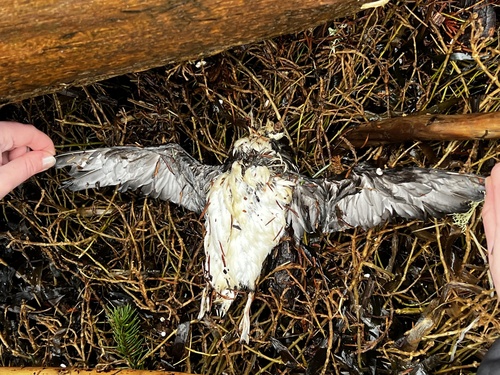 Marbled Murrelet
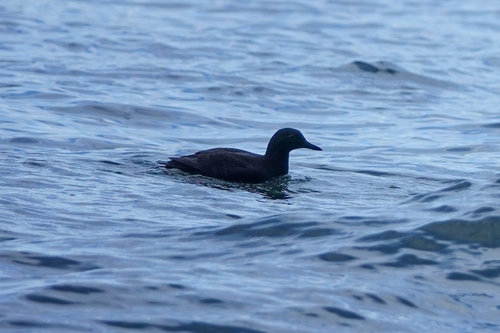 Pigeon Guillemot
In short
The most reliable field mark between Marbled Murrelet and Pigeon Guillemot is the presence of a bold white wing patch in all plumages of Pigeon Guillemot, which is never shown by Marbled Murrelet. In flight or at rest, this white wing patch—broken by a dark wedge—is diagnostic for Pigeon Guillemot of any age or season. Marbled Murrelet is smaller, chunkier, and lacks any white in the wing, instead showing uniform dark upperparts in breeding and a more subdued black-and-white pattern in winter. Bill structure, leg color, and overall jizz also differ, but the wing patch is the fastest field check. Immature and non-breeding birds are most often confused, but even then, the guillemot's white wing stands out.
Identification tips
- White wing patch (all ages, all seasons): Pigeon Guillemot always shows a bold white wing patch broken by a dark wedge; Marbled Murrelet never shows any white in the wing. This is the single most reliable field mark, especially in flight or when wings are spread.
- Size and shape: Pigeon Guillemot is larger and longer-bodied (30–37 cm) than the compact, chunky Marbled Murrelet (25 cm). Guillemot looks more elongated, while murrelet is short-necked and stubby.
- Bill structure: Marbled Murrelet has a slender, short black bill; Pigeon Guillemot's bill is longer and heavier, sometimes appearing slightly downcurved, especially in southern birds.
- Leg color: Pigeon Guillemot has bright red legs and feet, often visible when perched or swimming. Marbled Murrelet's legs are dark and much less conspicuous.
- Perching behavior: Pigeon Guillemot frequently perches on rocks, docks, or even walks on land; Marbled Murrelet is almost never seen out of water except at hidden nest sites.
- Breeding plumage: Marbled Murrelet is mottled brown overall with no white in the wing or on the throat; Pigeon Guillemot is dark brown with a black sheen and a bold white wing patch.
- Non-breeding plumage: Marbled Murrelet is white below with a black crown, nape, and back, and a white neck collar (absent in guillemot); Pigeon Guillemot is white below and dark above, but always with a white wing patch and dark underwings.
- Juvenile/immature plumage: Pigeon Guillemot juveniles have brown barring below and a smaller white wing patch; Marbled Murrelet juveniles resemble adults of their season, never showing white in the wing.
- Flight style: Marbled Murrelet has pointed wings and a rapid, direct flight; Pigeon Guillemot has shorter, rounder wings and may appear less agile in the air, often requiring a running start from the water.
- Habitat context: Birds seen close to rocky shores, perched on rocks, or docks are almost always Pigeon Guillemots. Marbled Murrelets are more likely to be seen offshore or flying at dusk/dawn toward forested nesting sites.
- Underwing color: Pigeon Guillemot has plain, dark underwings in all plumages; Marbled Murrelet's underwing is not specifically described as diagnostic, but lacks the guillemot's pattern.
- Head pattern (non-breeding): Marbled Murrelet has a white neck collar and a black crown; Pigeon Guillemot's head is darker with white-tipped feathers, sometimes giving a scalloped look.
- Throat color (breeding): Marbled Murrelet lacks a pale throat; Pigeon Guillemot's throat is not distinctly pale but the overall head is dark.
- Bill color: Both have black bills, but the guillemot's is longer and heavier.
- Confusion risk: Most quiz mix-ups occur with immature or non-breeding birds in flight—always check for the white wing patch to confirm guillemot, and remember that murrelet never shows this mark.
Size
Pigeon Guillemot is noticeably larger and heavier than Marbled Murrelet. Pigeon Guillemot measures 30–37 cm in length and weighs 450–550 g [wikipedia], while Marbled Murrelet is smaller at about 25 cm [wikipedia]. This size difference is apparent in direct comparison, but less so at a distance or on the water. The guillemot also appears longer-bodied and less compact than the chunky, short-necked murrelet.
Plumage
-
Juvenile/First-winter/Immature: Pigeon Guillemot of all ages shows a white wing patch, even in juveniles, though it may be smaller and less crisp. Juvenile guillemots have brown barring on the underparts and more brown in the upperparts, but the white wing patch remains. Marbled Murrelet immatures resemble adults of their season, lacking any white in the wing, and have a more uniform dark upperwing.
-
Non-breeding (winter): Marbled Murrelet is white below with a black crown, nape, wings, and back, and shows a white neck collar. Pigeon Guillemot is white below and dark above, but always with a white wing patch broken by a dark wedge; underwings are plain and dark. The guillemot's head is darker with white-tipped feathers, sometimes giving a scalloped look.
-
Breeding (summer): Marbled Murrelet is mottled brown overall, lacking any white in the wing or on the throat. Pigeon Guillemot is dark brown with a black sheen, and the white wing patch is especially bold and diagnostic. The guillemot's legs are bright red, while the murrelet's are dark and less conspicuous.
-
Key contrast: The white wing patch of Pigeon Guillemot is visible in all plumages and ages, while Marbled Murrelet never shows white in the wing.
Behaviour
Pigeon Guillemot often sits upright on rocks, docks, or the shore, frequently resting on its tarsi and walking well on land—unusual for an auk. It is a strong surface swimmer and diver, using both wings and feet for propulsion. Marbled Murrelet is more strictly pelagic, rarely seen on land except at nest sites (which are hidden in old-growth forests or on remote ground). Murrelets are less likely to be seen perched or walking, and their flight is direct and rapid, with pointed wings. Pigeon Guillemot may be seen flying low over water, but its takeoff is labored compared to the murrelet.
Habitat
Marbled Murrelet is typically found offshore or near coastal forests, especially where old-growth trees are present for nesting. It is rarely seen close to shore except during dawn or dusk flights to nest sites. Pigeon Guillemot is much more coastal, often seen close to rocky shores, harbors, and docks, and is comfortable perching on rocks or man-made structures. If a bird is seen on land or perched on a rock, it is almost certainly a guillemot, not a murrelet.