

Motmot

Little Shearwater vs Common Diving-Petrel

Puffinus assimilis versus Pelecanoides urinatrix

Play a quiz with Little Shearwater and Common Diving-Petrel
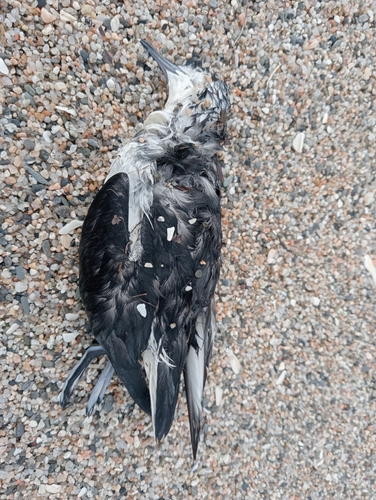
Little Shearwater (Puffinus assimilis) Little Shearwater
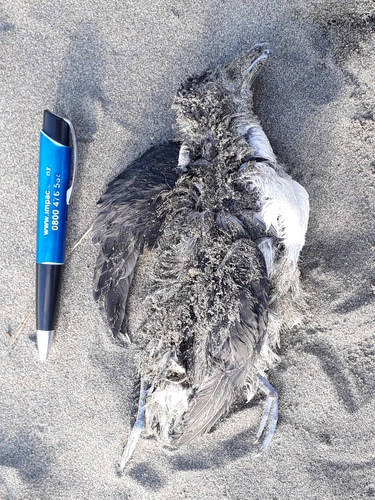
Common Diving-Petrel (Pelecanoides urinatrix) Common Diving-Petrel

Media

Loading…

In short

The most reliable field mark to separate Little Shearwater from Common Diving-Petrel is overall structure and flight style: Little Shearwater is longer-winged and cross-shaped in flight, with a slender bill and a pale panel on the inner flight feathers, while Common Diving-Petrel is compact, short-necked, and plump with a stubby black bill and rapid, whirring wingbeats. Both are black above and white below, but the shearwater shows more contrast and a distinctive flight silhouette. In close views, the diving-petrel's blue legs and feet and faint white wing strips can help, but these are rarely visible at sea. Both species are small, but the diving-petrel is heavier and more barrel-shaped.

Identification tips

  1. Flight style: Little Shearwater glides and banks with stiff, cross-shaped wings, while Common Diving-Petrel has rapid, whirring wingbeats with little or no gliding. If you see a bird shearing and banking, it's almost certainly a shearwater.
  2. Overall shape: Shearwater is slender, long-winged, and elongated; diving-petrel is compact, thickset, and short-necked, almost like a flying football.
  3. Bill shape and color: Shearwater has a slender, pale-tipped bill; diving-petrel has a short, thick, all-black bill. This is best seen at close range or in photos.
  4. Upperwing pattern: Look for the pale panel on the inner flight feathers of Little Shearwater in flight—this is absent in diving-petrel, which has more uniformly dark wings with only subtle thin white strips.
  5. Underparts contrast: Shearwater shows a crisp black-and-white contrast, especially when banking; diving-petrel's underparts are duller and less sharply defined.
  6. Facial pattern: The dark eye of Little Shearwater stands out in a white face; diving-petrel's face and neck can be browner, and the eye is less contrasting.
  7. Leg and foot color: Diving-petrel has blue legs and feet with blackish webbing, but this is rarely visible unless the bird is very close or in the hand.
  8. Behavior when flushed: Diving-petrel often dives straight into the water when disturbed, while shearwater usually takes flight.
  9. Tail shape: Shearwater's tail is longer and more pointed; diving-petrel's tail is short and stubby.
  10. Habitat context: If seen far offshore, especially in warmer waters, Little Shearwater is more likely; near subantarctic islands or close to shore, especially in southern oceans, diving-petrel is more likely.
  11. Relative abundance: In southeastern Australia and New Zealand, both can occur, but diving-petrel is more common nearshore and at colonies, while shearwater is more pelagic.
  12. Size impression: Shearwater appears smaller and lighter, despite being longer; diving-petrel is heavier and more robust.
  13. Wing shape: Shearwater's wings are proportionally shorter and broader than Manx Shearwater, but still longer and more pointed than the diving-petrel's short, rounded wings.
  14. Plumage pitfalls: Both are black above and white below, but only the shearwater shows the pale inner wing panel and strong contrast in flight.
  15. Voice: Not diagnostic in the field for separation between these two species.

Size

Little Shearwater is slightly longer (25–30 cm) with a noticeably longer wingspan (58–67 cm), but is much lighter and more slender than the Common Diving-Petrel, which is shorter (20–25 cm) but heavier (about 105 g) and much more thickset. The diving-petrel appears almost rotund, with a short neck and tail, while the shearwater is more elongated and delicate. In the hand or at very close range, the diving-petrel feels much denser and more compact.

Plumage

No age-specific upperwing patterns are described for either species, but adults and immatures of Little Shearwater show a strong contrast between black upperparts and white underparts, with a pale area on the inner flight feathers visible in flight. This pale panel is a key mark for Little Shearwater at all ages. The Common Diving-Petrel is also black above and white below, but the upperparts are more uniformly dark and the underparts are a duller white. The diving-petrel's wings have thin white strips, but these are subtle and often hard to see except at very close range. The face and neck of the diving-petrel can be browner than the rest of the upperparts, while the shearwater's dark eye stands out against a white face. Bill color is another difference: Little Shearwater has a slender, pale-tipped bill, while the diving-petrel's bill is short, thick, and entirely black.

Behaviour

Little Shearwater flies with a distinctive 'shearing' motion, gliding low over the water with stiff wings held at right angles to the body, often appearing cross-shaped. Its flight alternates between gliding and a few quick flaps, and it often banks to show both black upperparts and white underparts. In contrast, Common Diving-Petrel has a rapid, direct, and low flight with very fast wingbeats and little gliding; it looks like a small bullet skimming the surface. When flushed, diving-petrels often dive straight into the water rather than flying away. On land, both species nest in burrows, but the diving-petrel is rarely seen away from the colony.

Habitat

Both species are pelagic and nest on islands, but Little Shearwater is more likely to be seen in open ocean or offshore waters, sometimes far from land. Common Diving-Petrel is usually found closer to shore, especially over the continental shelf, and is more likely to be seen near breeding colonies on subantarctic and temperate islands. The diving-petrel's foraging is mostly nearshore during breeding season, while the shearwater can be encountered in a wider range of marine habitats.

Submit a better description

Use the same sections as the comparison. Your text is published immediately.

The most reliable field mark to separate Little Shearwater from Common Diving-Petrel is overall structure and flight style: Little Shearwater is longer-winged and cross-shaped in flight, with a slender bill and a pale panel on the inner flight feathers, while Common Diving-Petrel is compact, short-necked, and plump with a stubby black bill and rapid, whirring wingbeats. Both are black above and white below, but the shearwater shows more contrast and a distinctive flight silhouette. In close views, the diving-petrel's blue legs and feet and faint white wing strips can help, but these are rarely visible at sea. Both species are small, but the diving-petrel is heavier and more barrel-shaped.

  1. Flight style: Little Shearwater glides and banks with stiff, cross-shaped wings, while Common Diving-Petrel has rapid, whirring wingbeats with little or no gliding. If you see a bird shearing and banking, it's almost certainly a shearwater.
  2. Overall shape: Shearwater is slender, long-winged, and elongated; diving-petrel is compact, thickset, and short-necked, almost like a flying football.
  3. Bill shape and color: Shearwater has a slender, pale-tipped bill; diving-petrel has a short, thick, all-black bill. This is best seen at close range or in photos.
  4. Upperwing pattern: Look for the pale panel on the inner flight feathers of Little Shearwater in flight—this is absent in diving-petrel, which has more uniformly dark wings with only subtle thin white strips.
  5. Underparts contrast: Shearwater shows a crisp black-and-white contrast, especially when banking; diving-petrel's underparts are duller and less sharply defined.
  6. Facial pattern: The dark eye of Little Shearwater stands out in a white face; diving-petrel's face and neck can be browner, and the eye is less contrasting.
  7. Leg and foot color: Diving-petrel has blue legs and feet with blackish webbing, but this is rarely visible unless the bird is very close or in the hand.
  8. Behavior when flushed: Diving-petrel often dives straight into the water when disturbed, while shearwater usually takes flight.
  9. Tail shape: Shearwater's tail is longer and more pointed; diving-petrel's tail is short and stubby.
  10. Habitat context: If seen far offshore, especially in warmer waters, Little Shearwater is more likely; near subantarctic islands or close to shore, especially in southern oceans, diving-petrel is more likely.
  11. Relative abundance: In southeastern Australia and New Zealand, both can occur, but diving-petrel is more common nearshore and at colonies, while shearwater is more pelagic.
  12. Size impression: Shearwater appears smaller and lighter, despite being longer; diving-petrel is heavier and more robust.
  13. Wing shape: Shearwater's wings are proportionally shorter and broader than Manx Shearwater, but still longer and more pointed than the diving-petrel's short, rounded wings.
  14. Plumage pitfalls: Both are black above and white below, but only the shearwater shows the pale inner wing panel and strong contrast in flight.
  15. Voice: Not diagnostic in the field for separation between these two species.

Little Shearwater is slightly longer (25–30 cm) with a noticeably longer wingspan (58–67 cm), but is much lighter and more slender than the Common Diving-Petrel, which is shorter (20–25 cm) but heavier (about 105 g) and much more thickset. The diving-petrel appears almost rotund, with a short neck and tail, while the shearwater is more elongated and delicate. In the hand or at very close range, the diving-petrel feels much denser and more compact.

No age-specific upperwing patterns are described for either species, but adults and immatures of Little Shearwater show a strong contrast between black upperparts and white underparts, with a pale area on the inner flight feathers visible in flight. This pale panel is a key mark for Little Shearwater at all ages. The Common Diving-Petrel is also black above and white below, but the upperparts are more uniformly dark and the underparts are a duller white. The diving-petrel's wings have thin white strips, but these are subtle and often hard to see except at very close range. The face and neck of the diving-petrel can be browner than the rest of the upperparts, while the shearwater's dark eye stands out against a white face. Bill color is another difference: Little Shearwater has a slender, pale-tipped bill, while the diving-petrel's bill is short, thick, and entirely black.

Little Shearwater flies with a distinctive 'shearing' motion, gliding low over the water with stiff wings held at right angles to the body, often appearing cross-shaped. Its flight alternates between gliding and a few quick flaps, and it often banks to show both black upperparts and white underparts. In contrast, Common Diving-Petrel has a rapid, direct, and low flight with very fast wingbeats and little gliding; it looks like a small bullet skimming the surface. When flushed, diving-petrels often dive straight into the water rather than flying away. On land, both species nest in burrows, but the diving-petrel is rarely seen away from the colony.

Both species are pelagic and nest on islands, but Little Shearwater is more likely to be seen in open ocean or offshore waters, sometimes far from land. Common Diving-Petrel is usually found closer to shore, especially over the continental shelf, and is more likely to be seen near breeding colonies on subantarctic and temperate islands. The diving-petrel's foraging is mostly nearshore during breeding season, while the shearwater can be encountered in a wider range of marine habitats.

Discard your changes?

You have unsaved edits. If you leave now, those changes will be lost.

Little Shearwater · Common Diving-Petrel · My Tricky Birds