

Little Ringed Plover vs Northern Lapwing
Thinornis dubius versus Vanellus vanellus
Play a quiz with Little Ringed Plover and Northern Lapwing
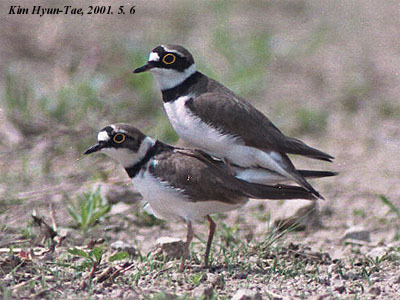 Little Ringed Plover
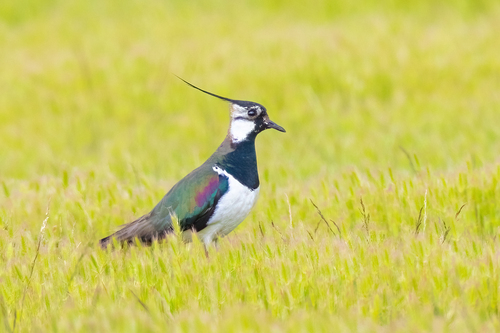 Northern Lapwing
In short
The most reliable field mark to separate Little Ringed Plover from Northern Lapwing is overall structure and size: Lapwing is much larger, with a distinctive long crest, rounded wings, and a green-glossed back, while Little Ringed Plover is a compact, small plover with a neat yellow eye-ring and no crest. In flight or at rest, Lapwing shows bold black-and-white contrast and a shimmering green back, while Little Ringed Plover is plain brown above with a single black neckband and white underparts. Age-related confusion is unlikely, as even juveniles of both species differ strongly in size and shape. If you see a small, short-billed plover with a yellow eye-ring and no crest, it is Little Ringed Plover; a large, crested, black-and-white wader with a green back is Northern Lapwing.
Identification tips
- Size and structure: Lapwing is much larger and bulkier than Little Ringed Plover. If you see a bird the size of a pigeon or larger, it is Lapwing; a sparrow-sized, delicate wader is Little Ringed Plover. Works for all ages and seasons.
- Crest: Only Lapwing has a long, wispy crest (longest in males, shorter in females/juveniles). Little Ringed Plover never shows a crest. This is visible at all distances and ages.
- Head pattern: Little Ringed Plover has a neat black mask and a clear yellow eye-ring, with a white forehead and a single black neckband. Lapwing has a white face with black markings, a black crown, and a long crest, but no yellow eye-ring. This is diagnostic at close range.
- Back color: Lapwing's back is green-glossed and iridescent, especially in good light. Little Ringed Plover is plain brown above, never greenish or glossy.
- Underparts: Both are white below, but Lapwing has a black breast and throat (especially males), while Little Ringed Plover has a single, sharp black neckband and otherwise white underparts.
- Leg color: Little Ringed Plover has flesh-colored legs; Lapwing's legs are not described in the notes, but are generally darker and longer in proportion to body size.
- Bill: Little Ringed Plover has a short, fine, dark bill; Lapwing's bill is longer and stouter, but this is less obvious than other marks.
- Flight shape: Lapwing shows broad, rounded wings and a slow, floppy flight with deep wingbeats. Little Ringed Plover has quick, direct flight with rapid wingbeats and pointed wings.
- Wing pattern in flight: Lapwing is boldly black and white above and below in flight, with a striking contrast. Little Ringed Plover is plain brown above and white below, with no bold wing pattern.
- Vocalization: Lapwing is noisy, especially in spring, with a loud 'pee-wit' call and display flights. Little Ringed Plover is quiet and unobtrusive.
- Habitat: If the bird is in a large, open, grassy field or wet meadow, especially in a flock, Lapwing is likely. If it is on bare gravel, sand, or mud near water, and alone or in a small group, suspect Little Ringed Plover.
- Behavior: Lapwing often feeds by walking slowly and picking, sometimes in large groups. Little Ringed Plover runs in short bursts and stops to pick, usually alone or in pairs.
- Sex and age: Lapwing males have longer crests and more sharply defined black on the head and breast, but all ages and sexes are much larger and show the same basic pattern. Little Ringed Plover is similar in all plumages, with the yellow eye-ring always present in adults.
- Juvenile confusion: No distinctive juvenile wing patterns are described for either species, but even young Lapwing are much larger, crested, and black-and-white, while young Little Ringed Plovers are small, plain, and lack a crest.
- Pitfalls: At long range, Lapwing's black-and-white contrast and size are still obvious; Little Ringed Plover can appear very plain, but never shows a crest or green gloss. If you see a yellow eye-ring, it is never Lapwing.
Size
Northern Lapwing is dramatically larger: 28–33 cm long with a 67–87 cm wingspan and weighing 128–330 g [wikipedia]. Little Ringed Plover is much smaller and more delicate, with no direct measurements in the notes, but it is a typical small plover and much lighter and shorter than Lapwing. Lapwing is also bulkier, with a longer body, broader wings, and a prominent crest, while Little Ringed Plover is compact, short-legged, and lacks a crest.
Plumage
- Juvenile/Immature birds: There is no mention of distinctive juvenile wing patterns for either species in the sources, but both are separable at all ages by size, structure, and head pattern.
- Adults: Little Ringed Plover is brown above, white below, with a single neat black neckband, a black mask, and a clear yellow eye-ring. Its legs are flesh-colored. Northern Lapwing is strikingly black and white, with a green-glossed back, a long black crest, and a white face with black markings. Males have a longer crest and more sharply defined black on the head and breast; females and young have shorter crests and duller head markings, but still show the same overall pattern. Lapwing's wings are rounded and broad, and in flight, it shows bold black and white contrast, unlike the plover's plain brown and white appearance.
Behaviour
Northern Lapwing is often seen in flocks, especially outside the breeding season, and is conspicuous in display flight with slow, deep wingbeats and acrobatic tumbling. It feeds by walking and picking on open ground. Little Ringed Plover is more solitary or in small groups, runs in short bursts, and feeds by picking at the ground or mud. Lapwing's flight is slow and floppy, with broad, rounded wings, while Little Ringed Plover has quick, direct flight with rapid wingbeats typical of small plovers.
Habitat
Little Ringed Plover prefers open, bare or sparsely vegetated ground near freshwater (gravel pits, riverbanks, lakeshores), often with little cover. Northern Lapwing uses a wider range of open habitats, including wet grassland, farmland, and marshes, and is less tied to water edges. Lapwing is more likely in large, open fields or wet meadows, sometimes far from water, while Little Ringed Plover is usually close to water and on much barer ground.
Voice
Northern Lapwing is highly vocal, especially in the breeding season, with a loud, shrill 'pee-wit' call and a variety of squeaks and mewing sounds. Its display flight is accompanied by constant calling. Little Ringed Plover is much quieter; no vocalizations are described in the notes, but it does not have the Lapwing's loud, distinctive calls. If you hear a 'pee-wit' or similar, it is Lapwing.