

Motmot

Light-vented Bulbul vs Sooty-headed Bulbul

Pycnonotus sinensis versus Pycnonotus aurigaster

Play a quiz with Light-vented Bulbul and Sooty-headed Bulbul

Light-vented Bulbul (Pycnonotus sinensis) Light-vented Bulbul
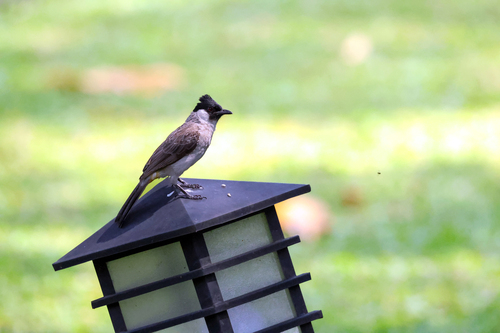
Sooty-headed Bulbul (Pycnonotus aurigaster) Sooty-headed Bulbul

Media

Loading…

In short

The most reliable field mark to separate Light-vented Bulbul from Sooty-headed Bulbul is the head pattern: Light-vented Bulbul shows a striking black crown with bold white patches on the nape and sides of the head, while Sooty-headed Bulbul has a less extensive black on the head and lacks the strong white nape patch. In addition, Sooty-headed Bulbul often shows a pale tan front and, in some subspecies, a gold-colored vent, which Light-vented Bulbul lacks. Both species are similar in size and overall shape, but their head and vent patterns are the key differences. Habitat overlap can occur, but Light-vented Bulbul is more at home in urban and lightly wooded settings, while Sooty-headed Bulbul prefers more forested or less urbanized areas.

Identification tips

  1. Head Pattern: Light-vented Bulbul shows a bold black crown and moustachial stripe, with large white patches on the nape and sides of the head, and a white line from the eye to the back of the head. Sooty-headed Bulbul has a less extensive black head, lacking the strong white nape patch and white eye stripe. This is the most reliable mark for adults and older immatures.
  2. Vent Color: Sooty-headed Bulbul may show a gold-colored vent in some subspecies, which is never present in Light-vented Bulbul. Always check the undertail area if visible.
  3. Crest: Sooty-headed Bulbul often shows a short crest, giving the head a slightly peaked look. Light-vented Bulbul does not have a noticeable crest, and the crown appears smoother.
  4. Underparts: Light-vented Bulbul has whitish underparts with a pale brown breastband, while Sooty-headed Bulbul has a tan front, which can look warmer or dirtier than the clean white of Light-vented.
  5. Upperparts and Wings: Both species have brownish wings and tails, but Light-vented Bulbul's are fringed with olive, which can be subtle. This is not a strong separator unless seen well.
  6. Facial Contrast: The white patches and lines on Light-vented Bulbul's head are much more striking than any facial markings on Sooty-headed Bulbul, which looks plainer and less contrasting.
  7. Habitat Context: In urban parks, gardens, and towns, especially in China and Taiwan, Light-vented Bulbul is far more likely. In more forested, rural, or shrubby areas in southeastern Asia, Sooty-headed Bulbul is more expected.
  8. Song and Calls: Light-vented Bulbul gives a bright, variable 'cha-ko-lee' song, while Sooty-headed Bulbul's call is a hurried series of whistled notes. Use with caution unless familiar with both.
  9. Perched Posture: Both perch upright, but Sooty-headed's crest can make the head look more peaked.
  10. Juvenile/Immature Birds: No distinctive juvenile wing or flight pattern differences are described, so rely on head and vent pattern even in young birds.
  11. Size and Structure: Both are similar in size and shape; do not use size as a primary separator.
  12. Pitfalls: Beware of worn or molting birds, as head pattern may appear less crisp, but Light-vented's white nape patch and eye-stripe are usually still visible.
  13. Sex Differences: No strong sexual dimorphism is described for either species, so all marks apply to both sexes.
  14. Seasonal Variation: No major seasonal plumage change is noted for either species; head and vent patterns are reliable year-round.
  15. Overlap Zones: Where both species occur, always prioritize head pattern and vent color over habitat, as both can occur in edge habitats.

Size

Both species are medium-sized bulbuls and are very close in length: Light-vented Bulbul is about 19 cm long and weighs around 29.9 g [wikidata], while Sooty-headed Bulbul ranges from 18–21 cm in length [wikipedia]. In the field, size is not a reliable separator; both appear similar in bulk and proportions.

Plumage

No distinctive juvenile or immature wing pattern differences are described for these two species, so focus is on adult and general plumage. Light-vented Bulbul is characterized by a sharp black crown and moustachial stripe, with prominent white patches on the nape and sides of the head, and a white line from the eye to the back of the head. Its upperparts are greyish-brown with olive tones, and the wings and tail are brown edged with olive. Underparts are whitish with a pale brown breastband. Sooty-headed Bulbul, by contrast, has a less extensive black on the head, a short crest, and a tan front. Some subspecies show a gold-colored vent, which is never present in Light-vented Bulbul. The Sooty-headed lacks the bold white nape patch and the white streak behind the eye seen in Light-vented. Both species have brownish wings and tails, but the head and vent patterns are the most diagnostic.

Behaviour

Both species are active, social songbirds often seen in pairs or small groups. Light-vented Bulbul is noisy and conspicuous, especially in urban parks and gardens, while Sooty-headed Bulbul is more often found in less urbanized, forest-edge or shrubby habitats. Both perch upright and move actively through foliage, but their behavior is not a strong separator in overlap zones.

Habitat

Light-vented Bulbul is abundant in lightly wooded areas, cultivated land, shrubland, and is especially common in towns, suburbs, and urban parks within its range [wikipedia]. Sooty-headed Bulbul is most often found in subtropical or tropical moist lowland forests and is generally more associated with less urbanized, forested or shrubby habitats in southeastern Asia [wikipedia]. In overlap zones, Light-vented Bulbul tends to dominate urban and suburban habitats, while Sooty-headed Bulbul is more likely in forest edge or rural areas.

Voice

Light-vented Bulbul has a bright, variable song often described as 'cha-ko-lee...cha-ko-lee...', and is generally noisy. Sooty-headed Bulbul's call is a series of whistled notes, similar in tone to the red-whiskered bulbul but delivered more hurriedly. While both are vocal, the Light-vented's song is more varied and musical, whereas Sooty-headed's is more hurried and whistled. However, voice alone is not always diagnostic without experience.

Submit a better description

Use the same sections as the comparison. Your text is published immediately.

The most reliable field mark to separate Light-vented Bulbul from Sooty-headed Bulbul is the head pattern: Light-vented Bulbul shows a striking black crown with bold white patches on the nape and sides of the head, while Sooty-headed Bulbul has a less extensive black on the head and lacks the strong white nape patch. In addition, Sooty-headed Bulbul often shows a pale tan front and, in some subspecies, a gold-colored vent, which Light-vented Bulbul lacks. Both species are similar in size and overall shape, but their head and vent patterns are the key differences. Habitat overlap can occur, but Light-vented Bulbul is more at home in urban and lightly wooded settings, while Sooty-headed Bulbul prefers more forested or less urbanized areas.

  1. Head Pattern: Light-vented Bulbul shows a bold black crown and moustachial stripe, with large white patches on the nape and sides of the head, and a white line from the eye to the back of the head. Sooty-headed Bulbul has a less extensive black head, lacking the strong white nape patch and white eye stripe. This is the most reliable mark for adults and older immatures.
  2. Vent Color: Sooty-headed Bulbul may show a gold-colored vent in some subspecies, which is never present in Light-vented Bulbul. Always check the undertail area if visible.
  3. Crest: Sooty-headed Bulbul often shows a short crest, giving the head a slightly peaked look. Light-vented Bulbul does not have a noticeable crest, and the crown appears smoother.
  4. Underparts: Light-vented Bulbul has whitish underparts with a pale brown breastband, while Sooty-headed Bulbul has a tan front, which can look warmer or dirtier than the clean white of Light-vented.
  5. Upperparts and Wings: Both species have brownish wings and tails, but Light-vented Bulbul's are fringed with olive, which can be subtle. This is not a strong separator unless seen well.
  6. Facial Contrast: The white patches and lines on Light-vented Bulbul's head are much more striking than any facial markings on Sooty-headed Bulbul, which looks plainer and less contrasting.
  7. Habitat Context: In urban parks, gardens, and towns, especially in China and Taiwan, Light-vented Bulbul is far more likely. In more forested, rural, or shrubby areas in southeastern Asia, Sooty-headed Bulbul is more expected.
  8. Song and Calls: Light-vented Bulbul gives a bright, variable 'cha-ko-lee' song, while Sooty-headed Bulbul's call is a hurried series of whistled notes. Use with caution unless familiar with both.
  9. Perched Posture: Both perch upright, but Sooty-headed's crest can make the head look more peaked.
  10. Juvenile/Immature Birds: No distinctive juvenile wing or flight pattern differences are described, so rely on head and vent pattern even in young birds.
  11. Size and Structure: Both are similar in size and shape; do not use size as a primary separator.
  12. Pitfalls: Beware of worn or molting birds, as head pattern may appear less crisp, but Light-vented's white nape patch and eye-stripe are usually still visible.
  13. Sex Differences: No strong sexual dimorphism is described for either species, so all marks apply to both sexes.
  14. Seasonal Variation: No major seasonal plumage change is noted for either species; head and vent patterns are reliable year-round.
  15. Overlap Zones: Where both species occur, always prioritize head pattern and vent color over habitat, as both can occur in edge habitats.

Both species are medium-sized bulbuls and are very close in length: Light-vented Bulbul is about 19 cm long and weighs around 29.9 g [wikidata], while Sooty-headed Bulbul ranges from 18–21 cm in length [wikipedia]. In the field, size is not a reliable separator; both appear similar in bulk and proportions.

No distinctive juvenile or immature wing pattern differences are described for these two species, so focus is on adult and general plumage. Light-vented Bulbul is characterized by a sharp black crown and moustachial stripe, with prominent white patches on the nape and sides of the head, and a white line from the eye to the back of the head. Its upperparts are greyish-brown with olive tones, and the wings and tail are brown edged with olive. Underparts are whitish with a pale brown breastband. Sooty-headed Bulbul, by contrast, has a less extensive black on the head, a short crest, and a tan front. Some subspecies show a gold-colored vent, which is never present in Light-vented Bulbul. The Sooty-headed lacks the bold white nape patch and the white streak behind the eye seen in Light-vented. Both species have brownish wings and tails, but the head and vent patterns are the most diagnostic.

Both species are active, social songbirds often seen in pairs or small groups. Light-vented Bulbul is noisy and conspicuous, especially in urban parks and gardens, while Sooty-headed Bulbul is more often found in less urbanized, forest-edge or shrubby habitats. Both perch upright and move actively through foliage, but their behavior is not a strong separator in overlap zones.

Light-vented Bulbul is abundant in lightly wooded areas, cultivated land, shrubland, and is especially common in towns, suburbs, and urban parks within its range [wikipedia]. Sooty-headed Bulbul is most often found in subtropical or tropical moist lowland forests and is generally more associated with less urbanized, forested or shrubby habitats in southeastern Asia [wikipedia]. In overlap zones, Light-vented Bulbul tends to dominate urban and suburban habitats, while Sooty-headed Bulbul is more likely in forest edge or rural areas.

Light-vented Bulbul has a bright, variable song often described as 'cha-ko-lee...cha-ko-lee...', and is generally noisy. Sooty-headed Bulbul's call is a series of whistled notes, similar in tone to the red-whiskered bulbul but delivered more hurriedly. While both are vocal, the Light-vented's song is more varied and musical, whereas Sooty-headed's is more hurried and whistled. However, voice alone is not always diagnostic without experience.

Discard your changes?

You have unsaved edits. If you leave now, those changes will be lost.

Light-vented Bulbul · Sooty-headed Bulbul · My Tricky Birds