

Light-vented Bulbul vs Brambling
Pycnonotus sinensis versus Fringilla montifringilla
Play a quiz with Light-vented Bulbul and Brambling
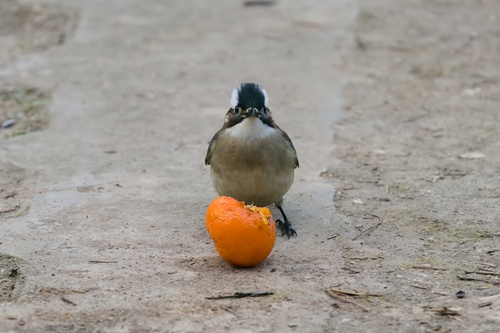 Light-vented Bulbul
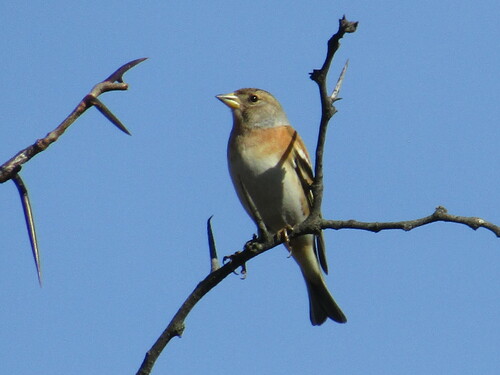 Brambling
In short
The most reliable way to separate Light-vented Bulbul from Brambling is by head pattern: Light-vented Bulbul always shows a striking black crown and white nape patches, while Brambling never does. In flight or at rest, Brambling (especially females and immatures) can look confusingly plain, but always lacks the bulbul’s bold head contrast. Bulbul is heavier-bodied, with a longer tail and a more upright stance, while Brambling is smaller, shorter-tailed, and more finch-like. Both can be vocal and active, but their calls and songs are completely different. If you’re unsure, focus on the head pattern and overall structure, as these are consistent across all ages and seasons.
Identification tips
- Head pattern is key: Light-vented Bulbul always shows a black crown and moustachial stripe, with bold white nape and cheek patches. Brambling never shows this pattern, regardless of age or sex.
- Bill color and shape: Bulbul has a dark, slightly decurved bill typical of bulbuls; Brambling has a conical, finch-like bill that is yellow in most plumages (black in breeding males). This is a reliable structural difference at close range.
- Body shape and posture: Bulbul is bulkier, longer-tailed, and perches upright, often looking elongated. Brambling is smaller, rounder, and perches more horizontally, with a shorter tail.
- Upperparts and wing color: Bulbul’s upperparts are grey-brown with olive tones, and the wings and tail are brown fringed with olive. Brambling’s upperparts are darker, with orange scapulars and no olive tones.
- Underparts: Bulbul is whitish below with a pale brown breastband. Brambling has a striking orange breast and white belly, with dark-spotted flanks. Even in females and immatures, the orange breast is present, though less vivid.
- Rump color in flight: Brambling has a white rump visible in flight, while Bulbul’s rump is not contrasting and blends with the back.
- Tail pattern: Brambling lacks white outer tail feathers (unlike chaffinch), and Bulbul’s tail is plain brown-olive with no white.
- Juvenile/first-winter confusion: Juvenile Brambling is plain but still lacks the bulbul’s bold head pattern; bulbul juveniles retain the black-and-white head contrast.
- Vocalizations: Bulbul is much more vocal, with a bright, variable song and loud calls. Brambling’s calls are finch-like and less musical.
- Habitat context: In urban parks and gardens in East Asia, Bulbul is the default. Brambling is unlikely in these settings and more typical in open woodlands or during migration.
- Group behavior: Brambling is often in flocks, especially in winter, while Bulbul is usually in pairs or small groups.
- Flight style: Brambling has a bounding, undulating flight; Bulbul flies more directly.
- Sex/season pitfalls: Only breeding male Brambling shows a black head, but it is all-black, not just the crown, and lacks white nape patches. Female and immature Brambling are much duller and never show the bulbul’s head pattern.
- Confusion risk: If you see a bird with a black-and-white head, it is never a Brambling. If you see a bird with an orange breast and white belly, especially with a white rump in flight, it is a Brambling.
- Fallback: When in doubt, focus on head pattern and bill shape—these are consistent and diagnostic in all ages and seasons.
Size
Light-vented Bulbul is noticeably heavier (29.9g vs. 22.0g) and longer (about 19 cm) than Brambling. Bulbul appears bulkier, with a longer tail and a more upright, slightly elongated posture. Brambling is smaller, more compact, and shaped like a typical finch, with a shorter tail and rounder body. In the field, this difference is often apparent when the two are seen side by side, but can be subtle at a distance or in poor light.
Plumage
No matter the age or season, Light-vented Bulbul shows a bold head pattern: black crown and moustachial stripe, white nape and cheek patches, and a pale face. This is present in all plumages and is diagnostic. Its upperparts are greyish-brown with olive tones, and the wings and tail are brown with olive fringes. Underparts are whitish with a pale brown breastband. Brambling, in contrast, never shows a black crown with white nape patches. Adult male Brambling in breeding plumage has a black head and orange breast, but the black is not restricted to the crown and lacks the bulbul's white nape. Females and immatures are plainer, with a streaked brown head, orange scapulars, and a white belly. All Brambling have a white rump (visible in flight), orange breast, and dark-spotted flanks, with no olive tones or bold head pattern. Bill color in Brambling is yellow (except black in breeding males), while Bulbul's bill is always dark. Juvenile and first-winter Brambling do not show any wing or tail pattern that could be confused with bulbul; the bulbul’s wing and tail are plain brown-olive. In summary, the bulbul’s head pattern is unique and always present, while Brambling’s orange breast and white rump are key in all ages.
Behaviour
Light-vented Bulbul is often seen perching upright on exposed branches, wires, or shrubs, sometimes in small groups, and is quite confiding in urban parks and gardens. It is active, noisy, and frequently flicks its tail. Brambling is more likely to be seen in flocks, sometimes very large, feeding on the ground or in trees, especially in migration or winter. Its movements are more finch-like: hopping or fluttering, rarely perching upright for long. In flight, Brambling shows a bounding, undulating flight typical of finches, while Bulbul’s flight is more direct and less bouncy.
Habitat
Light-vented Bulbul favors lightly wooded areas, cultivated land, shrubland, and is very common in towns, suburbs, and urban parks within its Asian range. Brambling is a migratory finch, found in a wide range of habitats but typically in forests, woodland edges, and open country during migration and winter. In urban areas, Brambling is much less likely, while Bulbul is abundant. If you are in a city park in East Asia, Bulbul is far more likely; Brambling is more expected in open woodlands or during migration.
Voice
Light-vented Bulbul is noisy, with a bright, variable song described as 'cha-ko-lee...cha-ko-lee...'. Its calls are also loud and distinctive. Brambling’s voice is not described here, but it is very different from the bulbul’s song and calls. If you hear a bright, repetitive, and varied song, it is likely the bulbul; Brambling’s vocalizations are more typical of finches and lack the bulbul’s musical quality.