

Motmot

Lesser Yellownape vs Streak-breasted Woodpecker

Picus chlorolophus versus Picus viridanus

Play a quiz with Lesser Yellownape and Streak-breasted Woodpecker
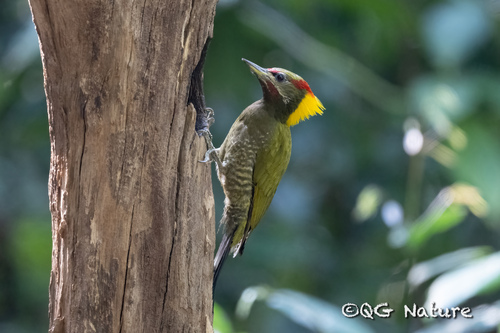
Lesser Yellownape (Picus chlorolophus) Lesser Yellownape
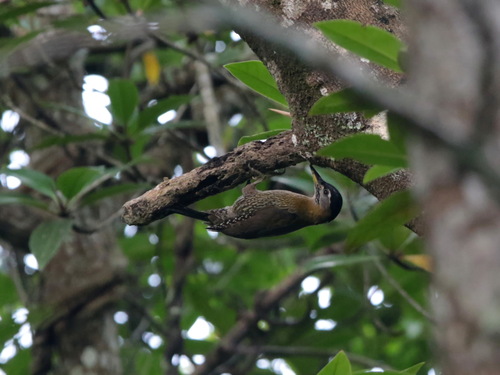
Streak-breasted Woodpecker (Picus viridanus) Streak-breasted Woodpecker

Media

Loading…

In short

The most reliable field mark to separate Lesser Yellownape from Streak-breasted Woodpecker is the bright yellow, tufted nape on Lesser Yellownape, which is absent in Streak-breasted. Lesser Yellownape also shows a green head with distinct red markings in males, while Streak-breasted lacks these facial colors and instead has a more uniform greenish appearance with streaking on the breast. Both species are green-backed woodpeckers and can overlap in range in parts of Southeast Asia, but habitat and subtle plumage details are key. Immature birds of both species may be duller, so look for the nape color and facial pattern first.

Identification tips

  1. Yellow nape tuft (Lesser Yellownape): Look for a bright yellow, bushy nape patch—this is diagnostic for Lesser Yellownape of all ages and sexes. Streak-breasted never shows this feature.
  2. Facial red markings (Lesser Yellownape males): Adult males have red above the eye, above the nape, and a red moustachial stripe. Females have a smaller red patch above the ear coverts. Streak-breasted Woodpecker lacks any red on the face in both sexes.
  3. Head color: Lesser Yellownape has a green head with a white throat. Streak-breasted has a more uniform greenish head without the white throat contrast.
  4. Breast pattern: Lesser Yellownape shows a whitish belly finely barred with green, while Streak-breasted is expected to have streaking on the breast (as per its name), though precise pattern details are not described in the sources.
  5. Rump and tail: Both have blackish rumps and tails—this is not a useful separation mark.
  6. Juvenile/immature birds: Young Lesser Yellownapes resemble duller females but still show the yellow nape. No distinctive immature wing or flight marks are described for either species, so rely on nape and face.
  7. Bill and structure: Both have typical woodpecker bills and stiff tails; no structural differences are noted that help in the field.
  8. Habitat context: In mangrove or lowland moist forest in the Malay Peninsula, consider Streak-breasted. In drier forest, hills, or outside this range, Lesser Yellownape is more likely.
  9. Geographic range: Lesser Yellownape is widespread from India to Vietnam and Indonesia; Streak-breasted is more local, mainly in the Malay Peninsula and adjacent areas.
  10. Sex differences: Only Lesser Yellownape shows clear sexual dimorphism in facial red markings; Streak-breasted does not.
  11. Subspecies variation (Lesser Yellownape): In peninsular India, Lesser Yellownape may have a greyer head, but the yellow nape remains a key mark.
  12. Perched vs. flight views: Both are best identified when perched; no flight-only marks are described.
  13. Pitfall—green upperparts: Both are green-backed, so do not rely on back color alone.
  14. Pitfall—size: Both are medium-sized woodpeckers; size is not a reliable field mark.
  15. Voice: No vocal differences are described in the sources; do not rely on calls for separation.

Size

Direct size data is limited, but Streak-breasted Woodpecker is recorded at about 105 g [wikidata], while Lesser Yellownape is described as a 'largish' woodpecker at 27 cm in length [wikipedia]. In the field, both appear medium-sized for Picus woodpeckers, with no dramatic difference in bulk or length likely to be diagnostic at a glance.

Plumage

For all ages, Lesser Yellownape stands out by its bright yellow, tufted nape, a feature lacking in Streak-breasted Woodpecker. Adult male Lesser Yellownape has a green head with a white throat, red above the eye and nape, and red moustachial stripes; females have only a red patch above the ear coverts. Young Lesser Yellownapes resemble females but are duller overall. Streak-breasted Woodpecker, by contrast, does not show these red facial markings or yellow nape, instead having a more uniform greenish upperpart and a streaked breast (as its name suggests). Both species have green upperparts and blackish rumps/tails, but Lesser Yellownape's underparts are whitish with fine green barring, while Streak-breasted is expected to show more streaking on the breast. No specific wing pattern or flight marks are described for either species in the sources, so perched views are most reliable.

Behaviour

Both species are typical Picus woodpeckers in behavior: they climb trunks, use stiff tails for support, and forage by pecking for insects. No behavioral differences are described that would reliably separate them in the field.

Habitat

Lesser Yellownape is a widespread and often common breeder in a variety of tropical and subtropical Asian forests, especially in the Indian subcontinent and Southeast Asia, favoring jungle and woodland habitats. Streak-breasted Woodpecker is more restricted, found from southeastern Bangladesh to the central Malay Peninsula, and is associated with subtropical or tropical moist lowland forests and mangroves. If you are in mangrove or lowland forest in the Malay Peninsula, Streak-breasted is more likely; in drier or hillier forests, especially outside the Malay Peninsula, Lesser Yellownape is the default.

Submit a better description

Use the same sections as the comparison. Your text is published immediately.

The most reliable field mark to separate Lesser Yellownape from Streak-breasted Woodpecker is the bright yellow, tufted nape on Lesser Yellownape, which is absent in Streak-breasted. Lesser Yellownape also shows a green head with distinct red markings in males, while Streak-breasted lacks these facial colors and instead has a more uniform greenish appearance with streaking on the breast. Both species are green-backed woodpeckers and can overlap in range in parts of Southeast Asia, but habitat and subtle plumage details are key. Immature birds of both species may be duller, so look for the nape color and facial pattern first.

  1. Yellow nape tuft (Lesser Yellownape): Look for a bright yellow, bushy nape patch—this is diagnostic for Lesser Yellownape of all ages and sexes. Streak-breasted never shows this feature.
  2. Facial red markings (Lesser Yellownape males): Adult males have red above the eye, above the nape, and a red moustachial stripe. Females have a smaller red patch above the ear coverts. Streak-breasted Woodpecker lacks any red on the face in both sexes.
  3. Head color: Lesser Yellownape has a green head with a white throat. Streak-breasted has a more uniform greenish head without the white throat contrast.
  4. Breast pattern: Lesser Yellownape shows a whitish belly finely barred with green, while Streak-breasted is expected to have streaking on the breast (as per its name), though precise pattern details are not described in the sources.
  5. Rump and tail: Both have blackish rumps and tails—this is not a useful separation mark.
  6. Juvenile/immature birds: Young Lesser Yellownapes resemble duller females but still show the yellow nape. No distinctive immature wing or flight marks are described for either species, so rely on nape and face.
  7. Bill and structure: Both have typical woodpecker bills and stiff tails; no structural differences are noted that help in the field.
  8. Habitat context: In mangrove or lowland moist forest in the Malay Peninsula, consider Streak-breasted. In drier forest, hills, or outside this range, Lesser Yellownape is more likely.
  9. Geographic range: Lesser Yellownape is widespread from India to Vietnam and Indonesia; Streak-breasted is more local, mainly in the Malay Peninsula and adjacent areas.
  10. Sex differences: Only Lesser Yellownape shows clear sexual dimorphism in facial red markings; Streak-breasted does not.
  11. Subspecies variation (Lesser Yellownape): In peninsular India, Lesser Yellownape may have a greyer head, but the yellow nape remains a key mark.
  12. Perched vs. flight views: Both are best identified when perched; no flight-only marks are described.
  13. Pitfall—green upperparts: Both are green-backed, so do not rely on back color alone.
  14. Pitfall—size: Both are medium-sized woodpeckers; size is not a reliable field mark.
  15. Voice: No vocal differences are described in the sources; do not rely on calls for separation.

Direct size data is limited, but Streak-breasted Woodpecker is recorded at about 105 g [wikidata], while Lesser Yellownape is described as a 'largish' woodpecker at 27 cm in length [wikipedia]. In the field, both appear medium-sized for Picus woodpeckers, with no dramatic difference in bulk or length likely to be diagnostic at a glance.

For all ages, Lesser Yellownape stands out by its bright yellow, tufted nape, a feature lacking in Streak-breasted Woodpecker. Adult male Lesser Yellownape has a green head with a white throat, red above the eye and nape, and red moustachial stripes; females have only a red patch above the ear coverts. Young Lesser Yellownapes resemble females but are duller overall. Streak-breasted Woodpecker, by contrast, does not show these red facial markings or yellow nape, instead having a more uniform greenish upperpart and a streaked breast (as its name suggests). Both species have green upperparts and blackish rumps/tails, but Lesser Yellownape's underparts are whitish with fine green barring, while Streak-breasted is expected to show more streaking on the breast. No specific wing pattern or flight marks are described for either species in the sources, so perched views are most reliable.

Both species are typical Picus woodpeckers in behavior: they climb trunks, use stiff tails for support, and forage by pecking for insects. No behavioral differences are described that would reliably separate them in the field.

Lesser Yellownape is a widespread and often common breeder in a variety of tropical and subtropical Asian forests, especially in the Indian subcontinent and Southeast Asia, favoring jungle and woodland habitats. Streak-breasted Woodpecker is more restricted, found from southeastern Bangladesh to the central Malay Peninsula, and is associated with subtropical or tropical moist lowland forests and mangroves. If you are in mangrove or lowland forest in the Malay Peninsula, Streak-breasted is more likely; in drier or hillier forests, especially outside the Malay Peninsula, Lesser Yellownape is the default.

Discard your changes?

You have unsaved edits. If you leave now, those changes will be lost.

Lesser Yellownape · Streak-breasted Woodpecker · My Tricky Birds