

Motmot

ヒメアオゲラ 対 スジムネアオゲラ

Picus chlorolophus 対 Picus viridanus

ヒメアオゲラとスジムネアオゲラのクイズ
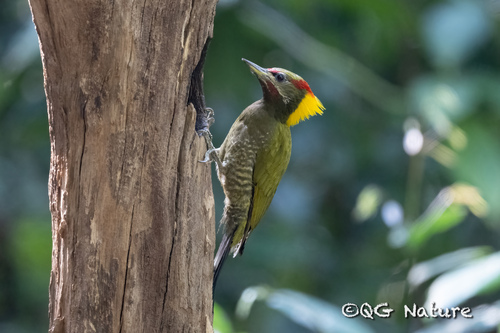
ヒメアオゲラ (Picus chlorolophus) ヒメアオゲラ
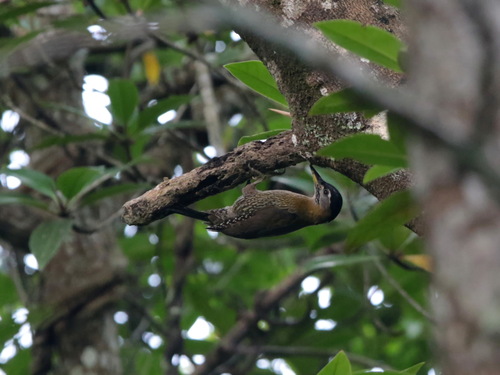
スジムネアオゲラ (Picus viridanus) スジムネアオゲラ

メディア

読み込み中…

要点

ヒメアオゲラとスジムネアオゲラを区別する最も信頼できるフィールドマークは、ヒメアオゲラの明るい黄色の房状の後頭部であり、スジムネアオゲラにはこれがありません。ヒメアオゲラはまた、オスに特有の赤いマーキングがある緑の頭を示しますが、スジムネアオゲラはこれらの顔の色がなく、代わりに胸にストライプがあるより均一な緑がかった外観を持っています。両種は緑背のキツツキであり、東南アジアの一部で分布が重なることがありますが、生息地と微妙な羽毛の詳細が重要です。両種の未熟な鳥はより鈍い色合いを持つことがあるため、まず後頭部の色と顔のパターンを探してください。

識別のコツ

  1. 黄色の後頭部の房(ヒメアオゲラ): 明るい黄色の房状の後頭部のパッチを探してください—これはすべての年齢と性別のヒメアオゲラに特有です。スジムネアオゲラはこの特徴を示しません。
  2. 顔の赤いマーキング(ヒメアオゲラのオス): 成熟したオスは目の上、後頭部の上、そして赤い口ひげのストライプがあります。メスは耳覆いの上に小さな赤いパッチを持っています。スジムネアオゲラは両性において顔に赤色を持ちません。
  3. 頭の色: ヒメアオゲラは白い喉を持つ緑の頭をしています。スジムネアオゲラは白い喉のコントラストがないより均一な緑がかった頭を持っています。
  4. 胸のパターン: ヒメアオゲラは緑で細かく縞模様のある白っぽい腹部を示しますが、スジムネアオゲラは胸にストライプがあることが期待されます(その名前通り)、ただし正確なパターンの詳細は情報源には記載されていません。
  5. 尾と尾羽: 両種は黒っぽい尾と尾羽を持っています—これは有用な区別マークではありません。
  6. 幼鳥/未熟な鳥: 若いヒメアオゲラは鈍いメスに似ていますが、まだ黄色の後頭部を示します。両種において未熟な翼や飛行の特徴は記載されていないため、後頭部と顔に頼ってください。
  7. くちばしと構造: 両種は典型的なキツツキのくちばしと硬い尾を持っており、フィールドで役立つ構造的な違いは記載されていません。
  8. 生息地の文脈: マレー半島のマングローブや低地の湿った森林ではスジムネアオゲラを考慮してください。乾燥した森林、丘陵、またはこの範囲の外ではヒメアオゲラの方が可能性が高いです。
  9. 地理的範囲: ヒメアオゲラはインドからベトナム、インドネシアまで広く分布しています。スジムネアオゲラはより局所的で、主にマレー半島とその周辺地域に分布しています。
  10. 性差: ヒメアオゲラのみが顔の赤いマーキングにおいて明確な性差を示します。スジムネアオゲラは示しません。
  11. 亜種の変異(ヒメアオゲラ): インド半島では、ヒメアオゲラはより灰色の頭を持つことがありますが、黄色の後頭部は重要なマークのままです。
  12. 止まり木と飛行の視点: 両種は止まっているときに最も識別されやすいです。飛行中の特徴は記載されていません。
  13. 落とし穴—緑の上面: 両種は緑背であるため、背中の色だけに頼らないでください。
  14. 落とし穴—サイズ: 両種は中型のキツツキであり、サイズは信頼できるフィールドマークではありません。
  15. 声: 情報源には声の違いは記載されていません。呼び声に頼って区別しないでください。

大きさ

直接のサイズデータは限られていますが、スジムネアオゲラは約105gで記録されており、ヒメアオゲラは27cmの「大きめの」キツツキとして記載されています。フィールドでは、両種はPicusのキツツキとして中型に見え、体重や長さにおいて目立った違いは診断的ではない可能性があります。

羽色

すべての年齢において、ヒメアオゲラはその明るい黄色の房状の後頭部によって際立っており、これはスジムネアオゲラには欠けています。成鳥のオスのヒメアオゲラは白い喉を持つ緑の頭、目と後頭部の上に赤、そして赤い口ひげのストライプを持っています。メスは耳覆いの上に赤いパッチのみを持っています。若いヒメアオゲラはメスに似ていますが、全体的に鈍い色合いです。対照的に、スジムネアオゲラはこれらの赤い顔のマーキングや黄色の後頭部を示さず、代わりにより均一な緑がかった上面とストライプのある胸を持っています(その名前が示す通り)。両種は緑の上面と黒っぽい尾/尾羽を持っていますが、ヒメアオゲラの下部は細かい緑の縞模様のある白っぽいものであり、スジムネアオゲラは胸により多くのストライプを示すことが期待されます。情報源には両種の特定の翼のパターンや飛行の特徴は記載されていないため、止まっている視点が最も信頼できます。

行動

両種は行動において典型的なPicusのキツツキです:彼らは幹を登り、硬い尾を支えに使い、昆虫を求めてつつきます。フィールドで彼らを確実に区別するための行動の違いは記載されていません。

生息環境

ヒメアオゲラは、特にインド亜大陸と東南アジアのさまざまな熱帯および亜熱帯の森林で広く分布し、しばしば一般的な繁殖者です。ジャングルや森林の生息地を好みます。スジムネアオゲラはより制限されており、南東バングラデシュからマレー半島の中央部に見られ、亜熱帯または熱帯の湿った低地の森林やマングローブに関連しています。マレー半島のマングローブや低地の森林にいる場合、スジムネアオゲラの方が可能性が高いです。乾燥した森林や丘陵地帯、特にマレー半島の外では、ヒメアオゲラがデフォルトです。

より良い説明を送る

比較と同じ項目を使ってください。文章はすぐに公開されます。

The most reliable field mark to separate Lesser Yellownape from Streak-breasted Woodpecker is the bright yellow, tufted nape on Lesser Yellownape, which is absent in Streak-breasted. Lesser Yellownape also shows a green head with distinct red markings in males, while Streak-breasted lacks these facial colors and instead has a more uniform greenish appearance with streaking on the breast. Both species are green-backed woodpeckers and can overlap in range in parts of Southeast Asia, but habitat and subtle plumage details are key. Immature birds of both species may be duller, so look for the nape color and facial pattern first.

  1. Yellow nape tuft (Lesser Yellownape): Look for a bright yellow, bushy nape patch—this is diagnostic for Lesser Yellownape of all ages and sexes. Streak-breasted never shows this feature.
  2. Facial red markings (Lesser Yellownape males): Adult males have red above the eye, above the nape, and a red moustachial stripe. Females have a smaller red patch above the ear coverts. Streak-breasted Woodpecker lacks any red on the face in both sexes.
  3. Head color: Lesser Yellownape has a green head with a white throat. Streak-breasted has a more uniform greenish head without the white throat contrast.
  4. Breast pattern: Lesser Yellownape shows a whitish belly finely barred with green, while Streak-breasted is expected to have streaking on the breast (as per its name), though precise pattern details are not described in the sources.
  5. Rump and tail: Both have blackish rumps and tails—this is not a useful separation mark.
  6. Juvenile/immature birds: Young Lesser Yellownapes resemble duller females but still show the yellow nape. No distinctive immature wing or flight marks are described for either species, so rely on nape and face.
  7. Bill and structure: Both have typical woodpecker bills and stiff tails; no structural differences are noted that help in the field.
  8. Habitat context: In mangrove or lowland moist forest in the Malay Peninsula, consider Streak-breasted. In drier forest, hills, or outside this range, Lesser Yellownape is more likely.
  9. Geographic range: Lesser Yellownape is widespread from India to Vietnam and Indonesia; Streak-breasted is more local, mainly in the Malay Peninsula and adjacent areas.
  10. Sex differences: Only Lesser Yellownape shows clear sexual dimorphism in facial red markings; Streak-breasted does not.
  11. Subspecies variation (Lesser Yellownape): In peninsular India, Lesser Yellownape may have a greyer head, but the yellow nape remains a key mark.
  12. Perched vs. flight views: Both are best identified when perched; no flight-only marks are described.
  13. Pitfall—green upperparts: Both are green-backed, so do not rely on back color alone.
  14. Pitfall—size: Both are medium-sized woodpeckers; size is not a reliable field mark.
  15. Voice: No vocal differences are described in the sources; do not rely on calls for separation.

Direct size data is limited, but Streak-breasted Woodpecker is recorded at about 105 g [wikidata], while Lesser Yellownape is described as a 'largish' woodpecker at 27 cm in length [wikipedia]. In the field, both appear medium-sized for Picus woodpeckers, with no dramatic difference in bulk or length likely to be diagnostic at a glance.

For all ages, Lesser Yellownape stands out by its bright yellow, tufted nape, a feature lacking in Streak-breasted Woodpecker. Adult male Lesser Yellownape has a green head with a white throat, red above the eye and nape, and red moustachial stripes; females have only a red patch above the ear coverts. Young Lesser Yellownapes resemble females but are duller overall. Streak-breasted Woodpecker, by contrast, does not show these red facial markings or yellow nape, instead having a more uniform greenish upperpart and a streaked breast (as its name suggests). Both species have green upperparts and blackish rumps/tails, but Lesser Yellownape's underparts are whitish with fine green barring, while Streak-breasted is expected to show more streaking on the breast. No specific wing pattern or flight marks are described for either species in the sources, so perched views are most reliable.

Both species are typical Picus woodpeckers in behavior: they climb trunks, use stiff tails for support, and forage by pecking for insects. No behavioral differences are described that would reliably separate them in the field.

Lesser Yellownape is a widespread and often common breeder in a variety of tropical and subtropical Asian forests, especially in the Indian subcontinent and Southeast Asia, favoring jungle and woodland habitats. Streak-breasted Woodpecker is more restricted, found from southeastern Bangladesh to the central Malay Peninsula, and is associated with subtropical or tropical moist lowland forests and mangroves. If you are in mangrove or lowland forest in the Malay Peninsula, Streak-breasted is more likely; in drier or hillier forests, especially outside the Malay Peninsula, Lesser Yellownape is the default.

変更を破棄しますか?

保存していない編集があります。今離れると失われます。

ヒメアオゲラ · スジムネアオゲラ · 苦手な鳥