

Lesser Yellownape vs Streak-breasted Woodpecker
Picus chlorolophus contro Picus viridanus
Fai un quiz con Lesser Yellownape e Streak-breasted Woodpecker
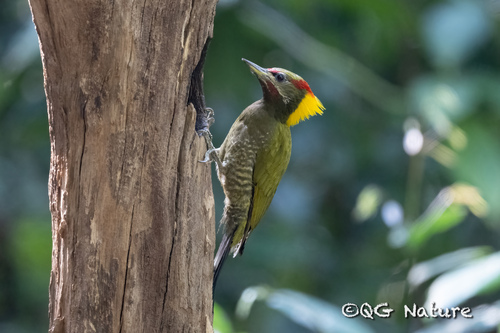 Lesser Yellownape
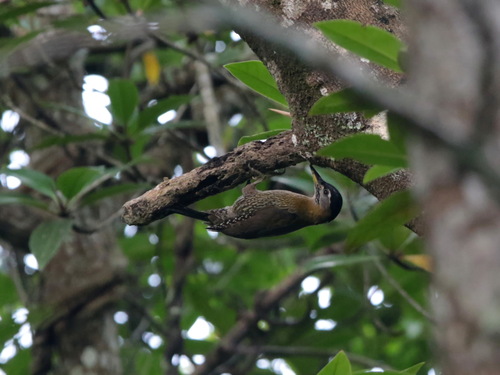 Streak-breasted Woodpecker
In breve
Il segno distintivo più affidabile per separare il Lesser Yellownape dallo Streak-breasted Woodpecker è la nuca tufted gialla brillante del Lesser Yellownape, assente nello Streak-breasted. Il Lesser Yellownape mostra anche una testa verde con marcature rosse distinte nei maschi, mentre lo Streak-breasted manca di questi colori facciali e ha invece un aspetto verde uniforme con striature sul petto. Entrambe le specie sono picchi con dorso verde e possono sovrapporsi nell'areale in alcune parti del Sud-est asiatico, ma l'habitat e i dettagli sottili del piumaggio sono fondamentali. Gli uccelli immaturi di entrambe le specie possono essere più opachi, quindi cerca prima il colore della nuca e il motivo facciale.
Consigli di identificazione
- Yellow nape tuft (Lesser Yellownape): Cerca una macchia di nuca tufted gialla brillante—questo è diagnostico per il Lesser Yellownape di tutte le età e sessi. Lo Streak-breasted non mostra mai questa caratteristica.
- Facial red markings (Lesser Yellownape males): I maschi adulti hanno rosso sopra l'occhio, sopra la nuca, e una striscia rossa moustachial. Le femmine hanno una macchia rossa più piccola sopra le copritrici auricolari. Lo Streak-breasted Woodpecker non ha rosso sul viso in entrambi i sessi.
- Head color: Il Lesser Yellownape ha una testa verde con una gola bianca. Lo Streak-breasted ha una testa verde uniforme senza il contrasto della gola bianca.
- Breast pattern: Il Lesser Yellownape mostra un ventre biancastro finemente barrato di verde, mentre lo Streak-breasted è previsto avere striature sul petto (come per il suo nome), anche se i dettagli precisi del motivo non sono descritti nelle fonti.
- Rump and tail: Entrambi hanno rami e code nerastre—questo non è un segno utile per la separazione.
- Juvenile/immature birds: I giovani Lesser Yellownapes assomigliano a femmine più opache ma mostrano ancora la nuca gialla. Non sono descritti segni distintivi di ali o volo immaturi per nessuna delle due specie, quindi fai affidamento sulla nuca e sul viso.
- Bill and structure: Entrambi hanno becchi tipici da picchio e code rigide; non sono notate differenze strutturali che aiutino sul campo.
- Habitat context: In foreste umide di mangrovie o basse nella Penisola Malese, considera lo Streak-breasted. In foreste più secche, colline, o al di fuori di questo areale, il Lesser Yellownape è più probabile.
- Geographic range: Il Lesser Yellownape è diffuso dall'India al Vietnam e all'Indonesia; lo Streak-breasted è più locale, principalmente nella Penisola Malese e nelle aree adiacenti.
- Sex differences: Solo il Lesser Yellownape mostra un chiaro dimorfismo sessuale nelle marcature rosse facciali; lo Streak-breasted non lo fa.
- Subspecies variation (Lesser Yellownape): Nella penisola indiana, il Lesser Yellownape può avere una testa più grigia, ma la nuca gialla rimane un segno chiave.
- Perched vs. flight views: Entrambi sono meglio identificabili quando sono posati; non sono descritti segni solo di volo.
- Pitfall—green upperparts: Entrambi hanno un dorso verde, quindi non fare affidamento solo sul colore del dorso.
- Pitfall—size: Entrambi sono picchi di taglia media; la dimensione non è un segno affidabile sul campo.
- Voice: Non sono descritte differenze vocali nelle fonti; non fare affidamento sui richiami per la separazione.
Taglia
I dati diretti sulle dimensioni sono limitati, ma lo Streak-breasted Woodpecker è registrato a circa 105 g [wikidata], mentre il Lesser Yellownape è descritto come un picchio 'grande' di 27 cm di lunghezza [wikipedia]. Sul campo, entrambi appaiono di dimensioni medie per i picchi Picus, senza una differenza drammatica in bulk o lunghezza che possa essere diagnostica a colpo d'occhio.
Piumaggio
Per tutte le età, il Lesser Yellownape si distingue per la sua nuca tufted gialla brillante, una caratteristica assente nello Streak-breasted Woodpecker. Il maschio adulto del Lesser Yellownape ha una testa verde con una gola bianca, rosso sopra l'occhio e la nuca, e strisce rosse moustachial; le femmine hanno solo una macchia rossa sopra le copritrici auricolari. I giovani Lesser Yellownapes assomigliano a femmine ma sono più opachi nel complesso. Lo Streak-breasted Woodpecker, al contrario, non mostra queste marcature rosse facciali o la nuca gialla, avendo invece una parte superiore verde uniforme e un petto striato (come suggerisce il suo nome). Entrambe le specie hanno parti superiori verdi e rami/coda nerastre, ma le parti inferiori del Lesser Yellownape sono biancastre con fine barratura verde, mentre lo Streak-breasted dovrebbe mostrare più striature sul petto. Non sono descritti specifici motivi di ali o segni di volo per nessuna delle due specie nelle fonti, quindi le viste posate sono le più affidabili.
Comportamento
Entrambe le specie sono picchi tipici del genere Picus nel comportamento: scalano i tronchi, usano code rigide per supporto e cercano cibo picchiettando per insetti. Non sono descritte differenze comportamentali che possano separarle in modo affidabile sul campo.
Habitat
Il Lesser Yellownape è un allevatore diffuso e spesso comune in una varietà di foreste tropicali e subtropicali asiatiche, specialmente nel subcontinente indiano e nel Sud-est asiatico, preferendo habitat di giungla e bosco. Lo Streak-breasted Woodpecker è più ristretto, trovato dal Bangladesh sudorientale alla penisola malese centrale, ed è associato a foreste umide tropicali o subtropicali e mangrovie. Se ti trovi in una foresta di mangrovie o bassa nella Penisola Malese, è più probabile che tu incontri lo Streak-breasted; in foreste più secche o collinari, specialmente al di fuori della Penisola Malese, il Lesser Yellownape è il default.
Lesser Yellownape · Streak-breasted Woodpecker · I miei uccelli difficili