

Lesser Whistling-Duck vs Indian Spot-billed Duck
Dendrocygna javanica versus Anas poecilorhyncha
Play a quiz with Lesser Whistling-Duck and Indian Spot-billed Duck
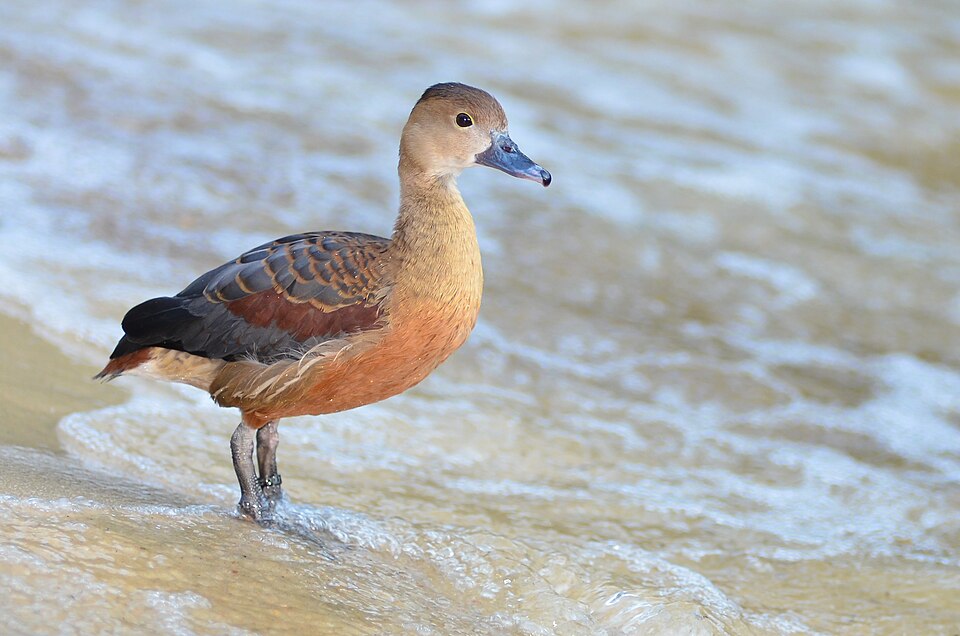 Lesser Whistling-Duck
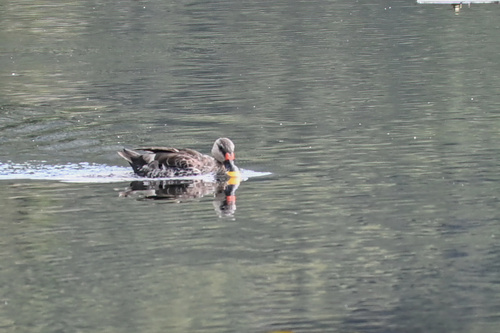 Indian Spot-billed Duck
In short
The most reliable field mark to separate these two is the wing and tail pattern in flight: Lesser Whistling-Duck shows a uniform chestnut-brown upperwing and chestnut upper-tail coverts, while Indian Spot-billed Duck has a green speculum with a bold white band at the base and white tertials forming a stripe at rest. Juvenile plumage is also distinct: Lesser Whistling-Duck chicks are black with white patches, while Indian Spot-billed Duck chicks are black with a yellow back and a broad eyestripe. Structurally, the whistling-duck is smaller, more compact, and often perches in trees, while the spot-billed duck is larger, with a longer neck and a distinctive bill pattern. Both are common in Indian wetlands, but their behavior, flight style, and flocking habits differ noticeably.
Identification tips
- In flight, check the wing pattern: Lesser Whistling-Duck shows uniform chestnut-brown upperwings and chestnut upper-tail coverts (all ages). Indian Spot-billed Duck has a green speculum with a bold white band at the base and white tertials; this is visible in both adults and juveniles.
- Juvenile downy chicks: Whistling-duck chicks are black with white patches; spot-billed duck chicks are black with a yellow back and a broad eyestripe.
- Bill pattern: Spot-billed Duck has a black bill tipped bright yellow, with orange-red spots at the base (males). Lesser Whistling-Duck has a plain dark bill without spots or color at the base.
- Eye-ring: Lesser Whistling-Duck has a prominent orange to yellow eye-ring, lacking in spot-billed duck.
- Crown color: Whistling-duck has a dark crown contrasting with the face; spot-billed duck has a paler head and neck, blending with the body.
- Leg and foot color: Spot-billed Duck has bright orange to coral red legs and feet, especially obvious when perched or walking; whistling-duck does not.
- Tail and upper-tail coverts: Lesser Whistling-Duck has chestnut upper-tail coverts; spot-billed duck does not (upper-tail coverts are not creamy white as in Fulvous Whistling-Duck, but not chestnut either).
- Jizz and posture: Whistling-duck is compact, short-necked, often upright, and may perch in trees. Spot-billed duck is larger, longer-necked, and rarely perches.
- Flocking: Whistling-ducks are usually in large, tight flocks; spot-billed ducks are in pairs or small groups.
- Flight style: Whistling-ducks fly slowly with rapid wingbeats, often circling and calling. Spot-billed ducks take off nearly vertically and fly more directly.
- Voice: Whistling-duck gives a loud, repetitive whistling call, especially in flight. Spot-billed duck sounds like a Mallard and does not whistle.
- Habitat context: Both use wetlands, but whistling-ducks are more likely in large flocks on open water or perched in trees; spot-billed ducks favor vegetated edges and are less gregarious.
- Sex differences: Only male spot-billed ducks show a prominent red spot at the bill base; both sexes of whistling-duck look alike.
- Seasonal plumage: Spot-billed duck males do not have an eclipse plumage, so bill and leg color are reliable year-round. Whistling-duck plumage is not strongly seasonal.
- Size at a distance: Spot-billed ducks are much larger and bulkier than whistling-ducks, especially when seen side by side.
Size
Indian Spot-billed Duck is significantly larger and heavier (average adult mass ~1195 g) than Lesser Whistling-Duck (~525 g). Spot-billed Ducks are about the size of a Mallard, with a noticeably longer neck and a bulkier body. In mixed flocks or at a distance, the whistling-duck will appear more compact and short-necked, often in tight groups, while spot-billed ducks are more elongated and often seen in pairs or small groups.
Plumage
- Juveniles: Lesser Whistling-Duck chicks are black with a white eyebrow and white patches on the back of the head, wing, lower back, and rump. Indian Spot-billed Duck chicks are black with a yellow back and a broad eyestripe, more similar to Mallard ducklings but with a wider stripe.
- Adults in flight: Lesser Whistling-Duck shows uniform chestnut-brown upperwings and chestnut upper-tail coverts (not creamy white). Indian Spot-billed Duck shows a green speculum bordered by a broad white band at the base, with white tertials forming a stripe on the side when perched or swimming.
- At rest: Lesser Whistling-Duck is overall chestnut-brown with an orange to yellow eye-ring and a dark crown. Indian Spot-billed Duck is mainly grey with a scaly pattern, paler head and neck, and a black bill tipped yellow with orange-red spots at the base (in males). Legs and feet are bright orange to coral red in the spot-billed duck, not so in the whistling-duck.
- Sexes: Both species have similar plumage between sexes, but the red spot at the base of the bill is more prominent in male spot-billed ducks.
Behaviour
Lesser Whistling-Ducks are highly gregarious, often seen in large flocks, especially during the day when they rest together on water or even in trees. They are nocturnal feeders and may perch on branches or nest in tree hollows. Their flight is slow with rapid wingbeats, and they often circle overhead while calling. Indian Spot-billed Ducks are less gregarious, usually seen in pairs or small groups, and rarely perch in trees. They feed mainly by dabbling, often in the evening or at night, and can take off nearly vertically from water when disturbed. In molt, they may dive to escape predators.
Habitat
Both species are widespread in freshwater wetlands across the Indian subcontinent. Lesser Whistling-Ducks favor lakes, marshes, wet paddy fields, and sometimes coastal areas, often resting on banks or even the open sea. They are more likely to be seen in large flocks in urban wetlands. Indian Spot-billed Ducks are also found in freshwater lakes and marshes, but tend to avoid very open water and are more often seen in pairs or small groups, nesting on the ground near water or occasionally in low trees covered by creepers.
Voice
Lesser Whistling-Duck gives a very prominent, repetitive wheezy whistling call, especially in flight or when circling overhead. Their call is distinctive and often described as a two-note whistle. Indian Spot-billed Duck has a call similar to the Mallard, not a whistling sound, and is less likely to be heard in flight.
Lesser Whistling-Duck · Indian Spot-billed Duck · My Tricky Birds