

Motmot

Lesser Frigatebird vs Great Frigatebird

Fregata ariel versus Fregata minor

Play a quiz with Lesser Frigatebird and Great Frigatebird
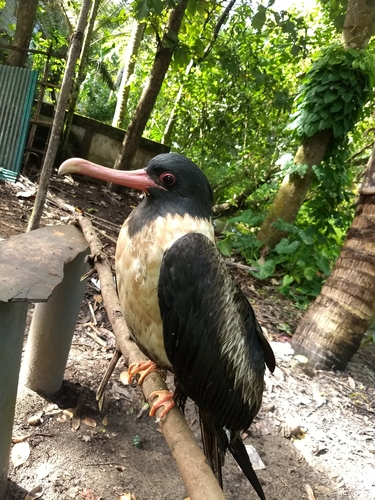
Lesser Frigatebird (Fregata ariel) Lesser Frigatebird
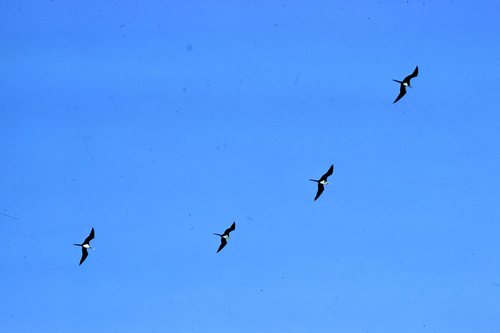
Great Frigatebird (Fregata minor) Great Frigatebird

Media

Loading…

In short

The most reliable field mark between Lesser and Great Frigatebirds is size: Lesser is distinctly smaller and lighter, with a noticeably shorter wingspan and body length. For immatures and females, check the extent and shape of white in the underparts and the presence of a white 'spur' or armpit patch—distinctive in Lesser but absent or less pronounced in Great. In flight, Lesser often looks more compact and agile, with a relatively shorter, more deeply forked tail. Both species show similar all-black adult males with inflated red throat sacs, so focus on structural and underwing differences, especially in non-adult-plumaged birds. Mistakes often happen with juveniles and females, so prioritize underwing pattern and overall size.

Identification tips

  1. Size is the first check: Great Frigatebird is much larger and bulkier, with a longer wingspan and body, but beware of lone birds without direct comparison.
  2. White underwing spur (armpit patch): Present in all ages except adult males of Lesser Frigatebird; absent or much less distinct in Great. Look for this in flight, especially on immatures and females.
  3. Juvenile head and throat: Great Frigatebird juveniles have a rust-tinged white face, head, and throat, lacking the sharp white underwing spur of Lesser.
  4. Adult male plumage: Both are mostly black with a red gular sac; Great may show green iridescence on scapulars (hard to see at distance). Do not rely on this alone.
  5. Adult female face and breast: Lesser females have a narrow red eye ring and a sharply defined white collar and breast; Great females also have a red eye ring but the white is less sharply defined.
  6. Tail shape in flight: Both have deeply forked tails, but Lesser's is proportionally shorter and may look more 'scissored' due to its smaller size.
  7. Jizz/flight style: Lesser appears more compact and agile, Great more languid and broad-winged. Use with caution unless you have experience with both.
  8. Bill and head proportions: Not reliably different in the field; both have long, hooked bills.
  9. Habitat context: Not diagnostic where both occur, but Great is more likely at large breeding colonies.
  10. Behavior: Both soar and rarely land; behavioral differences are not reliable for field separation.
  11. Vocalizations: Not helpful for field separation; both are mostly silent away from colonies.
  12. Sexual dimorphism: Both species show males with red gular sacs and females with white underparts, so always check for the underwing spur and overall size.
  13. Direct comparison: If both species are present, Great will tower over Lesser and look much more robust.
  14. Immature confusion: Most quiz errors happen with immatures—always check for the white underwing spur (Lesser) and the extent of white on the head/throat (Great).

Size

Lesser Frigatebird is the smallest frigatebird: body mass averages about 806 g, with males 625–875 g and females 760–955 g. Great Frigatebird is much larger: males 1,000–1,450 g, females 1,215–1,590 g. Lesser is 66–81 cm (26–32 in) long with a wingspan of 155–193 cm (61–76 in); Great is 85–105 cm (33–41 in) long with a wingspan of 205–230 cm (81–91 in). In the field, Great Frigatebird will look bulkier, longer-winged, and more imposing in direct comparison.

Plumage

Juvenile and immature birds are the most challenging. Lesser Frigatebird (all ages) shows a diagnostic white spur or patch in the 'armpit' (axillaries) that extends onto the underwing—this is especially helpful in flight and is absent or much less distinct in Great. Juvenile Great Frigatebirds have a rust-tinged white face, head, and throat, but lack the sharp white underwing spur of Lesser. Adult males of both are mostly black with a red gular sac, but Great males have greenish iridescence on scapulars (often hard to see at distance). Adult females of both have white throats and breasts, but Lesser females have a narrow red eye ring and a more sharply defined white collar and breast, while Great females have a red eye ring but the white is less sharply demarcated. In summary: look for the white underwing spur in Lesser (all non-adult-male ages), and the more extensive white on the head and throat in Great juveniles.

Behaviour

Both species are highly aerial and rarely land except to nest. Both are masters of soaring and rarely swim or walk. Lesser Frigatebird tends to appear more agile and buoyant in flight due to its smaller size and lighter build. Both engage in kleptoparasitism (harassing other seabirds for food), but this is not a reliable field mark for separation. Great Frigatebird females and juveniles are more likely to hunt seabird chicks at colonies, but this is rarely observed by casual birders.

Habitat

Both species overlap widely in tropical and subtropical oceans, especially in the Indian and Pacific Oceans, and both can be found around remote islands and atolls. Great Frigatebird has major populations in the Pacific (Hawaii, Galápagos), Indian Ocean (Seychelles, Mauritius), and a tiny South Atlantic presence. Lesser Frigatebird is also widespread in the Indian and Pacific Oceans, with some populations off Brazil. Habitat alone is not diagnostic where both occur, but Great is more likely at larger, established colonies.

Submit a better description

Use the same sections as the comparison. Your text is published immediately.

The most reliable field mark between Lesser and Great Frigatebirds is size: Lesser is distinctly smaller and lighter, with a noticeably shorter wingspan and body length. For immatures and females, check the extent and shape of white in the underparts and the presence of a white 'spur' or armpit patch—distinctive in Lesser but absent or less pronounced in Great. In flight, Lesser often looks more compact and agile, with a relatively shorter, more deeply forked tail. Both species show similar all-black adult males with inflated red throat sacs, so focus on structural and underwing differences, especially in non-adult-plumaged birds. Mistakes often happen with juveniles and females, so prioritize underwing pattern and overall size.

  1. Size is the first check: Great Frigatebird is much larger and bulkier, with a longer wingspan and body, but beware of lone birds without direct comparison.
  2. White underwing spur (armpit patch): Present in all ages except adult males of Lesser Frigatebird; absent or much less distinct in Great. Look for this in flight, especially on immatures and females.
  3. Juvenile head and throat: Great Frigatebird juveniles have a rust-tinged white face, head, and throat, lacking the sharp white underwing spur of Lesser.
  4. Adult male plumage: Both are mostly black with a red gular sac; Great may show green iridescence on scapulars (hard to see at distance). Do not rely on this alone.
  5. Adult female face and breast: Lesser females have a narrow red eye ring and a sharply defined white collar and breast; Great females also have a red eye ring but the white is less sharply defined.
  6. Tail shape in flight: Both have deeply forked tails, but Lesser's is proportionally shorter and may look more 'scissored' due to its smaller size.
  7. Jizz/flight style: Lesser appears more compact and agile, Great more languid and broad-winged. Use with caution unless you have experience with both.
  8. Bill and head proportions: Not reliably different in the field; both have long, hooked bills.
  9. Habitat context: Not diagnostic where both occur, but Great is more likely at large breeding colonies.
  10. Behavior: Both soar and rarely land; behavioral differences are not reliable for field separation.
  11. Vocalizations: Not helpful for field separation; both are mostly silent away from colonies.
  12. Sexual dimorphism: Both species show males with red gular sacs and females with white underparts, so always check for the underwing spur and overall size.
  13. Direct comparison: If both species are present, Great will tower over Lesser and look much more robust.
  14. Immature confusion: Most quiz errors happen with immatures—always check for the white underwing spur (Lesser) and the extent of white on the head/throat (Great).

Lesser Frigatebird is the smallest frigatebird: body mass averages about 806 g, with males 625–875 g and females 760–955 g. Great Frigatebird is much larger: males 1,000–1,450 g, females 1,215–1,590 g. Lesser is 66–81 cm (26–32 in) long with a wingspan of 155–193 cm (61–76 in); Great is 85–105 cm (33–41 in) long with a wingspan of 205–230 cm (81–91 in). In the field, Great Frigatebird will look bulkier, longer-winged, and more imposing in direct comparison.

Juvenile and immature birds are the most challenging. Lesser Frigatebird (all ages) shows a diagnostic white spur or patch in the 'armpit' (axillaries) that extends onto the underwing—this is especially helpful in flight and is absent or much less distinct in Great. Juvenile Great Frigatebirds have a rust-tinged white face, head, and throat, but lack the sharp white underwing spur of Lesser. Adult males of both are mostly black with a red gular sac, but Great males have greenish iridescence on scapulars (often hard to see at distance). Adult females of both have white throats and breasts, but Lesser females have a narrow red eye ring and a more sharply defined white collar and breast, while Great females have a red eye ring but the white is less sharply demarcated. In summary: look for the white underwing spur in Lesser (all non-adult-male ages), and the more extensive white on the head and throat in Great juveniles.

Both species are highly aerial and rarely land except to nest. Both are masters of soaring and rarely swim or walk. Lesser Frigatebird tends to appear more agile and buoyant in flight due to its smaller size and lighter build. Both engage in kleptoparasitism (harassing other seabirds for food), but this is not a reliable field mark for separation. Great Frigatebird females and juveniles are more likely to hunt seabird chicks at colonies, but this is rarely observed by casual birders.

Both species overlap widely in tropical and subtropical oceans, especially in the Indian and Pacific Oceans, and both can be found around remote islands and atolls. Great Frigatebird has major populations in the Pacific (Hawaii, Galápagos), Indian Ocean (Seychelles, Mauritius), and a tiny South Atlantic presence. Lesser Frigatebird is also widespread in the Indian and Pacific Oceans, with some populations off Brazil. Habitat alone is not diagnostic where both occur, but Great is more likely at larger, established colonies.

Discard your changes?

You have unsaved edits. If you leave now, those changes will be lost.

Lesser Frigatebird · Great Frigatebird · My Tricky Birds