

tesourão-pequeno/fragata-pequena vs fragata-grande
Fregata ariel versus Fregata minor
Jogue um quiz com tesourão-pequeno/fragata-pequena e fragata-grande
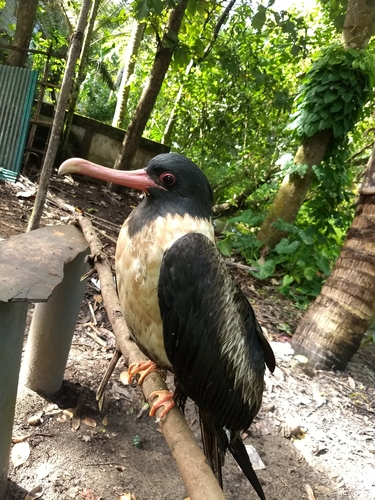 tesourão-pequeno/fragata-pequena
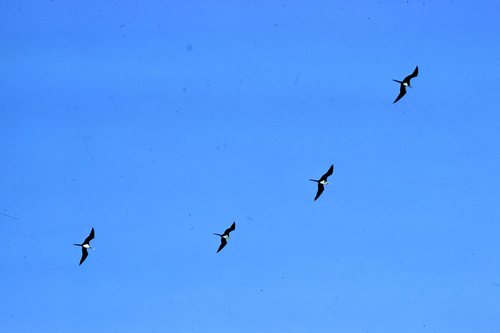 fragata-grande
Em resumo
A marca de campo mais confiável entre o tesourão-pequeno e a fragata-grande é o tamanho: o tesourão-pequeno é distintamente menor e mais leve, com uma envergadura e comprimento de corpo visivelmente mais curtos. Para imaturos e fêmeas, verifique a extensão e a forma do branco nas partes inferiores e a presença de um 'esporão' branco ou mancha na axila — distintivo no tesourão-pequeno, mas ausente ou menos pronunciado na fragata-grande. Em voo, o tesourão-pequeno muitas vezes parece mais compacto e ágil, com uma cauda relativamente mais curta e mais profundamente bifurcada. Ambas as espécies apresentam machos adultos totalmente pretos com sacos de garganta vermelhos inflacionados, então concentre-se nas diferenças estruturais e nas partes inferiores, especialmente em aves com plumagem não adulta. Erros frequentemente ocorrem com juvenis e fêmeas, então priorize o padrão das partes inferiores e o tamanho geral.
Dicas de identificação
- O tamanho é a primeira verificação: A fragata-grande é muito maior e mais robusta, com uma envergadura e corpo mais longos, mas tenha cuidado com aves solitárias sem comparação direta.
- Esporão branco na parte inferior (mancha na axila): Presente em todas as idades, exceto nos machos adultos do tesourão-pequeno; ausente ou muito menos distinto na fragata-grande. Procure isso em voo, especialmente em imaturos e fêmeas.
- Cabeça e garganta de juvenis: Os juvenis da fragata-grande têm um rosto, cabeça e garganta brancos com tom ferrugento, sem o esporão branco agudo na parte inferior do tesourão-pequeno.
- Plumagem de machos adultos: Ambos são principalmente pretos com um saco gular vermelho; a fragata-grande pode mostrar iridescência verde nas escapulares (difícil de ver à distância). Não confie apenas nisso.
- Rosto e peito de fêmeas adultas: As fêmeas do tesourão-pequeno têm um anel ocular vermelho estreito e um colar e peito brancos bem definidos; as fêmeas da fragata-grande também têm um anel ocular vermelho, mas o branco é menos definido.
- Forma da cauda em voo: Ambas têm caudas profundamente bifurcadas, mas a do tesourão-pequeno é proporcionalmente mais curta e pode parecer mais 'cortada' devido ao seu tamanho menor.
- Jizz/estilo de voo: O tesourão-pequeno parece mais compacto e ágil, enquanto a fragata-grande é mais lânguida e de asas largas. Use com cautela, a menos que você tenha experiência com ambas.
- Proporções do bico e da cabeça: Não são confiavelmente diferentes no campo; ambos têm bicos longos e curvados.
- Contexto de habitat: Não é diagnóstico onde ambas ocorrem, mas a fragata-grande é mais provável em grandes colônias de reprodução.
- Comportamento: Ambas planam e raramente pousam; diferenças comportamentais não são confiáveis para separação em campo.
- Vocalizações: Não são úteis para separação em campo; ambas são principalmente silenciosas longe das colônias.
- Dimorfismo sexual: Ambas as espécies mostram machos com sacos gulares vermelhos e fêmeas com partes inferiores brancas, então sempre verifique o esporão da parte inferior e o tamanho geral.
- Comparação direta: Se ambas as espécies estiverem presentes, a fragata-grande se destacará sobre o tesourão-pequeno e parecerá muito mais robusta.
- Confusão com imaturos: A maioria dos erros de quiz acontece com imaturos — sempre verifique o esporão branco na parte inferior (tesourão-pequeno) e a extensão do branco na cabeça/garganta (fragata-grande).
Tamanho
O tesourão-pequeno é a menor fragata: a massa corporal média é de cerca de 806 g, com machos de 625–875 g e fêmeas de 760–955 g. A fragata-grande é muito maior: machos de 1.000–1.450 g, fêmeas de 1.215–1.590 g. O tesourão-pequeno mede 66–81 cm (26–32 in) de comprimento com uma envergadura de 155–193 cm (61–76 in); a fragata-grande mede 85–105 cm (33–41 in) de comprimento com uma envergadura de 205–230 cm (81–91 in). No campo, a fragata-grande parecerá mais robusta, com asas mais longas e mais imponente em comparação direta.
Plumagem
Aves juvenis e imaturas são as mais desafiadoras. O tesourão-pequeno (todas as idades) apresenta um esporão ou mancha branca diagnóstica na 'axila' (axilares) que se estende para a parte inferior — isso é especialmente útil em voo e está ausente ou muito menos distinto na fragata-grande. Os juvenis da fragata-grande têm um rosto, cabeça e garganta brancos com tom ferrugento, mas não possuem o esporão branco agudo na parte inferior do tesourão-pequeno. Machos adultos de ambos são principalmente pretos com um saco gular vermelho, mas os machos da fragata-grande têm iridescência esverdeada nas escapulares (geralmente difícil de ver à distância). As fêmeas adultas de ambos têm gargantas e peitos brancos, mas as fêmeas do tesourão-pequeno têm um anel ocular vermelho estreito e um colar e peito brancos mais bem definidos, enquanto as fêmeas da fragata-grande têm um anel ocular vermelho, mas o branco é menos demarcado. Em resumo: procure o esporão branco na parte inferior no tesourão-pequeno (todas as idades não adultas) e o branco mais extenso na cabeça e garganta nos juvenis da fragata-grande.
Comportamento
Ambas as espécies são altamente aéreas e raramente pousam, exceto para nidificar. Ambas são mestres do planador e raramente nadam ou andam. O tesourão-pequeno tende a parecer mais ágil e flutuante em voo devido ao seu tamanho menor e construção mais leve. Ambas se envolvem em cleptoparasitismo (assediando outras aves marinhas por comida), mas isso não é uma marca de campo confiável para separação. Fêmeas e juvenis da fragata-grande são mais propensos a caçar filhotes de aves marinhas em colônias, mas isso raramente é observado por observadores casuais.
Habitat
Ambas as espécies se sobrepõem amplamente em oceanos tropicais e subtropicais, especialmente nos oceanos Índico e Pacífico, e ambas podem ser encontradas ao redor de ilhas remotas e atóis. A fragata-grande tem populações significativas no Pacífico (Havai, Galápagos), no Oceano Índico (Seicheles, Maurício) e uma pequena presença no Atlântico Sul. O tesourão-pequeno também é amplamente distribuído nos oceanos Índico e Pacífico, com algumas populações ao largo do Brasil. O habitat por si só não é diagnóstico onde ambas ocorrem, mas a fragata-grande é mais provável em colônias maiores e estabelecidas.
tesourão-pequeno/fragata-pequena · fragata-grande · Minhas aves difíceis