
Least Grebe vs Pied-billed Grebe
Tachybaptus dominicus versus Podilymbus podiceps
Play a quiz with Least Grebe and Pied-billed Grebe
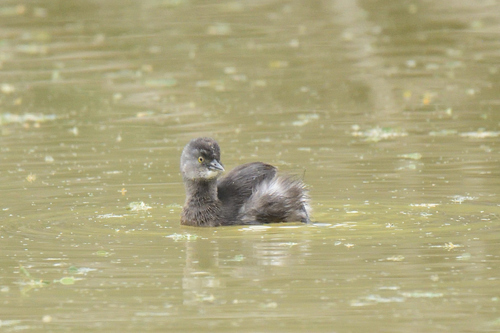 Least Grebe
 Pied-billed Grebe
In short
The most reliable field mark to separate Least Grebe from Pied-billed Grebe is the presence of a bold white wing patch in flight on Least Grebe of all ages, which Pied-billed Grebe completely lacks. In perched or swimming birds, Least Grebe is much smaller and slimmer, with a thin, pointed bill and bright yellow eyes, while Pied-billed Grebe is noticeably bulkier, has a thick, blunt bill (with a black band in breeding season), and a white undertail. Juvenile Pied-billed Grebes are striped, unlike the plainer, paler young Least Grebes. Both species are overall brownish, but Least Grebe always lacks any chestnut on the neck and is darker overall. Bill shape and size differences are especially helpful at a distance or in poor light.
Identification tips
- White wing patch in flight: Only Least Grebe shows a white patch on the wing when flying; Pied-billed Grebe’s wings are plain brown with no white. This is the single most reliable mark for birds flushed or seen in flight, regardless of age.
- Size: Least Grebe is much smaller and lighter than Pied-billed Grebe. If you see both together, the difference is striking, but beware of misjudging size on lone birds or at distance.
- Bill shape: Least Grebe has a thin, sharp, pointed bill; Pied-billed Grebe’s bill is thick, blunt, and chicken-like, with a pale color and a black band in breeding adults. Bill shape is often visible even at moderate range.
- Eye color: Least Grebe has bright yellow eyes; Pied-billed Grebe’s eyes are duller and do not stand out as much.
- Juvenile plumage: Juvenile Pied-billed Grebes have bold black-and-white facial stripes, while Least Grebe juveniles are simply paler and greyer, lacking any striping. This is a key mark in late summer and fall.
- Neck color: Least Grebe always lacks chestnut or rufous on the neck, while Pied-billed Grebe is plain brown; this helps separate them from other grebes but is less useful between these two.
- Undertail color: Pied-billed Grebe has a conspicuous white undertail, often visible when the bird is diving or preening. Least Grebe lacks this contrast.
- Crown and throat: In breeding season, Least Grebe has a blackish crown and throat; Pied-billed Grebe has a black throat patch and a pale bill with a black band. In non-breeding season, both become paler, but bill shape and size remain useful.
- Overall jizz: Least Grebe appears more delicate, shorter-necked, and less bulky than Pied-billed Grebe, which is stocky and heavy-bodied.
- Feet in flight: Both have feet set far back, but Pied-billed Grebe’s large, lobed toes often trail behind the body in flight and are not webbed.
- Habitat context: Least Grebe is more likely in small, overgrown, or temporary water bodies; Pied-billed Grebe prefers larger, more open wetlands. If you’re in a tiny, weedy ditch in the tropics, Least Grebe is more likely.
- Behavior: Both dive readily, but Pied-billed Grebe is especially shy and may disappear for long periods underwater, resurfacing far from its original location.
- Sexual dimorphism: Neither species shows obvious sex differences in the field, so do not rely on this for separation.
- Seasonal context: In North America, Pied-billed Grebe is more likely outside the tropics, especially in winter. Least Grebe is resident in the southern U.S., Mexico, and further south.
- Common pitfalls: Do not confuse Pied-billed Grebe’s brown plumage for Least Grebe; always check for bill shape, size, and the presence or absence of the white wing patch in flight.
Size
Least Grebe is dramatically smaller and lighter (adult mass ~122.5 g) than Pied-billed Grebe (~440 g). Least Grebe is also shorter (21–27 cm) compared to Pied-billed Grebe (31–38 cm). This size difference is obvious when seen side-by-side, but can be underestimated if birds are alone. Least Grebe appears more petite and delicate, while Pied-billed Grebe is stocky and heavy-bodied.
Plumage
- In flight (all ages): Least Grebe shows a distinct white wing patch; Pied-billed Grebe lacks any white in the wings when flying, which is a key separation point at any age.
- Juveniles: Pied-billed Grebe juveniles have bold black-and-white stripes on the face and neck, making them look quite different from Least Grebe juveniles, which are simply paler and greyer than adults with no striping.
- Adults (breeding): Least Grebe is dark brownish-grey above with a blackish crown and throat, brownish chest, pale underparts, and always lacks chestnut on the neck. Pied-billed Grebe is brown overall with a darker crown and back, and in summer shows a black throat and a distinctive pale bill with a black band.
- Adults (non-breeding): Both species become paler, but Pied-billed Grebe loses the black throat and bill band, while Least Grebe develops a whitish throat and remains smaller and darker overall.
- Other marks: Pied-billed Grebe has a white undertail, visible when swimming or diving; Least Grebe does not.
Behaviour
Both species are excellent divers and rarely seen flying, but Pied-billed Grebe is even more reluctant to fly and is more likely to dive and reappear far from danger. Both have legs set far back, making walking on land nearly impossible. Pied-billed Grebe’s feet are lobed, not webbed, and often trail behind the body in flight. Least Grebe is more likely to use small, temporary, or heavily vegetated water bodies, and may appear more agile and less bulky in the water.
Habitat
Both species use freshwater wetlands with emergent vegetation, but Least Grebe is more often found in small, overgrown or temporary ponds, ditches, and mangroves, especially in the southern parts of its range. Pied-billed Grebe is more widespread in North America and prefers larger ponds, lakes, and marshes, sometimes venturing into saltwater or higher elevations during migration. Overlap is possible in Central America and the Caribbean, but Least Grebe is more likely in dense, vegetated, or ephemeral wetlands.