

Zampullín Macacito vs Zampullín Picogrueso
Tachybaptus dominicus frente a Podilymbus podiceps
Juega un quiz con Zampullín Macacito y Zampullín Picogrueso
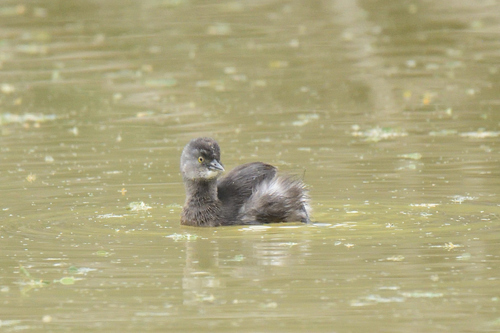 Zampullín Macacito
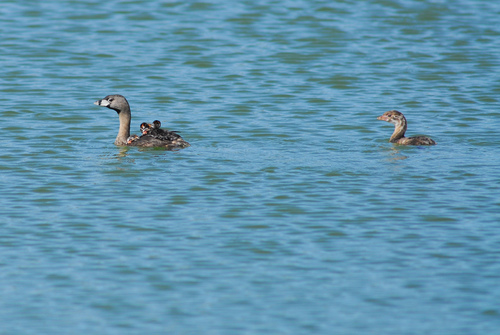 Zampullín Picogrueso
En breve
La marca de campo más confiable para separar el Zampullín Macacito del Zampullín Picogrueso es la presencia de un parche blanco en el ala en vuelo en el Zampullín Macacito de todas las edades, que el Zampullín Picogrueso carece por completo. En aves posadas o nadando, el Zampullín Macacito es mucho más pequeño y esbelto, con un pico delgado y puntiagudo y ojos amarillos brillantes, mientras que el Zampullín Picogrueso es notablemente más robusto, tiene un pico grueso y romo (con una banda negra en la temporada de cría) y una parte inferior blanca. Los Zampullines Picogruesos juveniles están rayados, a diferencia de los Zampullines Macacitos jóvenes, que son más simples y pálidos. Ambas especies son en general marrones, pero el Zampullín Macacito siempre carece de cualquier castaño en el cuello y es más oscuro en general. Las diferencias en la forma y tamaño del pico son especialmente útiles a distancia o en luz pobre.
Consejos de identificación
- Parche blanco en el ala en vuelo: Solo el Zampullín Macacito muestra un parche blanco en el ala cuando vuela; las alas del Zampullín Picogrueso son marrones simples sin blanco. Esta es la marca más confiable para aves asustadas o vistas en vuelo, independientemente de la edad.
- Tamaño: El Zampullín Macacito es mucho más pequeño y ligero que el Zampullín Picogrueso. Si ves ambos juntos, la diferencia es sorprendente, pero ten cuidado de no subestimar el tamaño en aves solitarias o a distancia.
- Forma del pico: El Zampullín Macacito tiene un pico delgado, afilado y puntiagudo; el pico del Zampullín Picogrueso es grueso, romo y parecido al de un pollo, con un color pálido y una banda negra en los adultos en cría. La forma del pico a menudo es visible incluso a distancia moderada.
- Color de los ojos: El Zampullín Macacito tiene ojos amarillos brillantes; los ojos del Zampullín Picogrueso son más apagados y no destacan tanto.
- Plumaje juvenil: Los Zampullines Picogruesos juveniles tienen rayas faciales negras y blancas, mientras que los juveniles del Zampullín Macacito son simplemente más pálidos y grises, careciendo de cualquier rayado. Esta es una marca clave a finales del verano y en otoño.
- Color del cuello: El Zampullín Macacito siempre carece de castaño o rufo en el cuello, mientras que el Zampullín Picogrueso es marrón simple; esto ayuda a separarlos de otros zampullines, pero es menos útil entre estos dos.
- Color de la parte inferior: El Zampullín Picogrueso tiene una parte inferior blanca conspicua, a menudo visible cuando el ave está buceando o acicalándose. El Zampullín Macacito carece de este contraste.
- Cresta y garganta: En la temporada de cría, el Zampullín Macacito tiene una cresta y garganta negruzcas; el Zampullín Picogrueso tiene una mancha negra en la garganta y un pico pálido con una banda negra. En la temporada no reproductiva, ambos se vuelven más pálidos, pero la forma y tamaño del pico siguen siendo útiles.
- Jizz general: El Zampullín Macacito parece más delicado, con el cuello más corto y menos robusto que el Zampullín Picogrueso, que es robusto y de cuerpo pesado.
- Pies en vuelo: Ambos tienen los pies colocados hacia atrás, pero los grandes dedos lobulados del Zampullín Picogrueso a menudo cuelgan detrás del cuerpo en vuelo y no están palmeados.
- Contexto de hábitat: El Zampullín Macacito es más probable que se encuentre en cuerpos de agua pequeños, crecidos o temporales; el Zampullín Picogrueso prefiere humedales más grandes y abiertos. Si estás en una pequeña zanja llena de maleza en los trópicos, es más probable que veas un Zampullín Macacito.
- Comportamiento: Ambos bucean con facilidad, pero el Zampullín Picogrueso es especialmente tímido y puede desaparecer durante largos períodos bajo el agua, volviendo a emerger lejos de su ubicación original.
- Dimorfismo sexual: Ninguna de las especies muestra diferencias sexuales obvias en el campo, así que no confíes en esto para la separación.
- Contexto estacional: En América del Norte, el Zampullín Picogrueso es más probable que se encuentre fuera de los trópicos, especialmente en invierno. El Zampullín Macacito es residente en el sur de EE. UU., México y más al sur.
- Errores comunes: No confundas el plumaje marrón del Zampullín Picogrueso con el Zampullín Macacito; siempre verifica la forma del pico, el tamaño y la presencia o ausencia del parche blanco en el ala en vuelo.
Tamaño
El Zampullín Macacito es dramáticamente más pequeño y ligero (masa adulta ~122.5 g) que el Zampullín Picogrueso (~440 g). El Zampullín Macacito también es más corto (21–27 cm) en comparación con el Zampullín Picogrueso (31–38 cm). Esta diferencia de tamaño es obvia cuando se ven uno al lado del otro, pero puede subestimarse si las aves están solas. El Zampullín Macacito parece más pequeño y delicado, mientras que el Zampullín Picogrueso es robusto y de cuerpo pesado.
Plumaje
- En vuelo (todas las edades): El Zampullín Macacito muestra un parche blanco distintivo en el ala; el Zampullín Picogrueso carece de cualquier blanco en las alas al volar, lo que es un punto clave de separación a cualquier edad.
- Juveniles: Los Zampullines Picogruesos juveniles tienen rayas negras y blancas en la cara y el cuello, lo que los hace ver bastante diferentes de los juveniles del Zampullín Macacito, que son simplemente más pálidos y grises que los adultos sin rayado.
- Adultos (cría): El Zampullín Macacito es de un marrón grisáceo oscuro en la parte superior con una cresta y garganta negruzcas, pecho marrón, partes inferiores pálidas y siempre carece de castaño en el cuello. El Zampullín Picogrueso es marrón en general con una cresta y espalda más oscuras, y en verano muestra una garganta negra y un pico distintivo pálido con una banda negra.
- Adultos (no cría): Ambas especies se vuelven más pálidas, pero el Zampullín Picogrueso pierde la garganta negra y la banda del pico, mientras que el Zampullín Macacito desarrolla una garganta blanquecina y sigue siendo más pequeño y más oscuro en general.
- Otras marcas: El Zampullín Picogrueso tiene una parte inferior blanca, visible al nadar o bucear; el Zampullín Macacito no.
Comportamiento
Ambas especies son excelentes buceadores y rara vez se ven volando, pero el Zampullín Picogrueso es aún más reacio a volar y es más probable que bucee y reaparezca lejos del peligro. Ambos tienen las patas colocadas hacia atrás, lo que hace que caminar en tierra sea casi imposible. Los pies del Zampullín Picogrueso son lobulados, no palmeados, y a menudo cuelgan detrás del cuerpo en vuelo. El Zampullín Macacito es más probable que use cuerpos de agua pequeños, temporales o con mucha vegetación, y puede parecer más ágil y menos robusto en el agua.
Hábitat
Ambas especies utilizan humedales de agua dulce con vegetación emergente, pero el Zampullín Macacito se encuentra más a menudo en estanques pequeños, crecidos o temporales, zanjas y manglares, especialmente en las partes sur de su rango. El Zampullín Picogrueso es más común en América del Norte y prefiere estanques más grandes, lagos y pantanos, a veces aventurándose en agua salada o elevaciones más altas durante la migración. Es posible que haya superposición en América Central y el Caribe, pero el Zampullín Macacito es más probable que se encuentre en humedales densos, vegetados o efímeros.
Zampullín Macacito · Zampullín Picogrueso · Mis aves difíciles