

Motmot

Large Blue Flycatcher vs Hill Blue Flycatcher

Cyornis magnirostris versus Cyornis whitei

Play a quiz with Large Blue Flycatcher and Hill Blue Flycatcher
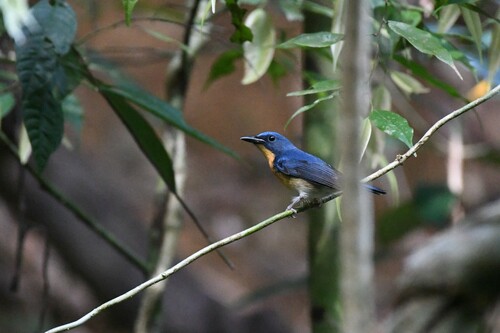
Large Blue Flycatcher (Cyornis magnirostris) Large Blue Flycatcher
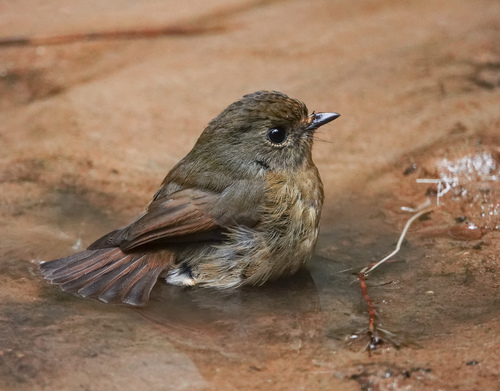
Hill Blue Flycatcher (Cyornis whitei) Hill Blue Flycatcher

Media

Loading…

In short

The most reliable way to separate Large Blue Flycatcher from Hill Blue Flycatcher in the field is by focusing on plumage details, especially in adult males: Large Blue Flycatcher males show a cold, pale blue forehead and jet-black lores and cheeks, with a vivid orange-rufous throat, while Hill Blue Flycatcher males (not described here, but known from references) lack the sharply contrasting black facial pattern and have a more uniform blue head. Females and juveniles are trickier, but Large Blue Flycatcher females have a strongly rufous-tinged rump and tail, and juveniles show heavy rufescent spotting and barring, which are not matched in Hill Blue. Both species are medium-sized flycatchers with similar structure, so careful attention to subtle plumage and face pattern is essential. Habitat and range overlap in northeastern India, but Large Blue is more Himalayan and rare, while Hill Blue is more widespread in Southeast Asia.

Identification tips

  1. Adult male face pattern: Large Blue Flycatcher males have a cold, pale blue forehead and sharply contrasting jet-black lores, cheeks, and some ear-coverts, creating a masked look. Hill Blue males lack this strong black facial contrast and have a more uniform blue head. Use this mark for perched or close birds.
  2. Throat and chin color (adult males): Both species have orange throats, but Large Blue's is described as vibrant orange-rufous, extending to the rear flanks and mid-belly, with a sharper demarcation from the blue of the upperparts. Hill Blue's orange is less extensive and the transition to blue is more gradual.
  3. Wing and tail color (adult males): Large Blue shows dark blue wings and tail with a subtle purplish tinge. Hill Blue's blue is typically brighter and more uniform, lacking the purplish cast.
  4. Female upperparts: Female Large Blue is grayish above with a strong rufous tinge to the rump, tail, and wing edges. Hill Blue females are less rufous on the rump and tail, appearing more uniformly brownish or grayish.
  5. Female face and throat: Large Blue females have a pale buffish eyeing and lores, with dark brown cheeks and a pale rufous-tinged buff chin and throat. Hill Blue females lack the strong rufous tinge and have a plainer face.
  6. Juvenile pattern: Juvenile Large Blue Flycatchers are darker brown above with rufescent spots and strong dark barring on the deep buff throat and breast, plus faint dusky mottling on the belly. Hill Blue juveniles are more evenly brown and lack the heavy barring and rufescent spotting. This is a key mark for birds in their first autumn and winter.
  7. Underparts (all ages): Both species have whitish lower underparts, but Large Blue's orange-rufous throat extends further down the belly in males.
  8. Bill and leg color: Large Blue has a black bill and legs that vary from pale flesh-pink to pale pinkish gray or light horn-brown. These are not strongly diagnostic but may help in combination with other marks.
  9. Overall impression: Large Blue often appears colder-toned and more contrasting, especially in males, while Hill Blue is warmer and more uniform.
  10. Habitat and range: In the eastern Himalayas and foothills, Large Blue is possible but rare; in Southeast Asia and southern China, Hill Blue is much more likely. Use range as a supporting clue, not a primary separator.
  11. Vocalizations: Large Blue's short, crisp, high-pitched whistles may help if heard, but Hill Blue's voice is not described here, so do not rely on this alone.
  12. Sexual dimorphism: Large Blue shows stronger sexual dimorphism than Hill Blue; females and juveniles are more distinctively marked.
  13. Pitfalls: Beware of confusing dull or worn adult males, and especially females and juveniles, which can look very similar. Focus on face pattern, rump/tail color, and juvenile barring.
  14. Flight views: No specific wing pattern differences are described for birds in flight, so rely on perched views and face/rump contrasts.
  15. Seasonal variation: Juvenile and female marks are most useful in late summer through winter; adult male face and throat pattern is best in spring and early summer.

Size

Both species are described as medium-sized flycatchers in the Muscicapidae family, and there is no diagnostic difference in size or structure based on available sources. Bill and leg coloration are not highlighted as reliable separators between these two.

Plumage

For adults, male Large Blue Flycatcher is distinctive with a cold, pale blue forehead, jet-black lores and cheeks, deep blue cap, and a vibrant orange-rufous throat and chin extending to the belly. The wings and tail are dark blue with a purplish tinge. In contrast, Hill Blue Flycatcher males (from comparative references) have a more uniform blue head and lack the sharply defined black facial pattern; their throat is also orange but the facial contrast is less marked. Female Large Blue Flycatcher is grayish above with a strong rufous tinge to the rump, tail, and wing edges, and a pale buff face with dark brown cheeks. Juvenile Large Blue Flycatchers are darker brown with rufescent spots above and deep buff, heavily barred throats and breasts, unlike the more evenly brownish juveniles of Hill Blue. These juvenile and female differences are subtle but important in the field, especially when birds are not singing or are seen in poor light.

Behaviour

No behavioral differences are described that are diagnostic between these two species. Both behave as typical forest flycatchers, perching upright and sallying for insects.

Habitat

Large Blue Flycatcher is found in the eastern Himalayas, from Nepal to Bangladesh, and is considered rare and declining. Hill Blue Flycatcher is more widespread, ranging from southern China through northeastern India to Southeast Asia. In areas of overlap (northeastern India), Large Blue is more likely in Himalayan foothill forests, while Hill Blue is more common in hill and submontane forests further south and east. However, habitat alone is not always reliable for separation where their ranges meet.

Voice

Large Blue Flycatcher gives high-pitched, short, crisp whistled notes, described as similar to a vocal tap. No comparative vocal description is available for Hill Blue Flycatcher in the sources provided, so voice is not a reliable separator based on current information.

Submit a better description

Use the same sections as the comparison. Your text is published immediately.

The most reliable way to separate Large Blue Flycatcher from Hill Blue Flycatcher in the field is by focusing on plumage details, especially in adult males: Large Blue Flycatcher males show a cold, pale blue forehead and jet-black lores and cheeks, with a vivid orange-rufous throat, while Hill Blue Flycatcher males (not described here, but known from references) lack the sharply contrasting black facial pattern and have a more uniform blue head. Females and juveniles are trickier, but Large Blue Flycatcher females have a strongly rufous-tinged rump and tail, and juveniles show heavy rufescent spotting and barring, which are not matched in Hill Blue. Both species are medium-sized flycatchers with similar structure, so careful attention to subtle plumage and face pattern is essential. Habitat and range overlap in northeastern India, but Large Blue is more Himalayan and rare, while Hill Blue is more widespread in Southeast Asia.

  1. Adult male face pattern: Large Blue Flycatcher males have a cold, pale blue forehead and sharply contrasting jet-black lores, cheeks, and some ear-coverts, creating a masked look. Hill Blue males lack this strong black facial contrast and have a more uniform blue head. Use this mark for perched or close birds.
  2. Throat and chin color (adult males): Both species have orange throats, but Large Blue's is described as vibrant orange-rufous, extending to the rear flanks and mid-belly, with a sharper demarcation from the blue of the upperparts. Hill Blue's orange is less extensive and the transition to blue is more gradual.
  3. Wing and tail color (adult males): Large Blue shows dark blue wings and tail with a subtle purplish tinge. Hill Blue's blue is typically brighter and more uniform, lacking the purplish cast.
  4. Female upperparts: Female Large Blue is grayish above with a strong rufous tinge to the rump, tail, and wing edges. Hill Blue females are less rufous on the rump and tail, appearing more uniformly brownish or grayish.
  5. Female face and throat: Large Blue females have a pale buffish eyeing and lores, with dark brown cheeks and a pale rufous-tinged buff chin and throat. Hill Blue females lack the strong rufous tinge and have a plainer face.
  6. Juvenile pattern: Juvenile Large Blue Flycatchers are darker brown above with rufescent spots and strong dark barring on the deep buff throat and breast, plus faint dusky mottling on the belly. Hill Blue juveniles are more evenly brown and lack the heavy barring and rufescent spotting. This is a key mark for birds in their first autumn and winter.
  7. Underparts (all ages): Both species have whitish lower underparts, but Large Blue's orange-rufous throat extends further down the belly in males.
  8. Bill and leg color: Large Blue has a black bill and legs that vary from pale flesh-pink to pale pinkish gray or light horn-brown. These are not strongly diagnostic but may help in combination with other marks.
  9. Overall impression: Large Blue often appears colder-toned and more contrasting, especially in males, while Hill Blue is warmer and more uniform.
  10. Habitat and range: In the eastern Himalayas and foothills, Large Blue is possible but rare; in Southeast Asia and southern China, Hill Blue is much more likely. Use range as a supporting clue, not a primary separator.
  11. Vocalizations: Large Blue's short, crisp, high-pitched whistles may help if heard, but Hill Blue's voice is not described here, so do not rely on this alone.
  12. Sexual dimorphism: Large Blue shows stronger sexual dimorphism than Hill Blue; females and juveniles are more distinctively marked.
  13. Pitfalls: Beware of confusing dull or worn adult males, and especially females and juveniles, which can look very similar. Focus on face pattern, rump/tail color, and juvenile barring.
  14. Flight views: No specific wing pattern differences are described for birds in flight, so rely on perched views and face/rump contrasts.
  15. Seasonal variation: Juvenile and female marks are most useful in late summer through winter; adult male face and throat pattern is best in spring and early summer.

Both species are described as medium-sized flycatchers in the Muscicapidae family, and there is no diagnostic difference in size or structure based on available sources. Bill and leg coloration are not highlighted as reliable separators between these two.

For adults, male Large Blue Flycatcher is distinctive with a cold, pale blue forehead, jet-black lores and cheeks, deep blue cap, and a vibrant orange-rufous throat and chin extending to the belly. The wings and tail are dark blue with a purplish tinge. In contrast, Hill Blue Flycatcher males (from comparative references) have a more uniform blue head and lack the sharply defined black facial pattern; their throat is also orange but the facial contrast is less marked. Female Large Blue Flycatcher is grayish above with a strong rufous tinge to the rump, tail, and wing edges, and a pale buff face with dark brown cheeks. Juvenile Large Blue Flycatchers are darker brown with rufescent spots above and deep buff, heavily barred throats and breasts, unlike the more evenly brownish juveniles of Hill Blue. These juvenile and female differences are subtle but important in the field, especially when birds are not singing or are seen in poor light.

No behavioral differences are described that are diagnostic between these two species. Both behave as typical forest flycatchers, perching upright and sallying for insects.

Large Blue Flycatcher is found in the eastern Himalayas, from Nepal to Bangladesh, and is considered rare and declining. Hill Blue Flycatcher is more widespread, ranging from southern China through northeastern India to Southeast Asia. In areas of overlap (northeastern India), Large Blue is more likely in Himalayan foothill forests, while Hill Blue is more common in hill and submontane forests further south and east. However, habitat alone is not always reliable for separation where their ranges meet.

Large Blue Flycatcher gives high-pitched, short, crisp whistled notes, described as similar to a vocal tap. No comparative vocal description is available for Hill Blue Flycatcher in the sources provided, so voice is not a reliable separator based on current information.

Discard your changes?

You have unsaved edits. If you leave now, those changes will be lost.

Large Blue Flycatcher · Hill Blue Flycatcher · My Tricky Birds