

Icterine Warbler vs Sedge Warbler
Hippolais icterina versus Acrocephalus schoenobaenus
Play a quiz with Icterine Warbler and Sedge Warbler
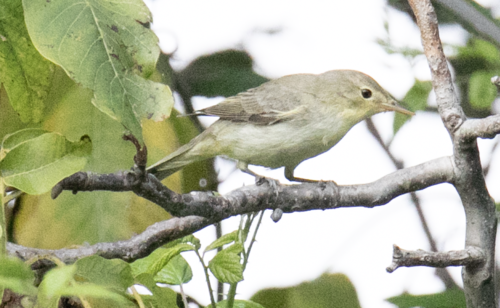 Icterine Warbler
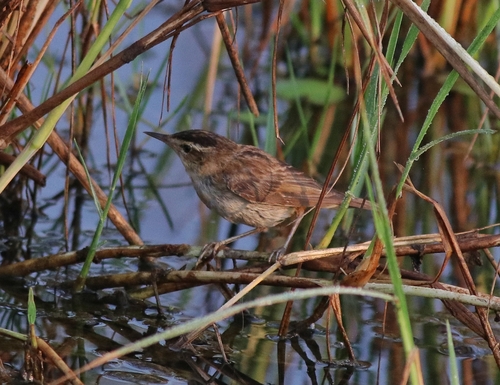 Sedge Warbler
In short
The most reliable field mark to separate Icterine Warbler from Sedge Warbler is the overall coloration and head pattern: Icterine Warbler is a large, greyish-green warbler with a uniform pale yellow underside, a vague yellowish supercilium, and a large, broad-based bill, while Sedge Warbler is smaller, brown above with heavy streaking, a bold whitish supercilium, and a streaked crown. Juvenile Sedge Warblers have dark spots on the breast, unlike Icterine. In flight or perched, Icterine Warbler shows a pale wing panel from the edges of the secondaries and tertials, absent in Sedge Warbler. Structure also differs: Icterine is longer-winged, with a squarer tail and a larger head, while Sedge Warbler is more compact and pointed. Habitat and behavior can help: Sedge Warbler is almost always in or near reeds and wetland vegetation, while Icterine prefers trees and bushes away from water.
Identification tips
- Breast spots in juveniles: Only juvenile Sedge Warbler shows dark spots on the breast. Any warbler with a spotted breast in late summer/autumn is not Icterine.
- Upperpart streaking: Sedge Warbler of all ages has a streaked brown back and crown; Icterine Warbler is plain greyish-green above with no streaks.
- Supercilium: Sedge Warbler has a bold, whitish supercilium running from bill to behind the eye, contrasting with a dark, streaked crown. Icterine Warbler's supercilium is faint, yellowish, and less defined, with a pale eye-ring and no crown streaking.
- Wing panel: Look for a pale panel on the folded wing (edges of secondaries and tertials) in Icterine Warbler, absent in Sedge Warbler. This is visible in all ages of Icterine.
- Underpart color: Icterine Warbler is uniformly pale yellow below; Sedge Warbler is pale but not yellow, and juveniles may show breast spots.
- Bill shape: Icterine Warbler has a large, broad-based bill, noticeably heavier than the pointed, fine bill of Sedge Warbler.
- Head and body structure: Icterine Warbler is larger, with a big head, long wings, and a short, square-ended tail. Sedge Warbler is smaller, more compact, with a flattened forehead and a more pointed tail.
- Leg color: Icterine Warbler's legs are grey, sometimes bluish; Sedge Warbler's legs are greyish, but this is less distinctive than other marks.
- Flight and jizz: Icterine Warbler is clumsier and less agile than Sedge Warbler, which is very active, often perches in the open, and performs song-flights.
- Habitat: Sedge Warbler is almost always in reeds or wetland vegetation; Icterine Warbler prefers trees and bushes, often away from water.
- Vocal behavior: Sedge Warbler is extremely vocal, with a rapid, chattering song and rattling alarm calls, often given from prominent perches or in flight. Icterine's song is not described here, so do not rely on this mark unless familiar with both.
- Seasonal context: Both are long-distance migrants, but Sedge Warbler is much more likely in reedbeds in spring and summer; Icterine is more often found in wooded or bushy areas during migration or breeding.
- Crown pattern: Sedge Warbler has a streaked crown, sometimes with a pale central stripe; Icterine's crown is plain.
- Rump color: Sedge Warbler has a warm brown, unstreaked rump, but this is subtle and less useful than other marks.
- Confusion risk: In poor light or from a distance, Icterine's yellowish underparts and plain upperparts are the best quick checks; Sedge Warbler's streaked back and bold supercilium are the best for it. Always check multiple features, especially in autumn when both can look worn.
Size
Icterine Warbler is noticeably larger and bulkier than Sedge Warbler. While Sedge Warbler measures 11.5–13 cm in length and weighs around 12 g [wikipedia], Icterine Warbler is described as a 'fairly big warbler' with a large head and long wings, giving it a more robust and elongated appearance. In the field, Icterine's size and structure are more reminiscent of a Hippolais warbler, whereas Sedge Warbler is more compact and slight, typical of Acrocephalus warblers.
Plumage
-
Juvenile/immature birds: Juvenile Sedge Warblers show dark spots on the breast, a mark not found on Icterine Warbler at any age. Sedge Warbler of all ages has a heavily streaked brown back and crown, and a bold, pale supercilium. Icterine Warbler, by contrast, is greyish-green above and uniformly pale yellow below, lacking streaks or spots on the underparts, and has only a vague yellowish supercilium and pale lores.
-
Wing pattern: Icterine Warbler (all ages) shows a pale panel on the folded wing, created by pale edges to the secondaries and tertials. Sedge Warbler lacks this panel; its wings are brown and streaked, blending with the back.
-
Adults: Icterine Warbler's underparts are a clean, uniform light yellow, while Sedge Warbler's are pale but not yellow, and the upperparts are always streaked in Sedge but plain in Icterine. Sedge Warbler's rump is warm brown and unstreaked, but this is subtle compared to the overall streaked look.
-
Head pattern: Sedge Warbler has a prominent whitish supercilium and a streaked crown; Icterine's supercilium is faint and yellowish, with a pale eye-ring and no crown streaking.
Behaviour
Icterine Warbler is generally solitary, foraging clumsily among foliage, sometimes flycatching, and is territorial in both breeding and wintering grounds. It is less agile than smaller Phylloscopus warblers. Sedge Warbler is more often seen in low, dense vegetation, especially reeds, and is highly active, often singing from exposed perches or in song-flights. Sedge Warbler's song-flights, with a parachuting descent and wings held in a 'V', are distinctive and not performed by Icterine Warbler.
Habitat
Sedge Warbler is strongly associated with wetlands, reedbeds, and waterside vegetation throughout the breeding season. It is rarely found away from such habitats. Icterine Warbler, in contrast, breeds and forages in trees and bushes, often away from water, and is not a reedbed specialist. If you find a Hippolais-type warbler in a reedbed, it is much more likely to be a Sedge Warbler; conversely, a large warbler in a leafy tree or bush away from water is more likely to be Icterine.
Voice
Sedge Warbler is highly vocal, with a distinctive, rapid, chattering song often delivered from a perch or in flight. The song is variable, includes mimicry, and is composed of random phrases. Its alarm call is a rattling 'chirr' or 'kerr'. Icterine Warbler's vocalizations are not described in the provided notes, so cannot be reliably contrasted here.