
Canapino maggiore vs Forapaglie comune
Hippolais icterina contro Acrocephalus schoenobaenus
Fai un quiz con Canapino maggiore e Forapaglie comune
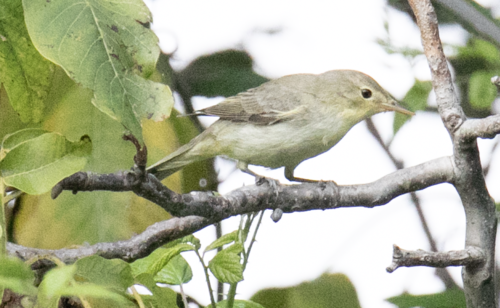 Canapino maggiore
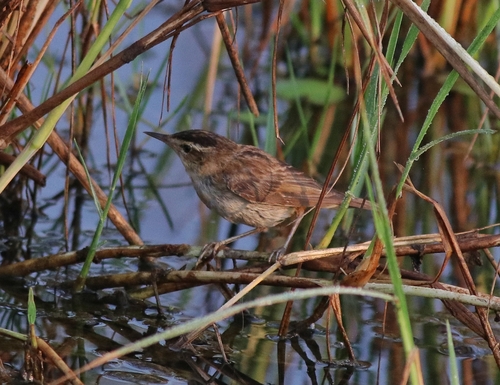 Forapaglie comune
In breve
Il segno di campo più affidabile per separare il Canapino maggiore dal Forapaglie comune è la colorazione generale e il motivo della testa: il Canapino maggiore è un grande warbler grigio-verde con un ventre uniformemente giallo pallido, un vago sopracciglio giallastro e un becco grande e largo, mentre il Forapaglie comune è più piccolo, marrone sopra con forti striature, un sopracciglio bianco audace e una corona striata. I giovani Forapaglie comuni hanno macchie scure sul petto, a differenza del Canapino. In volo o posato, il Canapino maggiore mostra un pannello alare pallido dai bordi delle secondarie e delle terziarie, assente nel Forapaglie comune. Anche la struttura differisce: il Canapino è più lungo nelle ali, con una coda più quadrata e una testa più grande, mentre il Forapaglie comune è più compatto e appuntito. L'habitat e il comportamento possono aiutare: il Forapaglie comune si trova quasi sempre in o vicino a canneti e vegetazione umida, mentre il Canapino preferisce alberi e cespugli lontano dall'acqua.
Consigli di identificazione
- Macchie sul petto nei giovani: Solo il giovane Forapaglie comune mostra macchie scure sul petto. Qualsiasi warbler con un petto macchiato in tarda estate/autunno non è il Canapino.
- Striature superiori: Il Forapaglie comune di tutte le età ha un dorso e una corona marroni striati; il Canapino maggiore è grigio-verde uniforme sopra senza striature.
- Sopracciglio: Il Forapaglie comune ha un sopracciglio bianco audace che va dal becco dietro l'occhio, in contrasto con una corona scura e striata. Il sopracciglio del Canapino maggiore è debole, giallastro e meno definito, con un anello oculare pallido e senza striature sulla corona.
- Pannello alare: Cerca un pannello pallido sull'ala piegata (bordi delle secondarie e delle terziarie) nel Canapino maggiore, assente nel Forapaglie comune. Questo è visibile in tutte le età del Canapino.
- Colore del ventre: Il Canapino maggiore è uniformemente giallo pallido sotto; il Forapaglie comune è pallido ma non giallo, e i giovani possono mostrare macchie sul petto.
- Forma del becco: Il Canapino maggiore ha un becco grande e largo, notevolmente più pesante rispetto al becco appuntito e fine del Forapaglie comune.
- Struttura della testa e del corpo: Il Canapino maggiore è più grande, con una testa grande, ali lunghe e una coda corta e quadrata. Il Forapaglie comune è più piccolo, più compatto, con una fronte appiattita e una coda più appuntita.
- Colore delle zampe: Le zampe del Canapino maggiore sono grigie, a volte bluastre; le zampe del Forapaglie comune sono grigioastre, ma questo è meno distintivo rispetto ad altri segni.
- Volo e jizz: Il Canapino maggiore è più goffo e meno agile rispetto al Forapaglie comune, che è molto attivo, spesso si posa in luoghi aperti e compie voli di canto.
- Habitat: Il Forapaglie comune si trova quasi sempre in canneti o vegetazione umida; il Canapino maggiore preferisce alberi e cespugli, spesso lontano dall'acqua.
- Comportamento vocale: Il Forapaglie comune è estremamente vocale, con un canto rapido e chiacchieroso e richiami d'allerta, spesso emessi da posatoi prominenti o in volo. Il canto del Canapino non è descritto qui, quindi non fare affidamento su questo segno a meno che non sia familiare con entrambi.
- Contesto stagionale: Entrambi sono migratori a lungo raggio, ma il Forapaglie comune è molto più probabile nei canneti in primavera e estate; il Canapino è più spesso trovato in aree boschive o cespugliose durante la migrazione o la nidificazione.
- Motivo della corona: Il Forapaglie comune ha una corona striata, a volte con una striscia centrale pallida; la corona del Canapino è semplice.
- Colore del cuscinetto: Il Forapaglie comune ha un cuscinetto marrone caldo, non striato, ma questo è sottile e meno utile rispetto ad altri segni.
- Rischio di confusione: In scarsa luce o da lontano, le parti inferiori giallastre del Canapino e le parti superiori semplici sono i migliori controlli rapidi; il dorso striato del Forapaglie comune e il sopracciglio audace sono i migliori per esso. Controlla sempre più caratteristiche, specialmente in autunno quando entrambi possono sembrare usurati.
Taglia
Canapino maggiore is noticeably larger and bulkier than Forapaglie comune. While Forapaglie comune measures 11.5–13 cm in length and weighs around 12 g [wikipedia], Canapino maggiore is described as a 'fairly big warbler' with a large head and long wings, giving it a more robust and elongated appearance. In the field, Icterine's size and structure are more reminiscent of a Hippolais warbler, whereas Forapaglie comune is more compact and slight, typical of Acrocephalus warblers.
Piumaggio
-
Juvenile/immature birds: Juvenile Sedge Warblers show dark spots on the breast, a mark not found on Canapino maggiore at any age. Forapaglie comune of all ages has a heavily streaked brown back and crown, and a bold, pale supercilium. Canapino maggiore, by contrast, is greyish-green above and uniformly pale yellow below, lacking streaks or spots on the underparts, and has only a vague yellowish supercilium and pale lores.
-
Wing pattern: Canapino maggiore (all ages) shows a pale panel on the folded wing, created by pale edges to the secondaries and tertials. Forapaglie comune lacks this panel; its wings are brown and streaked, blending with the back.
-
Adults: Canapino maggiore's underparts are a clean, uniform light yellow, while Forapaglie comune's are pale but not yellow, and the upperparts are always streaked in Sedge but plain in Icterine. Forapaglie comune's rump is warm brown and unstreaked, but this is subtle compared to the overall streaked look.
-
Head pattern: Forapaglie comune has a prominent whitish supercilium and a streaked crown; Icterine's supercilium is faint and yellowish, with a pale eye-ring and no crown streaking.
Comportamento
Il Canapino maggiore è generalmente solitario, cerca cibo goffamente tra il fogliame, a volte catturando insetti in volo, ed è territoriale sia nei luoghi di nidificazione che in quelli invernali. È meno agile rispetto ai più piccoli warbler di Phylloscopus. Il Forapaglie comune è più spesso visto in vegetazione bassa e densa, specialmente nei canneti, ed è molto attivo, spesso cantando da posatoi esposti o durante i voli di canto. I voli di canto del Forapaglie comune, con una discesa a paracadute e le ali tenute a 'V', sono distintivi e non eseguiti dal Canapino maggiore.
Habitat
Il Forapaglie comune è fortemente associato a zone umide, canneti e vegetazione lungo le acque durante tutta la stagione di nidificazione. È raramente trovato lontano da tali habitat. Il Canapino maggiore, al contrario, nidifica e cerca cibo in alberi e cespugli, spesso lontano dall'acqua, e non è uno specialista dei canneti. Se trovi un warbler di tipo Hippolais in un canneto, è molto più probabile che sia un Forapaglie comune; al contrario, un grande warbler in un albero o cespuglio foglioso lontano dall'acqua è più probabile che sia un Canapino.
Voce
Il Forapaglie comune è altamente vocale, con un canto distintivo, rapido e chiacchieroso spesso emesso da un posatoio o in volo. Il canto è variabile, include mimetismo ed è composto da frasi casuali. Il suo richiamo d'allerta è un 'chirr' o 'kerr' che rattling. Le vocalizzazioni del Canapino maggiore non sono descritte nelle note fornite, quindi non possono essere confrontate in modo affidabile qui.
Canapino maggiore · Forapaglie comune · I miei uccelli difficili