

Icterine Warbler vs Common Reed Warbler
Hippolais icterina versus Acrocephalus scirpaceus
Play a quiz with Icterine Warbler and Common Reed Warbler
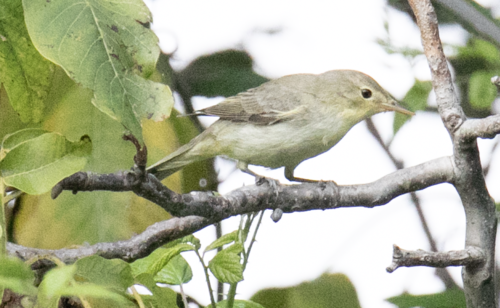 Icterine Warbler
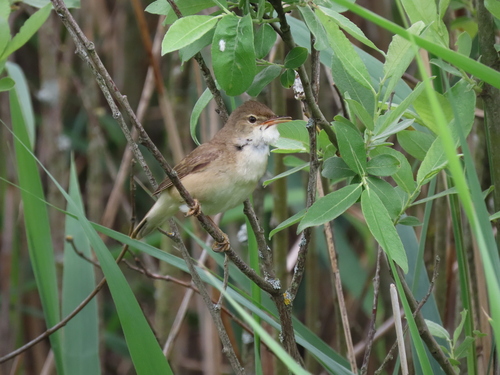 Common Reed Warbler
In short
The most reliable field mark to separate Icterine Warbler from Common Reed Warbler is the combination of Icterine's brighter, more yellowish underparts and distinctive pale wing panel, versus the Reed Warbler's plainer, browner plumage and lack of a wing panel. Icterine Warbler is a larger, longer-winged bird with a squarer tail and a broad-based bill, while Common Reed Warbler is more compact and has a flatter forehead. Juvenile Reed Warblers are richer buff below, but never show the Icterine's yellow wash or wing panel. Both can appear similar in overall shape, but careful attention to structure and subtle plumage differences is key, especially in autumn or on migration.
Identification tips
- Look for the pale wing panel: Icterine Warbler of all ages shows a pale panel on the folded wing, formed by pale edges to the secondaries and tertials. Reed Warbler never shows this feature. This is often the quickest field mark if the bird is perched and the wing is visible.
- Check underpart color: Icterine Warbler is distinctly yellow below, while Reed Warbler is buff or pale brownish. Juvenile Reed Warblers can be rich buff, but never approach the lemon-yellow of Icterine.
- Upperpart tone: Icterine has greyish-green upperparts, while Reed Warbler is plain brown above. This contrast is subtle but can be useful in good light.
- Supercilium and lores: Icterine has a vague yellowish supercilium and pale lores, giving a slightly open-faced look. Reed Warbler lacks a strong supercilium, appearing plainer and more uniform around the face.
- Bill shape: Icterine's bill is broad-based and relatively large for a warbler, while Reed Warbler's is strong and pointed but less broad at the base. This is most useful at close range.
- Head and forehead: Icterine Warbler has a large head, while Reed Warbler's forehead is noticeably flattened, giving it a more wedge-shaped profile.
- Tail shape: Icterine's tail is relatively short and square-ended; Reed Warbler's tail is also short but may appear more rounded in some postures.
- Wing length and projection: Icterine Warbler has longer wings, which can give a more attenuated look when perched. Reed Warbler is more compact with shorter wings.
- Leg color: Icterine Warbler's legs are grey, sometimes with a bluish cast. Reed Warbler's leg color is not specified here, but is usually brownish.
- Habitat context: If the bird is in a reedbed, Reed Warbler is far more likely. Icterine prefers trees and tall bushes, rarely entering reeds.
- Behavior: Icterine is often seen flycatching or making clumsy movements in foliage, while Reed Warbler moves methodically through reeds.
- Juvenile confusion: Young Reed Warblers are buff below but never yellow, and lack the wing panel. Juvenile Icterine is similar to adult but may be duller; the wing panel is still present.
- Size impression: Icterine is larger and bulkier than Reed Warbler, though this can be hard to judge without direct comparison.
- Vocalization: Reed Warbler's song is a slow, chattering 'jit-jit-jit' with whistles and mimicry. If you hear this, it's a Reed Warbler. Icterine's song is not described here.
- Seasonal context: Both are migrants, but Icterine is more likely in wooded areas and is less likely to be found in reeds at any season.
Size
Icterine Warbler is noticeably larger and longer-winged than Common Reed Warbler. While precise mass for Icterine is not given, Reed Warbler averages about 12g [wikidata], and Icterine is described as a 'fairly big warbler' with a large head and long wings. Reed Warbler is medium-sized for a warbler (13 cm length, 17–21 cm wingspan [wikipedia]), appearing more compact and less robust than Icterine. In direct comparison, Icterine's size and bulk are often apparent, especially with experience.
Plumage
-
Juvenile/immature birds: Juvenile Common Reed Warbler is richer buff below, but never shows the bright yellow underparts or the pale wing panel of Icterine Warbler. Icterine of all ages shows a pale panel on the folded wing (from pale edges to secondaries and tertials), which is lacking in Reed Warbler.
-
Adults: Icterine Warbler has greyish-green upperparts and uniformly light yellow underparts, with a vague yellowish supercilium and pale lores. Reed Warbler adults are unstreaked brown above and buff below, with a flattened forehead and no obvious wing panel. The Icterine's underparts are always yellower, and its upperparts have a greenish tinge, while Reed Warbler is plainer brown and buff.
-
In flight: The Icterine's longer wings and squarer tail may be apparent, but the wing panel is best seen when perched. Reed Warbler in flight shows no contrasting wing pattern.
Behaviour
Icterine Warbler tends to forage more clumsily among foliage, often flycatching or fluttering after insects, and is generally solitary and territorial. Reed Warbler is more often seen moving methodically through reedbeds, creeping up stems or between leaves. Both are insectivorous, but Icterine may also take fruit in late summer. In general, Icterine's movements may seem less sleek and more robust than the more streamlined Reed Warbler.
Habitat
Icterine Warbler breeds in a wide range of wooded or bushy habitats across mainland Europe (except the southwest), often in trees or tall shrubs. It is rarely found in reedbeds. Common Reed Warbler, as the name suggests, is strongly tied to reedbeds and wetland vegetation, breeding across Europe and into western Asia. If seen in dense reeds, Reed Warbler is much more likely; Icterine is more typical of woodland edges, parks, or gardens with tall trees and bushes.
Voice
Reed Warbler's song is a slow, chattering 'jit-jit-jit' with acrocephaline whistles and mimicry. No vocal description is provided for Icterine Warbler in these notes, so voice is not a reliable separator here.