

Motmot

Holub's Golden-Weaver vs Southern Brown-throated Weaver

Ploceus xanthops versus Ploceus xanthopterus

Play a quiz with Holub's Golden-Weaver and Southern Brown-throated Weaver
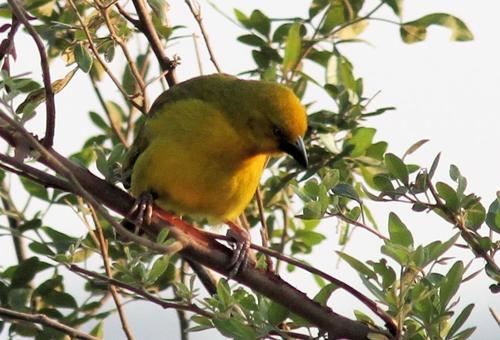
Holub's Golden-Weaver (Ploceus xanthops) Holub's Golden-Weaver
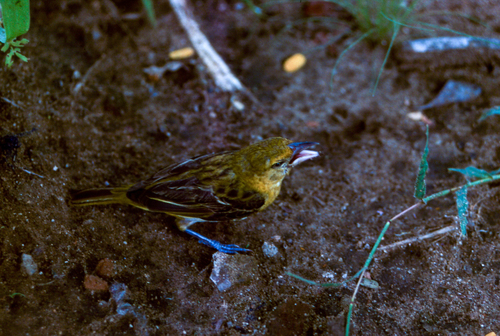
Southern Brown-throated Weaver (Ploceus xanthopterus) Southern Brown-throated Weaver

Media

Loading…

In short

The most reliable field mark between Holub's Golden-Weaver and Southern Brown-throated Weaver is overall size: Holub's is nearly twice as heavy, appearing bulkier in the field. Adult male Holub's Golden-Weaver shows a bright yellow head and body with a distinct orange wash under the chin and onto the upper breast, while the Southern Brown-throated Weaver lacks this orange and has a duller yellow overall. Females and immatures of Holub's are much duller, but still show more yellow on the face than the Southern Brown-throated. Both species have brown upperwings and yellowish underparts, but Holub's is generally brighter and more saturated. Juvenile and immature birds can be confusing, but Holub's tends to show more yellow on the chin and tail, even when otherwise olive. Bill and eye color also help: Holub's adults have a black bill and pale yellow eye, while Southern Brown-throated's details are less well described but are not noted as strikingly pale-eyed.

Identification tips

  1. Size is the quickest field check: Holub's Golden-Weaver is much larger and bulkier than Southern Brown-throated Weaver. If you see a robust, heavy-set weaver, especially among smaller species, suspect Holub's.
  2. Adult male plumage: Holub's males have a full yellow head and bright greenish-yellow body with a distinct orange wash under the chin and upper breast. Southern Brown-throated males are duller yellow and lack any orange on the throat or breast.
  3. Female and immature head color: Female Holub's shows yellow on the forehead, while Southern Brown-throated females are generally duller and lack this feature. Immature Holub's has yellow on the chin and tail, even when otherwise olive, a useful mark for separating from the uniformly duller Southern Brown-throated juvenile.
  4. Eye color in adults: Holub's adults have pale yellow eyes, which can stand out in good light. Southern Brown-throated's eye color is not noted as pale, so a strikingly pale-eyed weaver is likely Holub's.
  5. Bill color: Adult Holub's has a black bill, while juveniles have a pale brown bill. Southern Brown-throated's bill color is not described as distinctive, but a pale brown bill in a dull olive bird points to young Holub's.
  6. Upperwing and flight views: Both species have dull brown upperwings, but Holub's shows yellow on the lower wing portion, which can be visible in flight or when wings are spread. Southern Brown-throated is generally duller and lacks the extensive yellow.
  7. Orange throat patch: Only Holub's adult males show a clear orange wash under the chin and onto the upper breast. Absence of orange in this area suggests Southern Brown-throated.
  8. Juvenile/immature confusion: If you see a dull olive weaver with yellow on the chin and tail, it's likely a young Holub's. Southern Brown-throated juveniles are more uniformly dull and lack these yellow highlights.
  9. Leg color: Both species have pink legs, so this is not helpful for separation.
  10. Perched vs. in-flight jizz: Holub's appears more robust and heavy-billed when perched, while Southern Brown-throated is slimmer and more delicate.
  11. Habitat context: While both occur in similar wetland habitats, Holub's has a broader range and may be found in a wider variety of wetland types. In southern Africa, both may occur together, so don't rely on habitat alone.
  12. Group size and behavior: Both species can be colonial and build nests over water, so nesting behavior is not a reliable separator.
  13. Vocalization: No distinctive differences are described in the sources, so do not rely on song or call.
  14. Seasonal variation: Holub's breeding males are at their brightest from September to April (varies by region), so a very bright yellow and orange male in this period is likely Holub's. Non-breeding birds and females require closer attention to size and subtle plumage marks.
  15. Pitfalls: Immature Holub's can be mistaken for Southern Brown-throated due to their dull color, but look for yellow on the chin and tail, and check for pale yellow eyes in older birds.

Size

Holub's Golden-Weaver is substantially larger and heavier than the Southern Brown-throated Weaver. With a body mass of about 42.5g versus 22.15g, Holub's appears bulkier and more robust both perched and in flight. This difference is often apparent even at a distance, especially if both species are seen together or with familiar weavers for scale. The larger size of Holub's also gives it a more solid, less delicate impression, while Southern Brown-throated is noticeably smaller and lighter-built.

Plumage

Juvenile Holub's Golden-Weaver is dull olive above but already shows yellow on the tail, chin, and throat, with a dark brown eye and pale brown bill. This contrasts with the generally duller appearance of Southern Brown-throated Weaver juveniles, which lack the distinct yellow chin and tail. Adult male Holub's is bright greenish-yellow with a full yellow head and a clear orange wash under the chin and upper breast; females are duller but have yellow on the forehead. Both sexes have dull brown upperwings with yellow on the lower portion. Southern Brown-throated Weaver adults are described as duller yellow overall and lack the orange throat patch. Both species have black bills as adults, but Holub's stands out with its pale yellow eyes, while Southern Brown-throated's eye color is not noted as distinctive. In flight, the yellow in Holub's is more extensive and brighter, especially in males, while Southern Brown-throated remains more subdued.

Behaviour

Both species are colonial nesters and may be seen in small groups, especially around water. Holub's males are known for their display behavior, perching beside females and performing a song-stretch display. Both species build nests in reeds or bushes over water, but Holub's is noted for building nests 2–2.5 meters up. Both feed in similar habitats and may be seen foraging in flocks outside the breeding season. No major behavioral differences are noted that are diagnostic in the field.

Habitat

Both species occur in southern Africa and favor wetland edges, reeds, and waterside vegetation. Holub's Golden-Weaver has a broader range, extending from Gabon and Uganda south to eastern South Africa, while Southern Brown-throated Weaver is more restricted to southern Africa. In areas of overlap, both may be present in similar habitats, but Holub's is more likely in a wider range of wetland types. Habitat alone is not diagnostic where ranges overlap.

Submit a better description

Use the same sections as the comparison. Your text is published immediately.

The most reliable field mark between Holub's Golden-Weaver and Southern Brown-throated Weaver is overall size: Holub's is nearly twice as heavy, appearing bulkier in the field. Adult male Holub's Golden-Weaver shows a bright yellow head and body with a distinct orange wash under the chin and onto the upper breast, while the Southern Brown-throated Weaver lacks this orange and has a duller yellow overall. Females and immatures of Holub's are much duller, but still show more yellow on the face than the Southern Brown-throated. Both species have brown upperwings and yellowish underparts, but Holub's is generally brighter and more saturated. Juvenile and immature birds can be confusing, but Holub's tends to show more yellow on the chin and tail, even when otherwise olive. Bill and eye color also help: Holub's adults have a black bill and pale yellow eye, while Southern Brown-throated's details are less well described but are not noted as strikingly pale-eyed.

  1. Size is the quickest field check: Holub's Golden-Weaver is much larger and bulkier than Southern Brown-throated Weaver. If you see a robust, heavy-set weaver, especially among smaller species, suspect Holub's.
  2. Adult male plumage: Holub's males have a full yellow head and bright greenish-yellow body with a distinct orange wash under the chin and upper breast. Southern Brown-throated males are duller yellow and lack any orange on the throat or breast.
  3. Female and immature head color: Female Holub's shows yellow on the forehead, while Southern Brown-throated females are generally duller and lack this feature. Immature Holub's has yellow on the chin and tail, even when otherwise olive, a useful mark for separating from the uniformly duller Southern Brown-throated juvenile.
  4. Eye color in adults: Holub's adults have pale yellow eyes, which can stand out in good light. Southern Brown-throated's eye color is not noted as pale, so a strikingly pale-eyed weaver is likely Holub's.
  5. Bill color: Adult Holub's has a black bill, while juveniles have a pale brown bill. Southern Brown-throated's bill color is not described as distinctive, but a pale brown bill in a dull olive bird points to young Holub's.
  6. Upperwing and flight views: Both species have dull brown upperwings, but Holub's shows yellow on the lower wing portion, which can be visible in flight or when wings are spread. Southern Brown-throated is generally duller and lacks the extensive yellow.
  7. Orange throat patch: Only Holub's adult males show a clear orange wash under the chin and onto the upper breast. Absence of orange in this area suggests Southern Brown-throated.
  8. Juvenile/immature confusion: If you see a dull olive weaver with yellow on the chin and tail, it's likely a young Holub's. Southern Brown-throated juveniles are more uniformly dull and lack these yellow highlights.
  9. Leg color: Both species have pink legs, so this is not helpful for separation.
  10. Perched vs. in-flight jizz: Holub's appears more robust and heavy-billed when perched, while Southern Brown-throated is slimmer and more delicate.
  11. Habitat context: While both occur in similar wetland habitats, Holub's has a broader range and may be found in a wider variety of wetland types. In southern Africa, both may occur together, so don't rely on habitat alone.
  12. Group size and behavior: Both species can be colonial and build nests over water, so nesting behavior is not a reliable separator.
  13. Vocalization: No distinctive differences are described in the sources, so do not rely on song or call.
  14. Seasonal variation: Holub's breeding males are at their brightest from September to April (varies by region), so a very bright yellow and orange male in this period is likely Holub's. Non-breeding birds and females require closer attention to size and subtle plumage marks.
  15. Pitfalls: Immature Holub's can be mistaken for Southern Brown-throated due to their dull color, but look for yellow on the chin and tail, and check for pale yellow eyes in older birds.

Holub's Golden-Weaver is substantially larger and heavier than the Southern Brown-throated Weaver. With a body mass of about 42.5g versus 22.15g, Holub's appears bulkier and more robust both perched and in flight. This difference is often apparent even at a distance, especially if both species are seen together or with familiar weavers for scale. The larger size of Holub's also gives it a more solid, less delicate impression, while Southern Brown-throated is noticeably smaller and lighter-built.

Juvenile Holub's Golden-Weaver is dull olive above but already shows yellow on the tail, chin, and throat, with a dark brown eye and pale brown bill. This contrasts with the generally duller appearance of Southern Brown-throated Weaver juveniles, which lack the distinct yellow chin and tail. Adult male Holub's is bright greenish-yellow with a full yellow head and a clear orange wash under the chin and upper breast; females are duller but have yellow on the forehead. Both sexes have dull brown upperwings with yellow on the lower portion. Southern Brown-throated Weaver adults are described as duller yellow overall and lack the orange throat patch. Both species have black bills as adults, but Holub's stands out with its pale yellow eyes, while Southern Brown-throated's eye color is not noted as distinctive. In flight, the yellow in Holub's is more extensive and brighter, especially in males, while Southern Brown-throated remains more subdued.

Both species are colonial nesters and may be seen in small groups, especially around water. Holub's males are known for their display behavior, perching beside females and performing a song-stretch display. Both species build nests in reeds or bushes over water, but Holub's is noted for building nests 2–2.5 meters up. Both feed in similar habitats and may be seen foraging in flocks outside the breeding season. No major behavioral differences are noted that are diagnostic in the field.

Both species occur in southern Africa and favor wetland edges, reeds, and waterside vegetation. Holub's Golden-Weaver has a broader range, extending from Gabon and Uganda south to eastern South Africa, while Southern Brown-throated Weaver is more restricted to southern Africa. In areas of overlap, both may be present in similar habitats, but Holub's is more likely in a wider range of wetland types. Habitat alone is not diagnostic where ranges overlap.

Discard your changes?

You have unsaved edits. If you leave now, those changes will be lost.

Holub's Golden-Weaver · Southern Brown-throated Weaver · My Tricky Birds